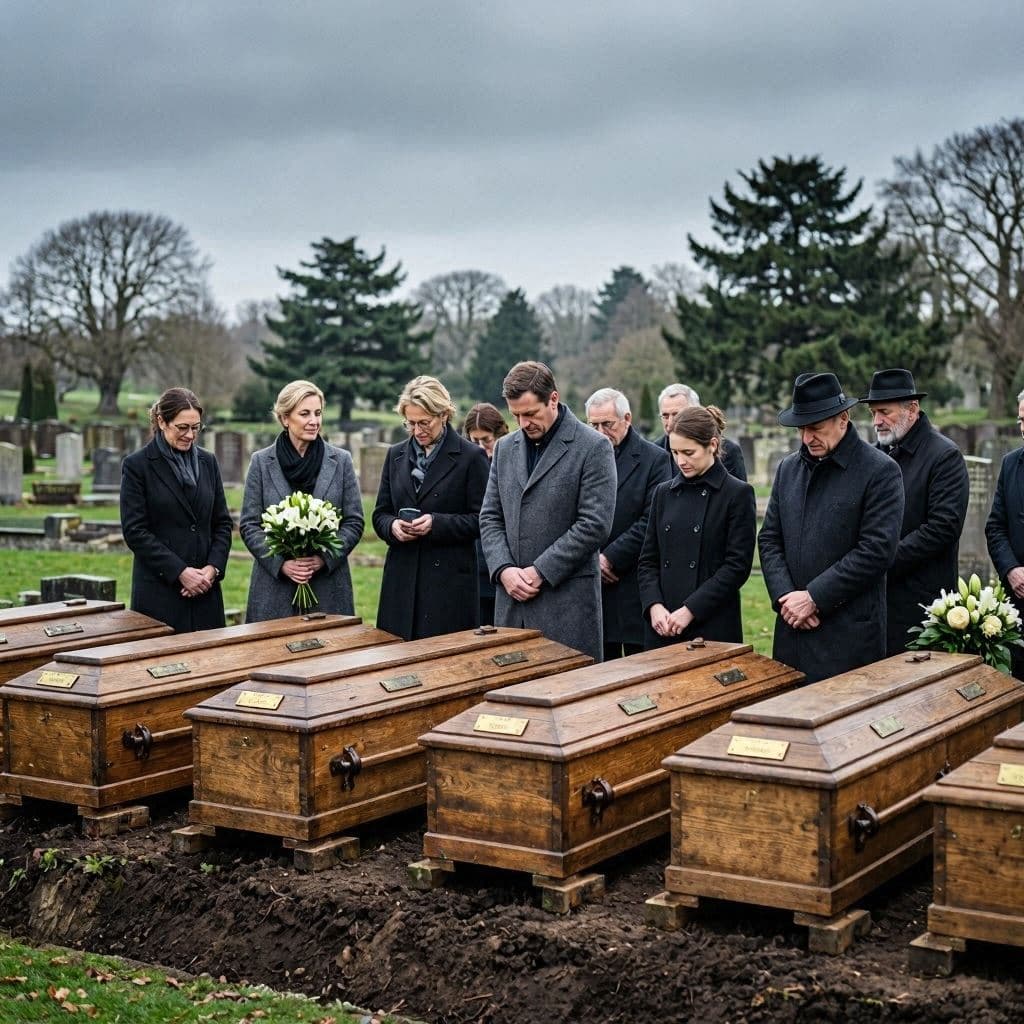
Grief has a weight that is difficult to measure, but in the small community where the Voronov family lived, it feels heavy enough to crush the earth beneath. Last week, a Russian missile strike turned their home into rubble, claiming the lives of two adults and four children. Today, as six coffins were lowered into the ground, neighbors spoke of a family "wiped off the map," a phrase that captures the suddenness and totality of their loss. It is a tragedy that leaves no room for words, only silence and tears.
The funeral, held in central Ukraine, was a somber affair attended by friends, relatives, and members of the local community. The Voronovs were known for their warmth and generosity, qualities that made their absence even more palpable. Children who once played in their yard now stand quietly, holding flowers, trying to comprehend a world that has suddenly become less safe and less kind. The loss of an entire generation of one family is a wound that may never fully heal.
Neighbors described the moment of the strike as a deafening roar followed by an eerie quiet. When the dust settled, the house was gone, replaced by a crater and scattered memories. Rescue workers searched through the debris for hours, hoping against hope for survivors. But the devastation was complete. The family’s belongings, from photographs to toys, were buried under tons of concrete, symbols of a life interrupted.
The attack has reignited anger and sorrow across Ukraine, where such incidents have become tragically common. Yet each loss remains unique, a specific universe of dreams and relationships extinguished in an instant. For the Voronovs’ neighbors, the strike is a personal violation, a reminder that no home is truly safe from the reach of war. Their grief is mixed with a growing desire for justice and accountability.
International observers have condemned the strike, noting the disproportionate impact on civilians. Human rights organizations are documenting the incident as part of a broader pattern of attacks on residential areas. These records serve as evidence for future legal proceedings, but they offer little comfort to those left behind. For the mourners, the focus remains on honoring the dead and supporting the few surviving relatives.
In the days following the funeral, the community has come together to support one another. Meals are shared, stories are told, and the name Voronov is spoken with reverence. This collective mourning is a form of resistance, a way of asserting that while lives can be taken, memory cannot be erased. The family may be gone, but their presence lingers in the hearts of those who knew them.
The funeral of the Voronov family is a poignant reminder of the human cost of conflict. It underscores the urgent need for peace and the protection of civilians in war zones. As Ukraine continues to endure, the stories of families like the Voronovs serve as a testament to the resilience of the human spirit and the enduring power of love in the face of destruction.
AI Image Disclaimer: Visuals associated with this article are AI-generated to illustrate the solemnity and communal aspect of the event.
Sources: CBS News Radio Free Europe/Radio Liberty AOL
Note: This article was published on BanxChange.com and is powered by the BXE Token on the XRP Ledger. For the latest articles and news, please visit BanxChange.com