Humanity has long looked toward the night sky not merely to count stars, but to ask a quieter and more profound question: are we alone? As astronomical technology continues to advance, scientists are designing new instruments capable of exploring worlds far beyond our own solar system with unprecedented precision.
Among these ambitious projects is the proposed Nautilus Space Observatory, a next-generation telescope concept designed to investigate the atmospheres of exoplanets. Researchers believe the mission could significantly expand humanity's understanding of distant planetary systems.
Unlike traditional observatories that rely on a single large mirror, the Nautilus concept envisions a fleet of telescopes operating together. This innovative approach would allow scientists to collect more light while potentially reducing construction costs and technical complexity.
One of the primary objectives of Nautilus is to study how planetary atmospheres evolve over time. By examining atmospheric composition, temperature, and chemical interactions, astronomers hope to gain deeper insights into planetary formation and habitability.
Scientists are particularly interested in identifying molecules such as water vapor, methane, carbon dioxide, and oxygen. These compounds may reveal important clues about a planet's environmental conditions and long-term evolution.
The search for potentially habitable worlds remains one of modern astronomy's most compelling pursuits. Although the discovery of life beyond Earth has yet to occur, understanding atmospheric processes is considered an essential step toward that goal.
International collaboration is expected to play a major role in the development of future observatories. Large-scale scientific missions increasingly depend on cooperation among universities, research institutions, and space agencies across multiple countries.
Researchers emphasize that projects like Nautilus remain in the conceptual and planning stages. Nevertheless, technological progress in optics, instrumentation, and data analysis continues to bring such missions closer to reality.
As humanity's observational capabilities expand, future telescopes may transform distant points of light into detailed worlds, revealing new chapters in the story of planetary evolution across the galaxy.
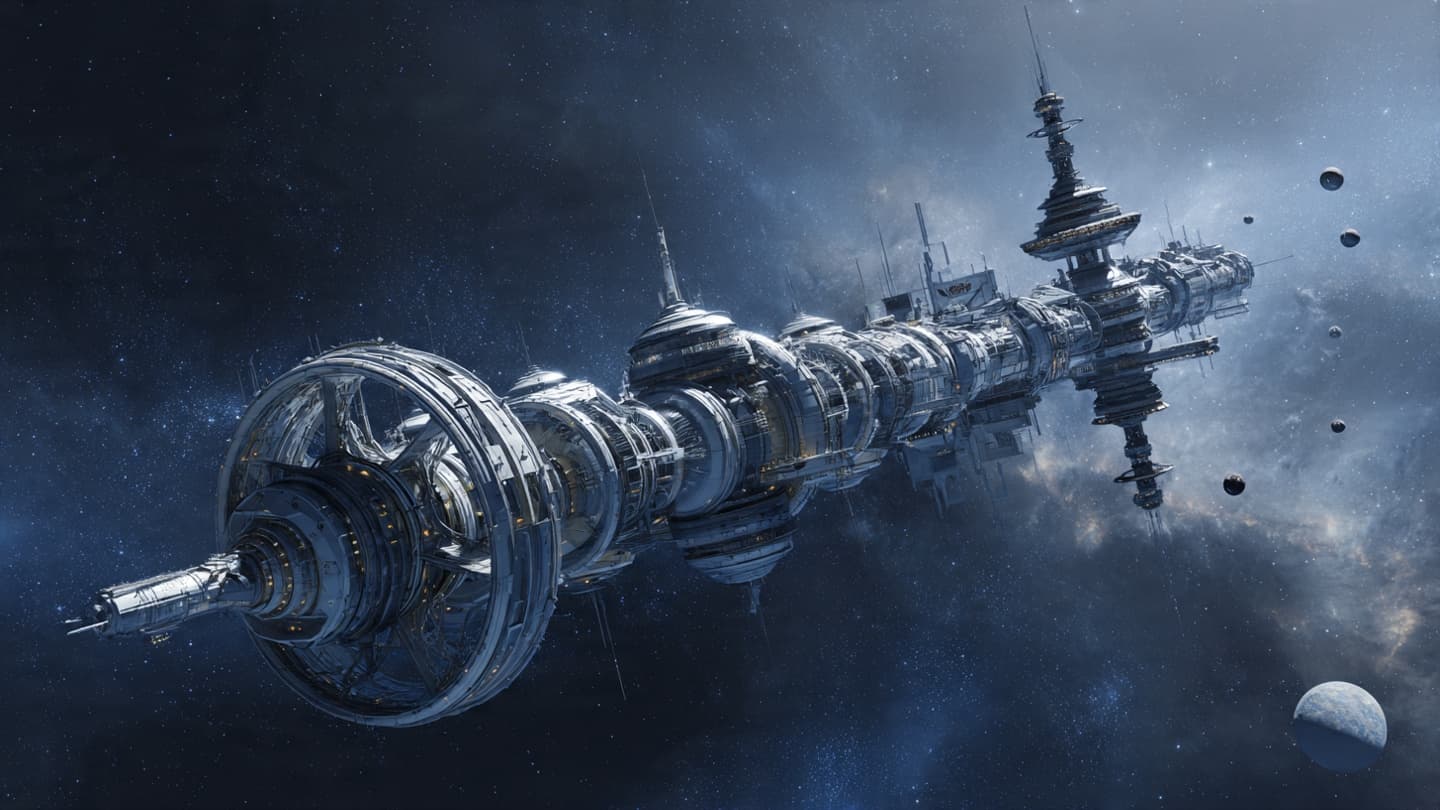
AI Image Disclaimer: Illustrations featured in this article were generated using artificial intelligence to visualize scientific concepts and future technologies.
Source Verification Check: arXiv, NASA, Nature Astronomy, Space.com, Scientific American
Published by Banx Network. This article is part of the Banx decentralized media programme, powered by the BXE token on the XRP Ledger.