
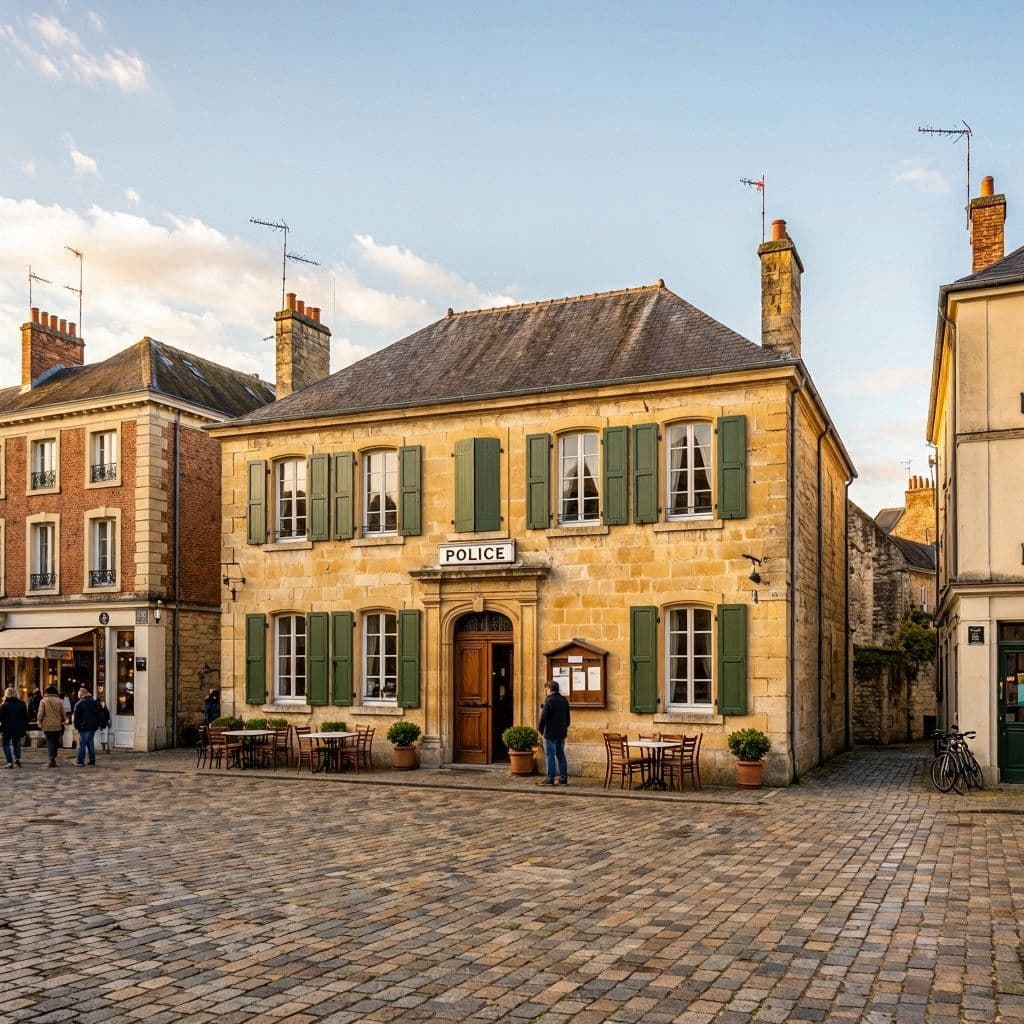
History leaves its marks on places, sometimes heavy and difficult to bear. In Braunau am Inn, Austria, the house where Adolf Hitler was born has long been a site of controversy and pilgrimage for neo-Nazis. Now, in a decisive move to reclaim the narrative, the building has been converted into a police station. This transformation is not just architectural but symbolic, aiming to strip the site of its dark allure and replace it with a function of public service and order. It is a step toward healing, however small.
Body: The conversion follows years of debate and legal battles over the property’s future. Various proposals, including a museum or a community center, were considered but ultimately rejected due to concerns about attracting unwanted attention. The decision to house a police station was seen as a pragmatic solution, ensuring the building is used for a purpose that reinforces law and order, directly contradicting the ideology of its most famous former resident.
Renovations were extensive, altering the interior to suit its new function while preserving the exterior’s historical integrity. The goal was to make the building unrecognizable as a shrine to hate. By filling it with officers who serve the community, the Austrian government hopes to dilute the symbolic power of the location. It is a subtle but powerful statement: justice and safety now reside where tyranny once began.
Local residents have expressed mixed feelings. Some welcome the change, seeing it as a way to move forward and reduce the stigma associated with the town. Others remain wary, concerned that the site may still draw curiosity seekers. However, the presence of a police station is expected to deter unauthorized gatherings and ensure that the area remains a normal part of the community.
The project also serves as an educational opportunity. Informational plaques and contextual displays explain the history of the building and the reasons for its conversion. This transparency aims to foster understanding rather than ignorance, encouraging visitors to reflect on the past without glorifying it. It is an effort to turn a place of shame into a lesson in resilience.
Internationally, the move has been largely praised as a creative and effective solution to a difficult problem. Other countries facing similar issues with historical sites linked to oppressive regimes may look to Braunau for inspiration. It demonstrates that physical spaces can be repurposed to serve positive ends, breaking the cycle of negative association.
The police station officially opened its doors recently, marking a new chapter for the building. Officers working there are aware of the significance of their location, approaching their duties with a sense of responsibility. For them, it is not just a workplace but a symbol of the values they uphold.
Closing: The transformation of Hitler’s birthplace into a police station is a testament to the power of reinvention. While the past cannot be erased, it can be recontextualized. By choosing a path of service and order, the community of Braunau has taken a meaningful step toward leaving the shadows of history behind.
AI Image Disclaimer: Images included here are AI-generated depictions of historic buildings and civic institutions, designed to visualize the concept of transformation and public service.
Sources: CNN CBC News Al Jazeera ABC News International
Note: This article was published on BanxChange.com and is powered by the BXE Token on the XRP Ledger. For the latest articles and news, please visit BanxChange.com