There are roads that rarely appear on maps of history.
They stretch through open countryside, cross rivers and forests, and connect distant positions where supplies, fuel, and equipment move quietly from one place to another. In times of peace, such routes are ordinary threads in the fabric of daily life. In war, they become lifelines. Every truck, every shipment, every journey along those roads carries weight far beyond its cargo.
Across Ukraine’s vast landscape, the contest over these routes has increasingly become a contest over information itself. The latest chapter in that evolution involves the growing use of artificial intelligence-powered drones, technologies designed to identify, track, and strike targets with greater speed and autonomy than previous generations of battlefield systems.
The development reflects a broader transformation unfolding throughout the conflict. Since the war began, drones have shifted from supporting tools to central actors in military operations. Small unmanned aircraft now observe front lines, gather intelligence, guide artillery, and monitor movements across hundreds of miles of contested territory. As both sides adapt, the technology continues to evolve, becoming more capable and increasingly integrated with advanced software systems.
Artificial intelligence has accelerated that process. By helping drones analyze imagery, recognize vehicles, maintain target tracking, and navigate difficult environments, AI can reduce dependence on constant human control. Military planners view these capabilities as particularly valuable against supply convoys, where timing and precision can determine whether resources reach troops at the front.
The focus on logistics is hardly new. Throughout history, armies have depended on supply networks as much as battlefield victories. Roads, railways, fuel depots, and transport vehicles often shape the outcome of conflicts as profoundly as the actions of soldiers. Modern technology has not changed that reality. Instead, it has altered the methods used to disrupt those networks.
In Ukraine, reports indicate that AI-enhanced drones are increasingly being deployed against vehicles carrying supplies to Russian forces. The objective is not only to damage equipment but also to complicate the movement of resources needed to sustain military operations. A successful strike can affect far more than a single vehicle; it can influence planning, logistics, and the tempo of activity across a wider area.
What makes this development particularly significant is the degree to which software now participates in decisions once dependent almost entirely on human observation. Machine vision systems can process images rapidly, identifying patterns and objects that might otherwise require extensive monitoring. Supporters argue that such capabilities increase efficiency and responsiveness. Critics and experts, meanwhile, continue to debate the ethical, legal, and strategic implications of expanding autonomy in warfare.
The conflict has become a laboratory of adaptation, where innovations emerge quickly and spread rapidly across the battlefield. Techniques that were experimental months earlier can become standard practice within a remarkably short period. Engineers, operators, and military planners find themselves in a constant cycle of adjustment, responding to new countermeasures, defenses, and technologies introduced by the opposing side.
Beyond the technical details lies a broader reflection on how warfare itself is changing. The image of conflict has long been associated with tanks, trenches, and aircraft visible against the horizon. Increasingly, however, some of the most consequential developments occur in code, sensors, data streams, and algorithms operating far from public view.
For civilians watching from afar, these technologies can seem abstract. Yet their effects remain deeply tangible. Every innovation introduced on the battlefield influences not only military calculations but also the duration, intensity, and human consequences of the conflict. The relationship between technology and warfare has always existed, but artificial intelligence is introducing new dimensions to that relationship, raising questions that extend well beyond Ukraine.
As another day passes across the plains and roads of Eastern Europe, convoys continue their journeys, drones continue their patrols, and software continues to interpret the world through electronic eyes. The roads remain the same, winding through fields and distant settlements. What has changed is the presence above them—machines capable of seeing farther, reacting faster, and transforming information into action.
In that evolving landscape, the struggle for territory increasingly intersects with a struggle for technological advantage. The roads still matter, as they always have. Yet above them now moves a new layer of conflict, shaped not only by engines and fuel, but by algorithms, data, and the growing reach of artificial intelligence.
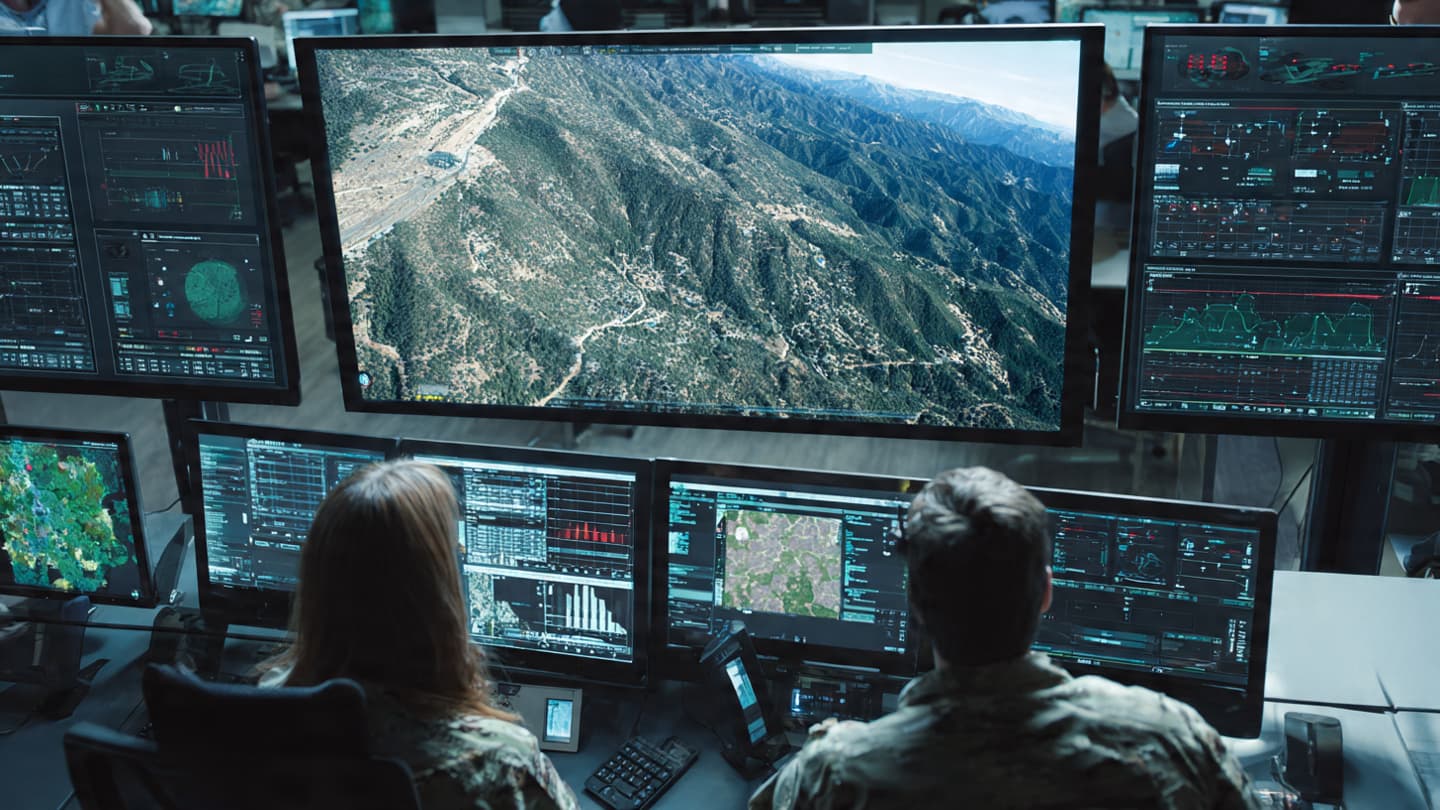
AI Image Disclaimer Visuals are AI-generated and serve as conceptual representations of the events and technologies discussed.
Sources Reuters Associated Press Institute for the Study of War (ISW) Center for Strategic and International Studies (CSIS) Royal United Services Institute (RUSI)
Published by Banx Network. This article is part of the Banx decentralized media programme, powered by the BXE token on the XRP Ledger.