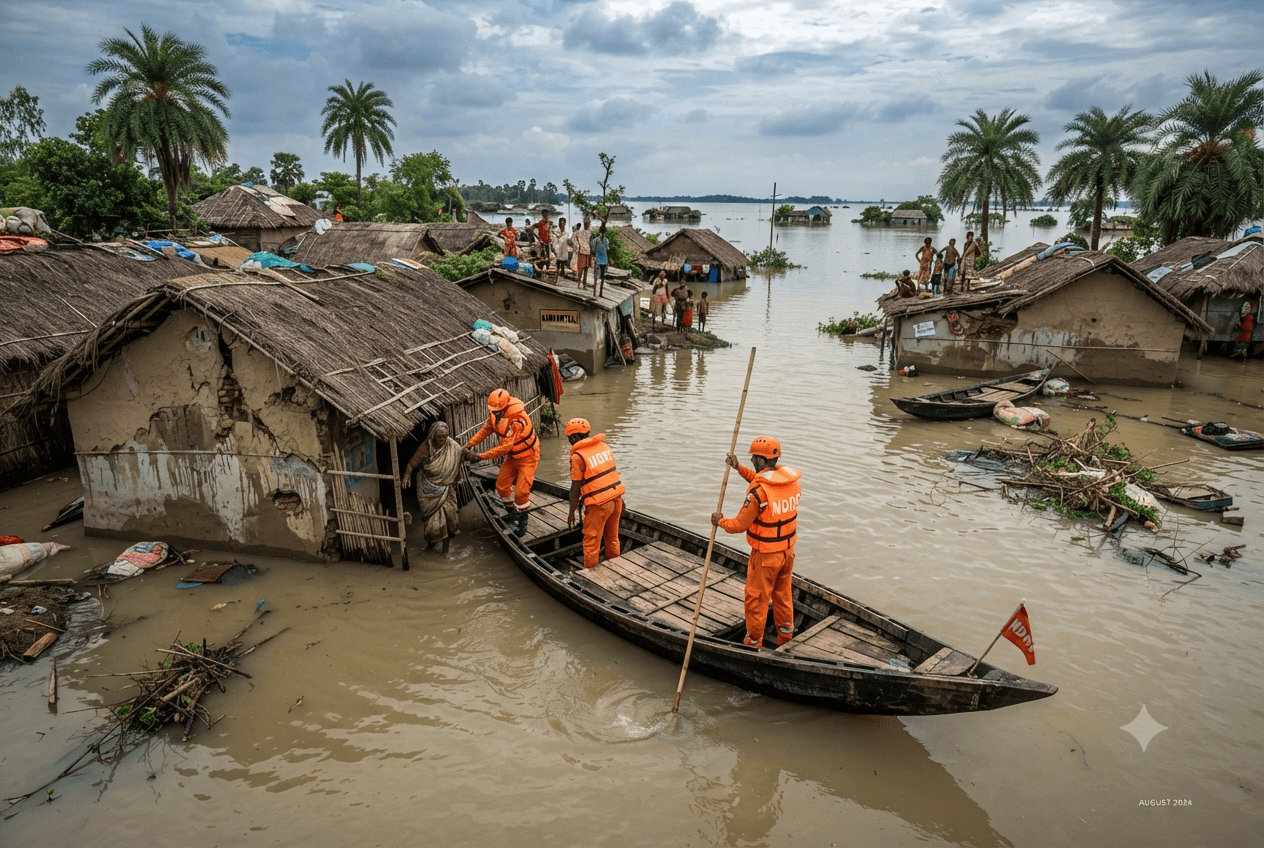
Patna, India—The river broke through its mud embankments before dawn, sending a fast-moving wall of brown water straight through the rural hamlet. Mud-brick homes collapsed within minutes as families scrambled to salvage what possessions they could carry onto higher ground. Local villagers used wooden poles and ropes to pull trapped neighbors from swirling torrents that swallowed entire crop fields. Emergency response teams arrived hours later, navigating washed-out dirt roads blocked by fallen trees and heavy debris.
District disaster management offices confirmed multiple casualties and noted that dozens of families were now sheltering under makeshift plastic tarps. Medical personnel set up makeshift triage posts on elevated patches of ground, distributing clean water and basic first aid supplies. Health workers warned of impending waterborne disease outbreaks as sanitation facilities remained submerged under stagnant mud. Survivors huddled together in the damp air, sharing grim updates about missing relatives swept away by the current.
Local agricultural cooperatives reported catastrophic damage to paddy fields just weeks ahead of the primary harvest cycle. Irrigation canals overflowed their banks, scouring away topsoil and burying farm machinery under thick layers of silt. Government surveyors attempted to reach the worst-hit pockets by boat, but strong currents forced them back repeatedly. District administrators requested immediate deployment of military engineering battalions to assist with bridge repairs.
Relief logistics faced severe bottlenecks as transport routes connecting remote farming communities to regional hubs remained severed. Non-governmental organizations mobilized food distribution drives, trucking in sacks of rice and high-energy biscuits for displaced villagers. Provincial leaders promised financial compensation packages for families who lost their homes, though disbursement timelines remained uncertain. Independent observers criticized local authorities for failing to maintain aging flood barriers ahead of the monsoon peak.
Engineers labored under continuous drizzle to reinforce remaining earthen dykes before secondary water surges arrived from upstream catchment areas. Power transmission lines snapped during the initial flood wave, leaving hundreds of villages without electricity or mobile communication. Rescue volunteers continued combing through debris along the receding riverbanks, searching for victims reported missing by local elders. The humanitarian crisis deepened as forecasters predicted additional heavy rainfall across the eastern river basins.
Note: This article was published on BanxChange.com and is powered by the BXE Token on the XRP Ledger. For the latest articles and news, please visit BanxChange.com