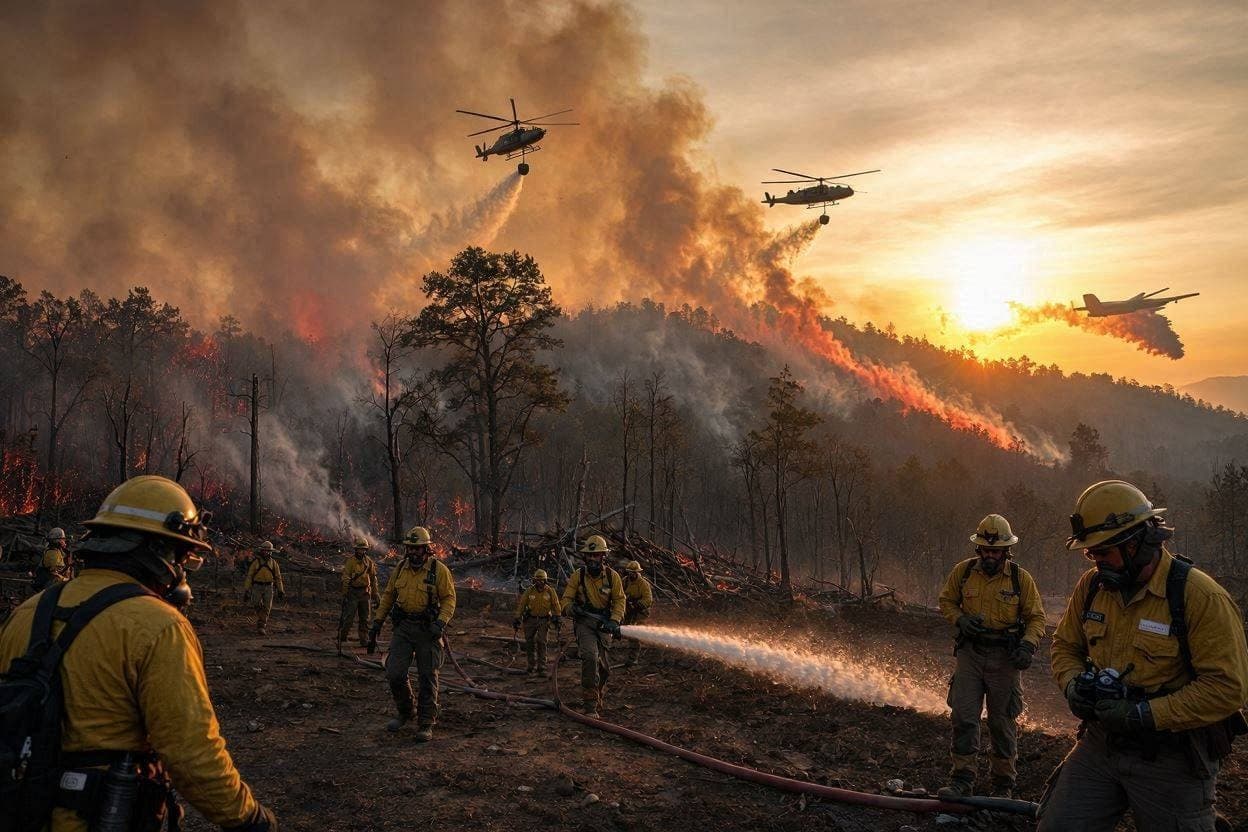
In the sun-drenched landscapes of southwestern Europe, firefighters are engaged in a relentless battle against the flames. With a new heatwave looming on the horizon, France and Spain are racing to contain existing wildfires before soaring temperatures and dry winds exacerbate the crisis. The urgency of the situation is palpable, as communities brace for another round of extreme weather that threatens homes, forests, and lives.
The current fires, already significant in scale, have displaced thousands and consumed vast areas of woodland. As meteorologists predict record-breaking temperatures for the coming days, the stakes have never been higher. This race against time and nature underscores the growing challenge of climate change in the Mediterranean region.
Body: In France, particularly in the Gironde department, firefighters have made progress in containing the blazes that threatened Bordeaux earlier in the summer. However, hotspots remain, and the risk of reignition is high. Additional resources, including aircraft and international aid, have been deployed to strengthen the defense lines. The goal is to secure the perimeter before the heat intensifies.
Spain faces similar challenges, with active fires in Catalonia and other regions. The dry vegetation, parched by months of little rain, acts as perfect fuel for the flames. Firefighters are working around the clock, creating firebreaks and conducting controlled burns to reduce the available fuel. Their efforts are crucial in preventing the spread to populated areas.
The incoming heatwave is expected to push temperatures above 40 degrees Celsius in some areas. Such conditions create a "fire weather" scenario, where even small sparks can lead to rapid and uncontrollable outbreaks. Authorities have issued red alerts, urging residents to avoid outdoor activities that could cause ignition, such as barbecues or machinery use.
Evacuation orders have been pre-positioned in vulnerable zones, ensuring that people can leave quickly if necessary. Shelters are being prepared, and emergency supplies are being stocked. The coordination between local, regional, and national agencies is critical for an effective response.
Climate scientists warn that these events are becoming more frequent and severe. The combination of higher average temperatures, prolonged droughts, and changing wind patterns creates a perfect storm for wildfires. Adaptation strategies, such as forest management and urban planning, are essential for long-term resilience.
For the local economies, particularly tourism and agriculture, the impact is significant. Smoke and fire deter visitors, while crops face the risk of damage. The economic cost of these disasters adds to the social and environmental toll, affecting livelihoods across the region.
International cooperation has played a key role in the response. Countries across Europe have shared resources and expertise, demonstrating solidarity in the face of a common threat. This collaborative approach is vital for managing cross-border risks and enhancing overall capacity.
As the heatwave approaches, the focus remains on prevention and preparedness. Public awareness campaigns are reminding citizens of their role in fire safety. Every individual action, from proper disposal of cigarettes to reporting suspicious smoke, contributes to the collective effort.
Closing: The race to curb wildfires in France and Spain before the new heatwave is a critical test of resilience. It highlights the need for sustained action against climate change and the importance of community vigilance in protecting our shared environment.
AI Image Disclaimer: Images used in this report are AI-generated depictions intended to illustrate the urgency of wildfire containment.
Sources: France 24 El País Euronews The Guardian
Note: This article was published on BanxChange.com and is powered by the BXE Token on the XRP Ledger. For the latest articles and news, please visit BanxChange.com