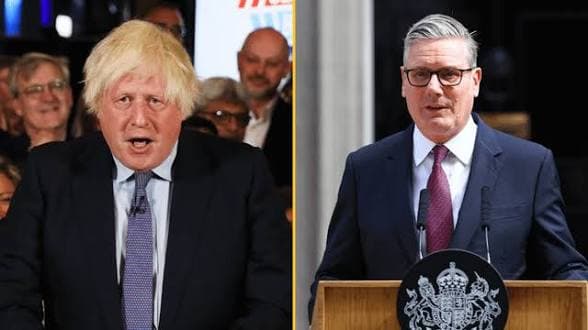
Below is a subjective ranking of UK Prime Ministers from 2001 onward, ordered from worst to best. Different people will weigh achievements, failures, context, and circumstances differently—so treat this as opinion, not a definitive historical verdict.
Liz Truss — extremely short tenure; policy rollout and market fallout overwhelmed her leadership. Boris Johnson — major political turbulence including major scandals and credibility damage, especially during the pandemic. Rishi Sunak — limited time to make large structural changes; often judged by legacy disputes and crisis-management performance. David Cameron — widely linked to the long-term political environment leading into the post-2010 era; Brexit loss dominates the narrative. Theresa May — Brexit dominated her premiership; repeated parliamentary defeats and eventual breakdown of strategy. Gordon Brown — takes a hit mainly for the financial-crisis-era perception; also associated with reforms and economic stabilization debates. Keir Starmer — strongest evaluation hinges on what you think his “restart” approach achieved early on versus inherited constraints. Tony Blair — despite heavy controversy around foreign policy, he also delivered long-running electoral success and major institutional shifts, making him stand out.
If you want, I can redo the list using a specific rule (e.g., “rank by objective policy outcomes,” “rank only domestic years,” or “rank by personal competence/communication”), but it will still be judgment-based.
Published by Banx Network. This article is part of the Banx decentralized media programme, powered by the BXE token on the XRP Ledger.