
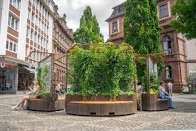
European cities facing more frequent and intense heatwaves are increasingly turning to “design fixes” to protect people in public spaces and inside homes. The core idea is straightforward: reduce how much heat the city absorbs, slow how heat builds up in streets and buildings, and make it easier for residents—especially older people and those with health risks—to find relief during extreme days.
Outdoor cooling strategies are a major focus. Cities are expanding tree canopy and adding shade structures such as pergolas and shade sails, using landscaping and street redesign to limit exposure along commonly walked or transit-heavy routes. Some also shift materials and street approaches—favoring surfaces that absorb less heat or rethinking hardscapes—to reduce ground and pavement temperatures that drive “urban heat island” effects.
Alongside shade, many cities are increasing greening at multiple scales. Parks, street trees, green roofs, and green façades can cool surrounding areas by affecting airflow and surface temperatures. In some places, blue-green solutions—integrating water features or improved drainage systems—are used to create cooler microclimates, though their success depends heavily on water availability and ongoing upkeep.
But public-space design alone can’t solve everything, so building improvements are also part of the playbook. Retrofitting homes and public buildings with better thermal performance and passive or low-energy cooling can reduce indoor heat exposure during peak heat. Where possible, cities pair these longer-term upgrades with policies that encourage faster adoption, aiming to protect residents during the hottest periods while the built environment slowly catches up.
Because extreme heat is an immediate health threat, cities also rely on governance and emergency preparedness. Heat-health plans often include heat risk mapping, public warning systems, and targeted support—such as cooling centers or shelters—activated during heat emergencies. When these systems are well coordinated and clearly communicated, they can reduce harm while longer-term infrastructure projects are underway.
Still, the article argues the challenge is systemic. Many design interventions take time to deliver neighborhood-wide benefits, and some cooling approaches require maintenance and water, which can be difficult during drought. In addition, results vary depending on the city’s specific heat drivers—surface temperatures, building heat load, and how dense heat-storing materials are in the urban fabric.
The overall conclusion is that these clever design solutions can work—often meaningfully—but they’re most effective when combined. The strongest outcomes come from pairing quick protections during heatwaves with sustained investment in street design, building resilience, and public-health planning, tailored to local climate and urban form.
Note: This article was published on BanxChange.com and is powered by the BXE Token on the XRP Ledger. For the latest articles and news, please visit BanxChange.com