Ice is among the most familiar substances in everyday life. It forms in household freezers, covers winter landscapes, and shapes some of Earth's largest natural environments. Yet despite its familiarity, the process by which water becomes ice has continued to challenge scientists for decades.
Recent research has provided new clues regarding the microscopic mechanisms involved in ice formation. The findings help explain processes that occur long before visible crystals emerge.
At the molecular level, water exists in constant motion. Individual molecules repeatedly collide, separate, and reorganize as they respond to changes in temperature and environmental conditions.
One of the most important stages involves nucleation, the moment when small groups of molecules begin arranging themselves into structures capable of developing into stable ice crystals.
Scientists have historically struggled to observe this process directly because it occurs at extremely small scales and often within very short time periods.
Advances in imaging technology, computer modeling, and laboratory techniques have improved researchers' ability to examine these early stages of freezing with unprecedented detail.
Understanding ice formation has practical implications beyond academic curiosity. The process influences weather forecasting, aviation safety, food preservation, climate science, and industrial manufacturing.
Researchers believe that improved knowledge may contribute to more accurate climate models and help explain how ice behaves under different environmental conditions.
Although water and ice remain among the most familiar materials on Earth, the latest findings demonstrate that even common natural phenomena can continue to reveal new scientific secrets. The study offers another reminder that discovery often begins with questions about the ordinary.
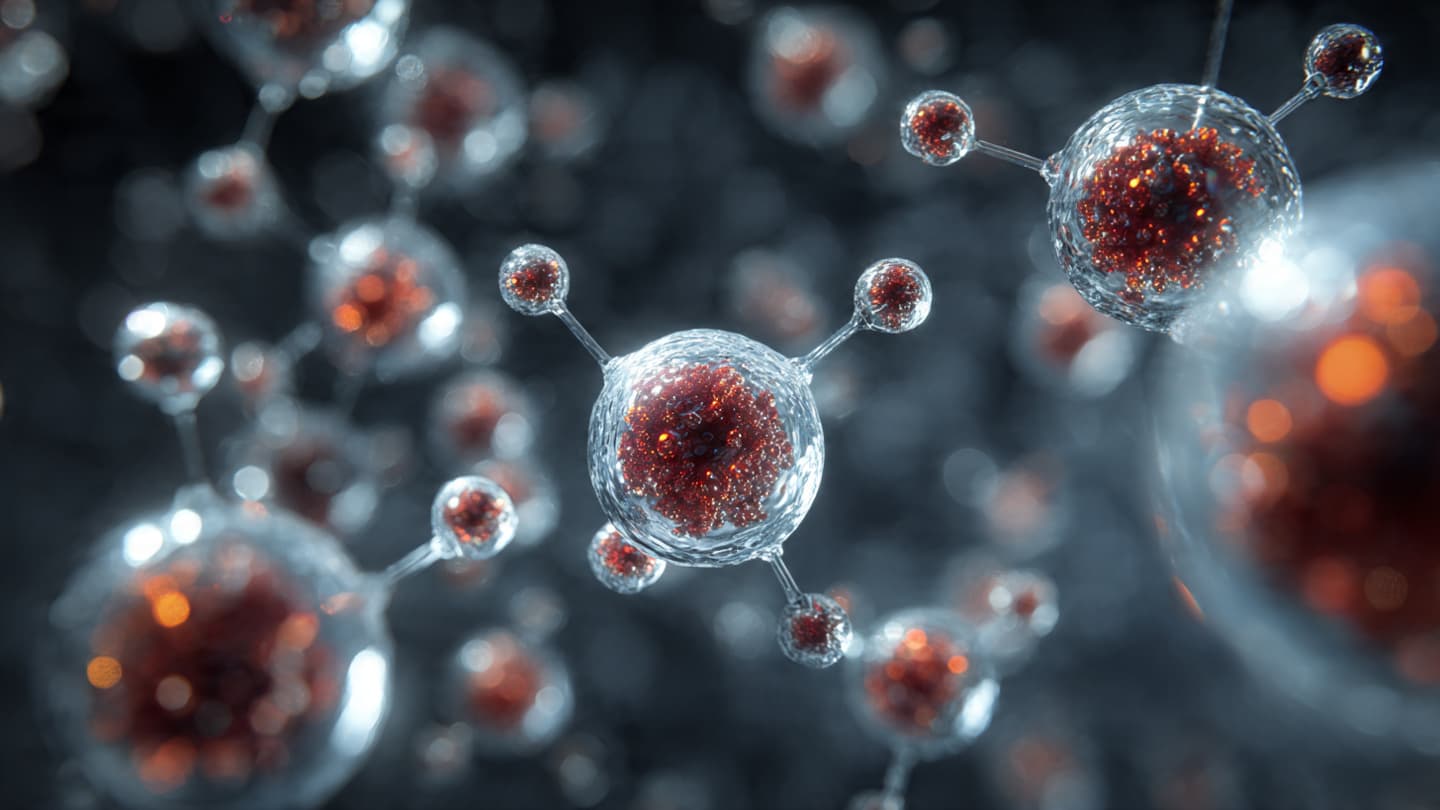
AI Image Disclaimer: This article contains an AI-generated illustration intended to visually represent scientific concepts related to ice formation.
Source Verification Check: Nature, ScienceDaily, Live Science, Scientific American, Physics Today
Published by Banx Network. This article is part of the Banx decentralized media programme, powered by the BXE token on the XRP Ledger.

.jpg&w=3840&q=75 "US Declares Drought Disaster for Parts of Puerto Rico as Dry Conditions Persist")