Black holes are often imagined as silent cosmic regions where matter disappears into darkness. Yet modern astronomy continues to reveal that these mysterious objects can remain surprisingly active, even when they appear relatively quiet. New research is offering fresh insight into this hidden activity.
A recent study suggests that certain black holes previously considered inactive may continue producing powerful streams of material known as cosmic winds. These outflows can influence their surrounding environments despite the absence of dramatic visible activity.
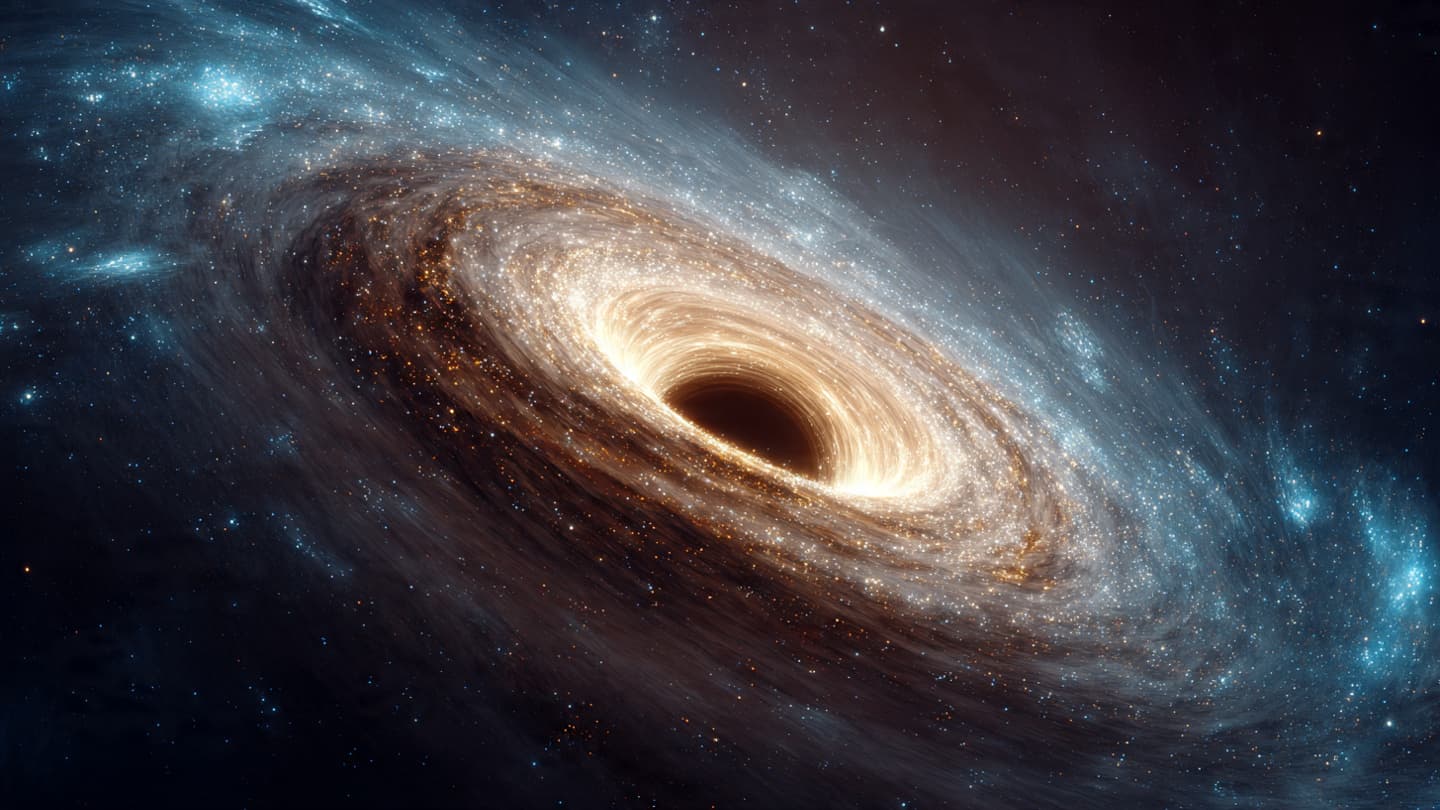
Black holes themselves do not emit light directly. However, material falling toward them can form disks of superheated gas that release enormous amounts of energy. In some cases, interactions within these regions generate energetic outflows.
Researchers examined observational data collected from advanced space- and ground-based observatories. Their findings indicate that even low-activity black holes may maintain processes capable of driving winds across surrounding regions of space.
The discovery contributes to a broader effort to understand how black holes influence galaxy evolution. Cosmic winds can affect the distribution of gas and potentially shape future star formation within galaxies.
Scientists have long known that highly active black holes can produce jets and energetic emissions. The new findings suggest that quieter systems may also play a more significant role than previously understood.
Astronomers emphasize that further observations will be necessary to refine existing models. As telescope technology improves, researchers gain access to increasingly detailed measurements of distant cosmic environments.
The study highlights how scientific understanding evolves over time. Objects once viewed as relatively passive can reveal unexpected complexity when examined through new instruments and analytical techniques.
As investigations continue, the findings offer another reminder that the universe often contains activity hidden beneath apparently calm appearances. Even the darkest regions of space may have more stories to tell.
AI Image Disclaimer: Images accompanying this article are AI-generated visual representations intended to illustrate scientific concepts and are not direct observational data.
Sources (Verification Check): Science News, Nature Astronomy, NASA, European Southern Observatory, Space.com
Published by Banx Network. This article is part of the Banx decentralized media programme, powered by the BXE token on the XRP Ledger.