Space exploration has always reflected humanity's determination to preserve knowledge as carefully as it pursues discovery. Even after years of successful observation, valuable scientific instruments sometimes face unexpected challenges, inviting engineers to develop creative solutions that extend their missions rather than bringing them to an early conclusion.
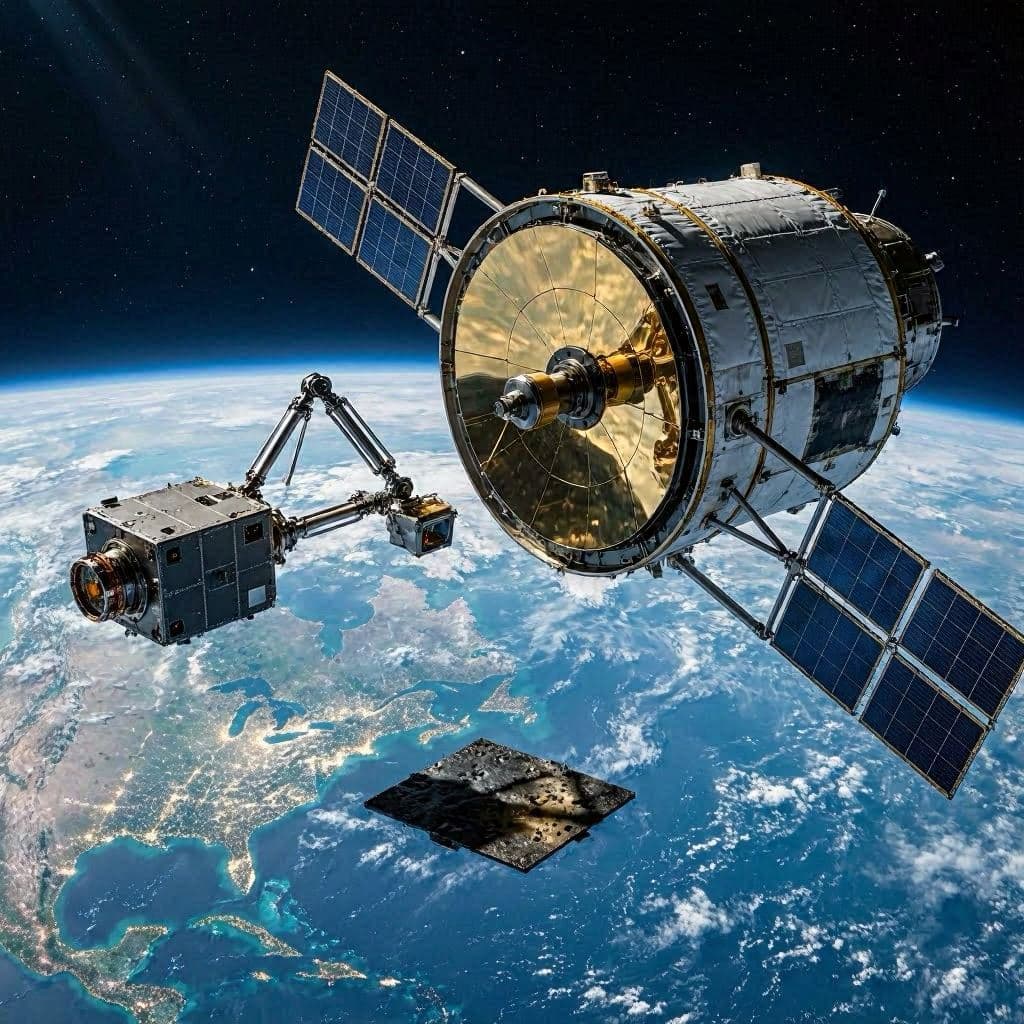
Engineers are studying a robotic mission designed to assist a space telescope whose orbit has gradually declined over time. Instead of replacing the observatory, the proposed mission would attempt to stabilize or adjust its orbit, potentially allowing years of additional scientific observations.
Space telescopes represent enormous investments in technology, engineering, and international collaboration. Extending the operational life of an existing observatory can provide significant scientific value while reducing the costs and timelines associated with launching entirely new missions.
The robotic servicing concept would rely on autonomous navigation, precision docking, and carefully controlled orbital maneuvers. These technologies have advanced considerably in recent years, making satellite servicing increasingly practical for future space operations.
Scientists emphasize that preserving space telescopes benefits research across numerous fields, including astronomy, planetary science, and cosmology. Observatories operating above Earth's atmosphere can capture data impossible to obtain from ground-based facilities due to atmospheric interference.
Mission planners continue evaluating technical feasibility, operational risks, and funding requirements before final approval. Every servicing mission requires extensive testing because spacecraft operate in an environment where even small mechanical errors can have significant consequences.
If successful, the mission could establish a valuable precedent for future satellite servicing. Rather than retiring aging spacecraft, engineers may increasingly restore, upgrade, or reposition important scientific assets already operating in orbit.
The proposal reflects an evolving philosophy within space exploration: preserving existing knowledge can be just as meaningful as pursuing new frontiers. Through careful engineering and international cooperation, humanity continues finding innovative ways to protect the tools that expand our understanding of the universe.
AI Image Disclaimer: Images included with this article were created using AI to illustrate space technology concepts and are not authentic mission photographs.
Sources (verified media): Science News, NASA, European Space Agency
Published by Banx Network. This article is part of the Banx decentralized media programme, powered by the BXE token on the XRP Ledger.