
War often leaves its deepest marks not only on battlefields, but also within the machinery of economies that quietly sustain nations day after day. Refineries, pipelines, and industrial corridors can become silent indicators of resilience or vulnerability during prolonged geopolitical conflict. Recent remarks from Ukrainian officials have once again drawn attention to the economic pressures shaping Russia’s wartime landscape.
Ukrainian representatives claimed that Russia could face severe financial strain following disruptions and closures affecting several oil refinery operations. The statement emerged amid continuing attacks targeting energy infrastructure linked to Moscow’s broader wartime economy.
According to reports from regional and international media, repeated strikes on refinery facilities have complicated parts of Russia’s fuel production and export systems. Ukrainian officials argue that sustained disruptions could weaken revenue streams that remain important to Moscow’s economic stability during the conflict.
Russia remains one of the world’s largest energy exporters, with oil and gas revenue continuing to play a central role in supporting government finances. Because of this, refinery operations and energy logistics have become increasingly significant strategic targets within the broader conflict.
Analysts caution, however, that predictions regarding national bankruptcy are often politically charged and difficult to verify conclusively in the short term. Despite sanctions and infrastructure pressure, Russia has continued adapting portions of its economy through redirected exports and alternative trade arrangements.
International energy markets are also closely monitoring developments because disruptions involving Russian oil infrastructure can influence global supply conditions and price stability. Several countries remain sensitive to shifts affecting fuel availability and shipping routes.
Observers note that economic warfare has become a defining characteristic of the Russia-Ukraine conflict. Alongside military operations, sanctions, infrastructure attacks, and trade restrictions continue shaping the broader geopolitical confrontation between Moscow and Western-aligned governments.
At the same time, economists emphasize that large national economies often possess multiple layers of financial resilience, even under significant external pressure. Long-term consequences therefore depend on sustained developments rather than isolated incidents alone.
The continuing dispute over Russia’s refinery sector illustrates how modern conflicts increasingly extend into energy systems, financial stability, and the wider architecture of global commerce.
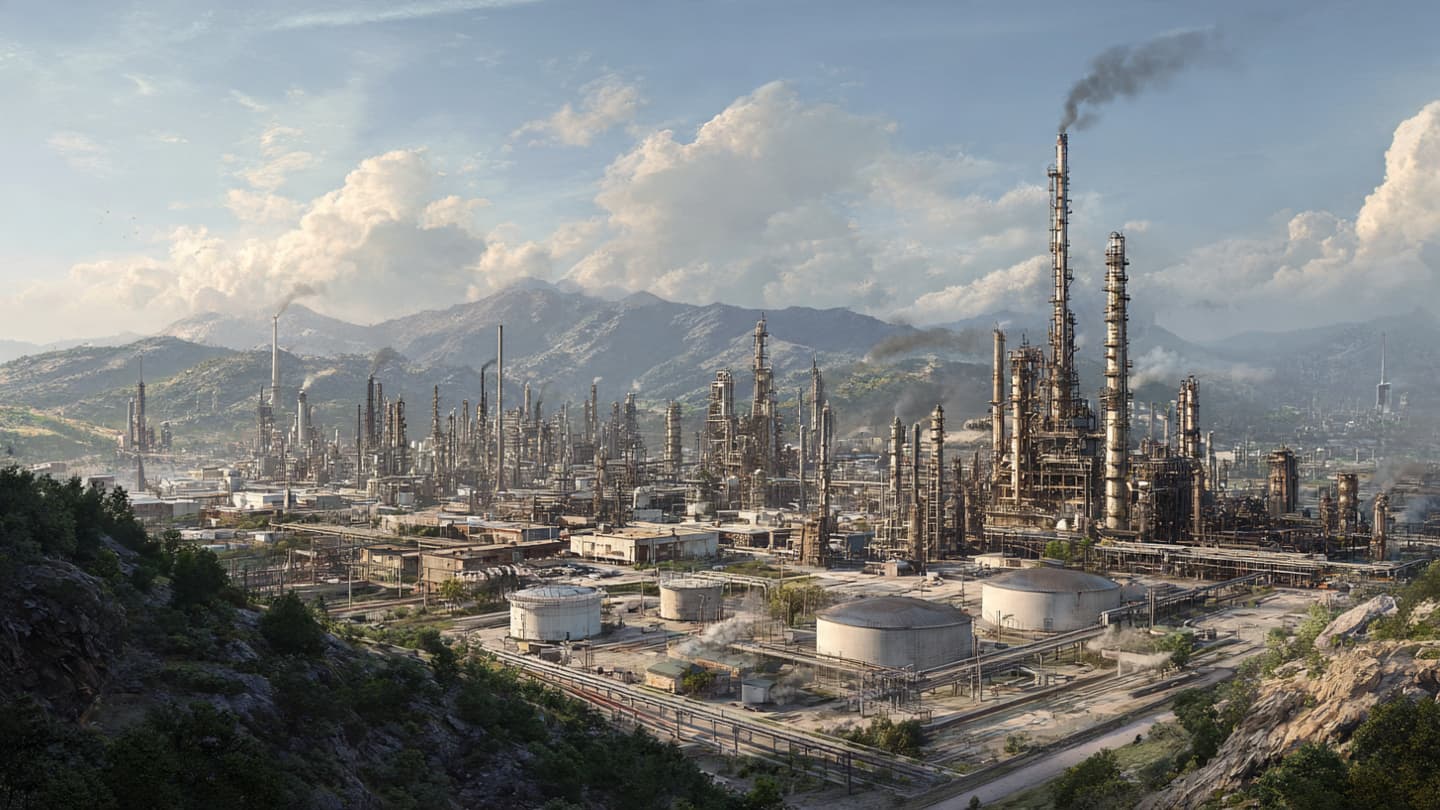
The visuals featured in this article are AI-generated illustrations created to support economic and geopolitical reporting themes.
Sources: Reuters, Bloomberg, Associated Press, Financial Times
Note: This article was published on BanxChange.com and is powered by the BXE Token on the XRP Ledger. For the latest articles and news, please visit BanxChange.com