
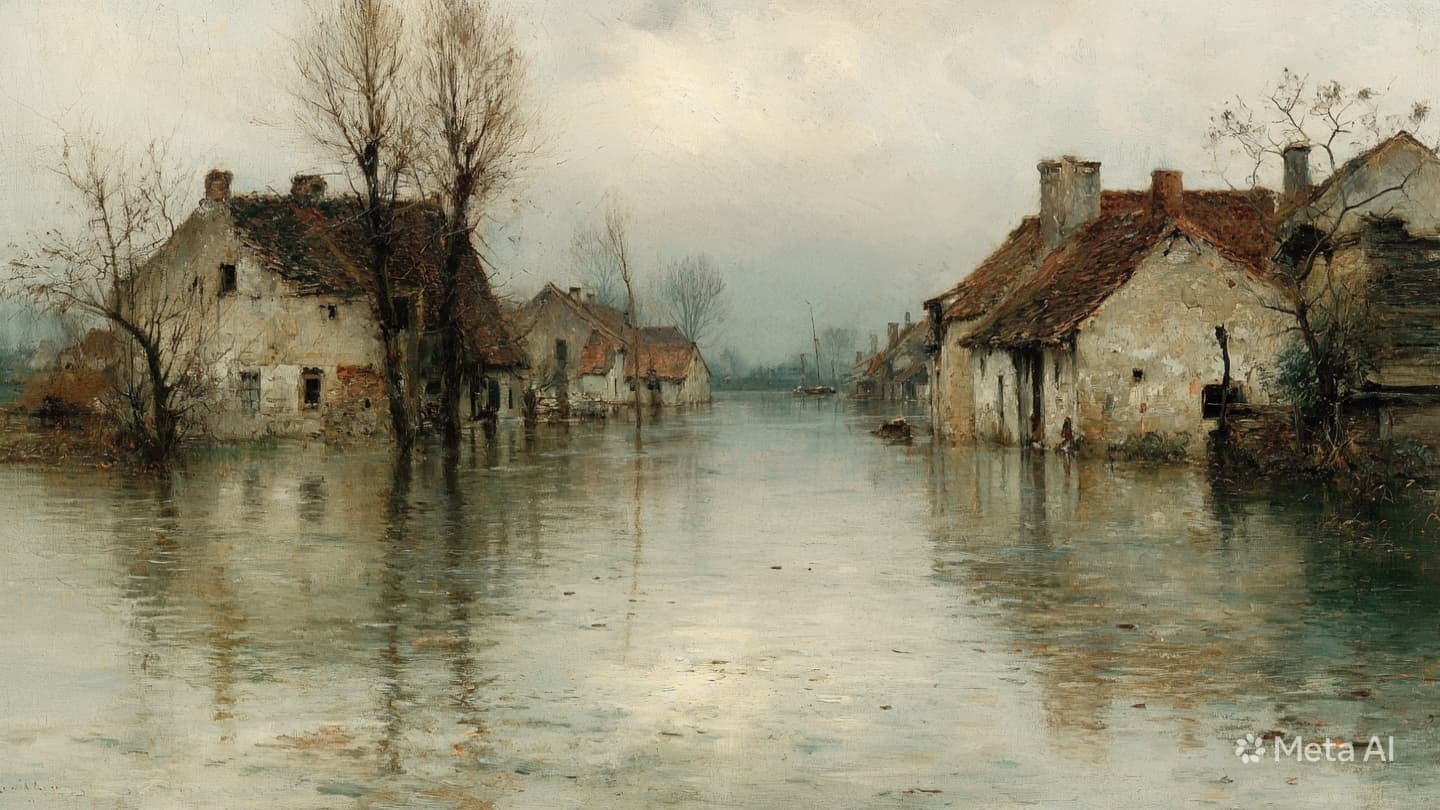
In the quiet stretches of the countryside, the earth has a way of absorbing the rhythm of the seasons without complaint. The fields, the rural lanes, and the small clusters of homes that define these landscapes are built upon a foundation of endurance. Yet, when the skies open and the rainfall refuses to cease, the land reaches a point of saturation that changes everything. The recent flash flooding in rural regions has not only brought physical destruction but has disrupted the long-standing, delicate balance between the village and the water.
The experience of a flash flood is, in many ways, an assault on the senses. The sound of water—which is usually a source of life and irrigation—becomes, in its excess, a roar of chaotic motion. It tears through the familiar geography of the rural plot, turning gardens into silt-filled basins and roads into impassable channels. The property damage reported is a tally of lost labor and ruined shelter, a stark reminder of how rapidly the environment can reclaim the spaces that humans have spent generations cultivating and defining as their own.
Emergency services have moved through these areas with a focused, heavy determination. Their work is largely reactive, a race against the rising tide to minimize the reach of the damage. In these rural corridors, the infrastructure is often less robust than in the urban centers, making the impact of sudden water accumulation feel far more personal and immediate. The sight of neighbors helping neighbors, of the communal effort to pump out basements and clear the debris of the storm, speaks to the resilience that these areas possess, even as they are tested by forces beyond their control.
There is a reflective, haunting quality to the aftermath of such events. As the waters recede, they leave behind a landscape that feels fundamentally altered. The mud-caked belongings, the scarred earth of the riverbanks, and the structural damage to dwellings provide a narrative of the storm’s trajectory. It is a story of vulnerability, where the geography of a valley or the proximity to a stream determines the level of loss, a reality that often feels arbitrary to those caught in its path.
The authorities, meanwhile, are left to assess the broader implications of these events. The increase in such flooding suggests a changing relationship with the climate, one where the traditional water management systems are no longer sufficient to handle the intensity of modern storms. The dialogue now shifts toward the necessity of improved infrastructure and better planning, a move toward a future where the rural landscape is better fortified against the unpredictability of the sky.
Yet, beyond the data and the policy, there remains the human element—the quiet, enduring attachment to the land that persists even in the wake of disaster. People in these regions are not merely victims of the flood; they are stewards of the soil who understand that their lives are tied to the patterns of the rain. The recovery process is, for them, a slow return to the rhythm they have always known, an act of rebuilding that is as much about restoring their sense of place as it is about repairing the physical structures they call home.
The current situation is being monitored with a high degree of gravity. As the ground dries and the assessments of the damage are finalized, the focus is on providing the necessary aid to those who have been most affected. The goal is to ensure that the recovery is as thorough as possible, providing a measure of security to communities that have been unnerved by the intensity of the latest weather systems. It is a period of transition, where the urgency of the flood gives way to the patient, persistent work of reconstruction.
Ultimately, the event serves as a call for a greater understanding of our environmental footprint. The land in rural regions holds the history of our cultivation, and it also mirrors our failures in management. As the recovery continues, the focus will inevitably turn toward long-term resilience, seeking a way to harmonize the needs of the rural community with the increasingly volatile behavior of the water. It is a necessary evolution, a way to ensure that the village can continue to thrive, even as the world around it changes in ways we are only beginning to fully comprehend.
Published by Banx Network. This article is part of the Banx decentralized media programme, powered by the BXE token on the XRP Ledger.


.jpg&w=3840&q=75 "Intelligence Agencies Suspect Russia Is Developing Anti-Satellite Weapon to Target Starlink")