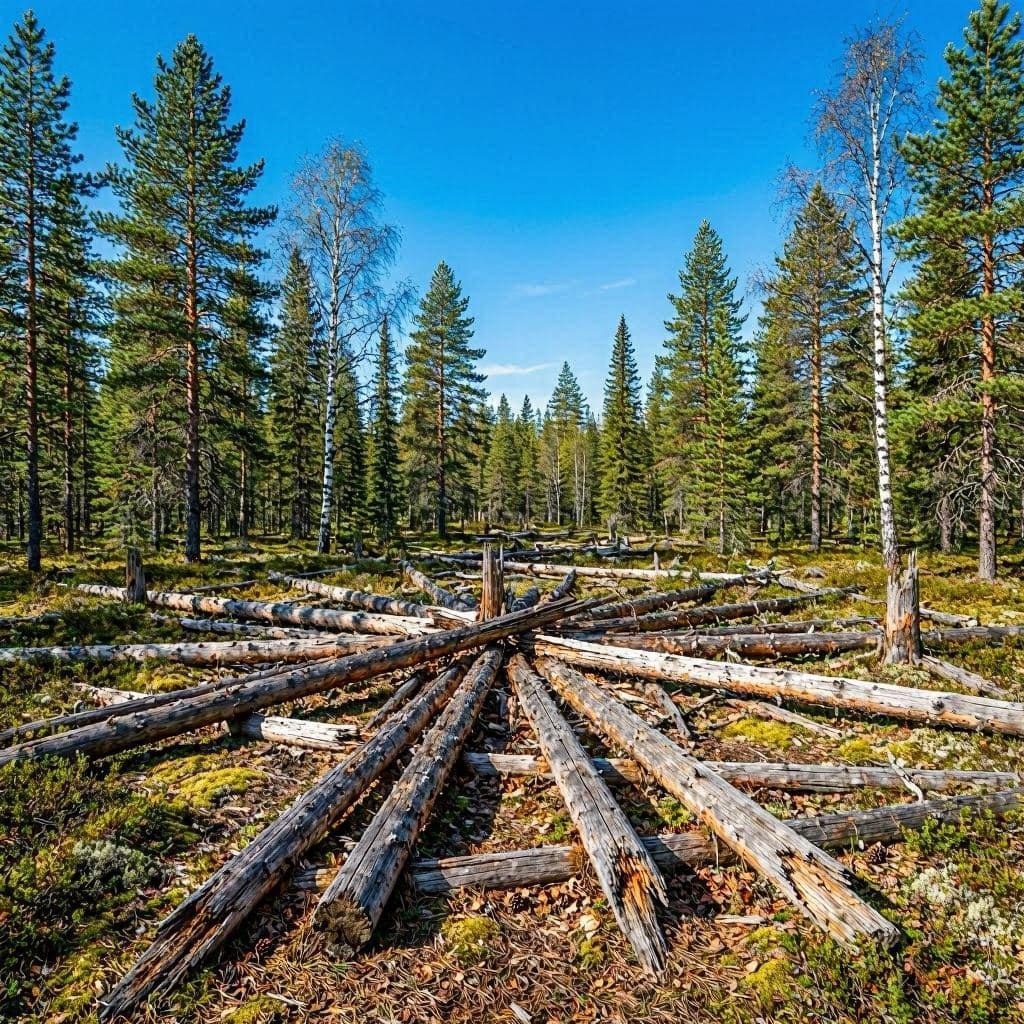
On a crisp morning in June 1908, the remote taiga of Siberia was shaken by a cataclysmic event that would ripple through history. A massive explosion, estimated to be a thousand times more powerful than the atomic bomb dropped on Hiroshima, flattened eighty million trees over an area of two thousand square kilometers. This event, known as the Tunguska event, remains the largest impact event in recorded history, yet it left no crater. For decades, it puzzled scientists, forcing a reevaluation of what comes from space and how it interacts with Earth.
Initially, the lack of a crater led to wild speculation, ranging from alien spacecraft crashes to natural gas explosions. However, as scientific methods advanced, the consensus shifted toward a cosmic origin. The prevailing theory today is that a stony asteroid or comet fragment entered the atmosphere at high speed and disintegrated before hitting the ground. The resulting airburst released immense energy, creating a shockwave that devastated the landscape without leaving a traditional impact site.
This realization changed our understanding of near-Earth objects. It demonstrated that asteroids do not need to strike the surface to cause significant damage. Airbursts can pose a serious threat to populated areas, even if the object itself burns up in the atmosphere. The Tunguska event served as a wake-up call, highlighting the vulnerability of Earth to cosmic debris and the need for better monitoring systems.
In the years since, scientists have studied the region extensively, searching for microscopic fragments of the impactor. While definitive pieces remain elusive, the chemical signatures found in peat bogs and tree resin support the extraterrestrial hypothesis. These tiny clues have helped refine models of atmospheric entry and fragmentation, improving our ability to predict the behavior of similar objects in the future.
The legacy of Tunguska extends beyond science into culture and policy. It inspired countless works of fiction and fueled interest in planetary defense. Today, agencies like NASA and ESA actively track near-Earth asteroids, developing strategies to mitigate potential threats. The event transformed a remote mystery into a global priority, emphasizing the importance of international cooperation in space safety.
For the people of Siberia, the event was a traumatic disruption of their traditional way of life. The Evenki reindeer herders who witnessed the blast described it as a "fire in the sky," a description that captures the awe and terror of the moment. Their oral histories provide a human dimension to the scientific data, reminding us that natural disasters are not just statistical events but lived experiences.
As we look to the future, the lessons of Tunguska remain relevant. With increasing urbanization and technological dependence, the potential impact of an airburst is greater than ever. Continued research and monitoring are essential to ensure that we are prepared for any future encounters with cosmic visitors. The event serves as a humble reminder of our place in a dynamic solar system.
In the end, that morning in Siberia did more than flatten a forest; it expanded our consciousness. It taught us that space is not distant and detached but intimately connected to our planet’s safety. By studying the past, we prepare for the future, ensuring that humanity remains vigilant and resilient in the face of cosmic uncertainties.
AI Image Disclaimer: Please note that any images associated with this article are AI-generated interpretations intended for illustrative purposes only and do not represent actual historical photographs of the 1908 event.
Sources: National Geographic Smithsonian Magazine BBC Future NASA Center for Near Earth Object Studies Russian Academy of Sciences
Published by Banx Network. This article is part of the Banx decentralized media programme, powered by the BXE token on the XRP Ledger.