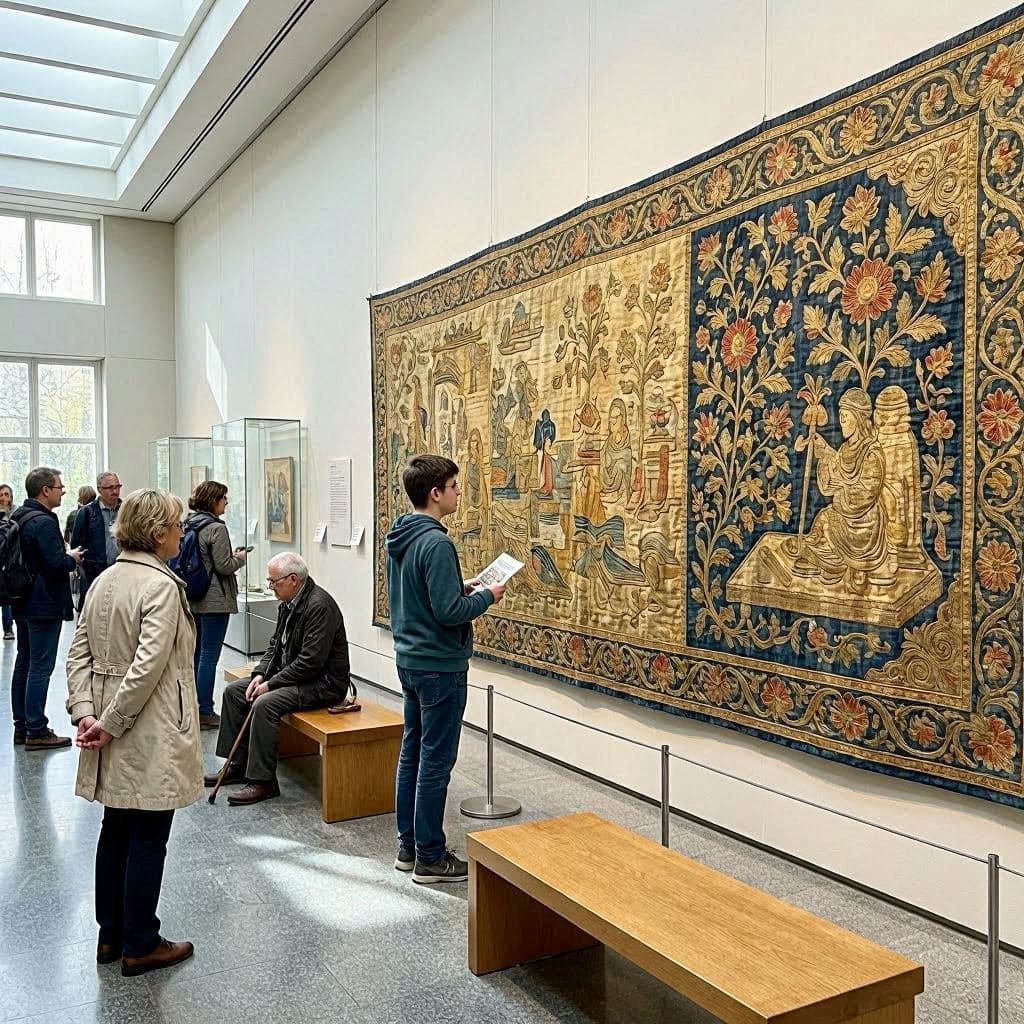
History often feels distant, confined to textbooks and museums. But occasionally, an artifact emerges that bridges the gap between past and present, drawing crowds with its tangible connection to a pivotal moment. The Bayeux Tapestry, a nearly thousand-year-old embroidered cloth depicting the Norman Conquest of England, has returned to the United Kingdom for a rare exhibition. The response has been overwhelming, with tens of thousands of people rushing to secure tickets, eager to witness this masterpiece of medieval artistry.
The tapestry, usually housed in France, is a fragile treasure that rarely travels due to its age and sensitivity to light and humidity. Its presence in the UK is a diplomatic and cultural event of significant magnitude, marking a special occasion in Anglo-French relations. For many visitors, it is a once-in-a-lifetime opportunity to see the 70-meter-long narrative up close, tracing the events of 1066 that reshaped the course of British history.
The excitement surrounding the exhibition reflects a deep public interest in heritage and storytelling. The tapestry is not just a historical record; it is a work of art that combines vivid imagery with intricate detail. Each stitch tells a part of the story, from the preparation for battle to the final victory at Hastings. Seeing it in person allows viewers to appreciate the craftsmanship and the sheer scale of the endeavor, something that reproductions cannot fully convey.
Queues for tickets formed online within minutes of their release, crashing websites and highlighting the immense demand. Museums and galleries have extended opening hours and added extra security measures to manage the flow of visitors. The logistical challenge is significant, but so is the reward: sharing this cultural gem with a broad audience. It is a testament to the enduring power of history to captivate and inspire.
For historians and students, the exhibition offers a unique educational resource. Scholars have gathered to study the textile’s conservation status and to discuss its historical accuracy. Public lectures and guided tours provide context, helping visitors understand the political and social implications of the Norman Conquest. It is an immersive learning experience that brings the Middle Ages to life.
The event also fosters a sense of shared heritage between Britain and France. Despite centuries of rivalry and conflict, the two nations share a deep historical intertwining. The Bayeux Tapestry is a symbol of this connection, reminding us that our histories are linked. Its display in the UK is a gesture of cultural cooperation, promoting understanding and appreciation across borders.
Local businesses in the host city are benefiting from the influx of tourists. Hotels, restaurants, and shops report increased activity, boosting the local economy. The cultural ripple effect extends beyond the museum walls, enriching the community and highlighting the value of arts and heritage tourism. It is a win for culture and commerce alike.
As the exhibition continues, the hope is that visitors leave with more than just a photo. They carry with them a deeper appreciation for the past and the stories that shape our present. The Bayeux Tapestry, with its silent threads of wool and linen, speaks volumes about human ambition, conflict, and creativity. It is a reminder that history is not just what happened, but what we choose to remember.
AI Image Disclaimer: The visual aids accompanying this article are created using artificial intelligence and are intended for conceptual illustration only, not as factual depictions of the specific exhibition or crowds.
Sources: The Guardian BBC News The Times Art Newspaper France 24
Published by Banx Network. This article is part of the Banx decentralized media programme, powered by the BXE token on the XRP Ledger.