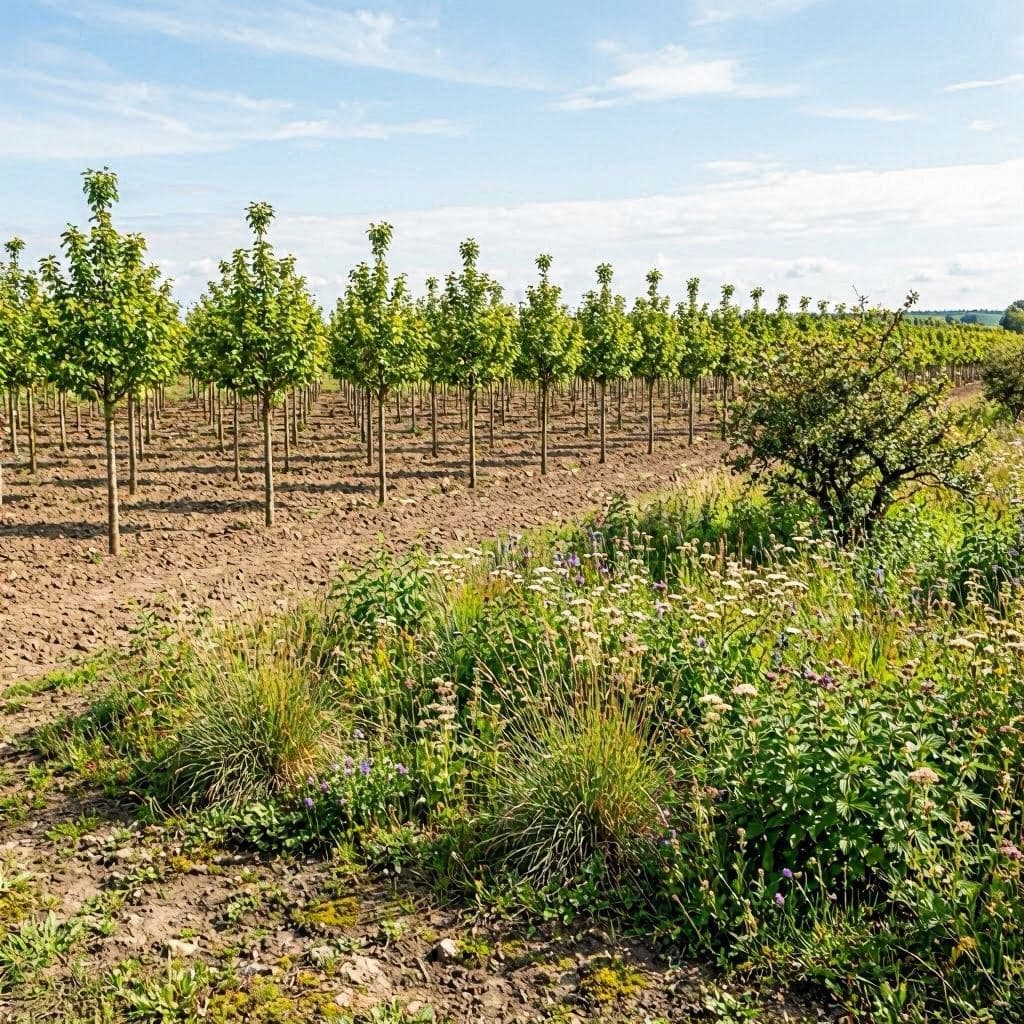
In an ambitious effort to combat desertification and improve air quality, China has planted billions of trees over the past few decades, creating what is often called the "Great Green Wall." This massive afforestation project has turned barren lands green and captured significant amounts of carbon. However, recent ecological studies suggest that these plantations are not functioning like natural forests. While they provide visual greenery, they lack the biodiversity and resilience of native ecosystems, raising questions about the long-term sustainability of such large-scale engineering solutions.
The primary issue lies in the monoculture nature of many of these plantations. To achieve rapid growth and survival in harsh conditions, officials often planted single species of fast-growing trees, such as poplars and pines. While effective for quick coverage, monocultures are vulnerable to pests, diseases, and climate stress. A natural forest, by contrast, is a complex web of diverse species that support each other, creating a resilient system capable of adapting to change.
Furthermore, these planted trees often consume more water than the native vegetation they replaced. In arid and semi-arid regions, this can lead to a depletion of groundwater resources, potentially exacerbating water scarcity for local communities and agriculture. The "green" solution, therefore, carries a hidden blue cost, highlighting the trade-offs inherent in large-scale environmental interventions. It is a reminder that nature cannot be simply engineered without understanding its intricate balances.
Ecologists argue that true restoration requires more than just planting trees; it requires restoring ecosystems. This involves reintroducing native shrubs, grasses, and a variety of tree species that are adapted to the local climate. Such mixed vegetation supports a wider range of wildlife, improves soil health, and creates a more stable environment. The shift from "afforestation" to "ecological restoration" is a critical nuance in modern conservation science.
China has recognized these challenges and is beginning to adjust its strategies. Recent policies emphasize the use of native species and the protection of existing natural vegetation rather than just planting new trees. There is a growing appreciation for the value of natural regeneration, allowing the land to heal itself with minimal human intervention. This pivot reflects a deeper understanding of ecological principles and a move toward more sustainable practices.
The lessons from China’s Great Green Wall are relevant globally. As nations race to meet carbon neutrality goals, there is a temptation to view tree planting as a silver bullet. However, this case study demonstrates that quantity does not equal quality. Effective climate action requires nuanced approaches that prioritize biodiversity and ecosystem health over simple metrics of tree count. It calls for patience and scientific rigor.
For the international community, this serves as a cautionary tale and a learning opportunity. It underscores the importance of local knowledge and ecological diversity in restoration projects. By studying the outcomes of the Great Green Wall, other countries can avoid similar pitfalls and design more effective reforestation programs that benefit both the planet and its inhabitants.
In the end, the story of the Great Green Wall is one of evolution. It began as a bold attempt to conquer nature with sheer scale, but it is maturing into a more sophisticated effort to work with nature’s complexity. The trees remain, but the understanding behind them has grown deeper, offering hope for a greener, more resilient future.
AI Image Disclaimer: The visual aids accompanying this article are created using artificial intelligence and are intended for conceptual illustration only, not as factual depictions of specific plantation sites.
Sources: Nature Ecology & Evolution The Guardian BBC News Scientific American
Note: This article was published on BanxChange.com and is powered by the BXE Token on the XRP Ledger. For the latest articles and news, please visit BanxChange.com