Key Highlights
- DTCC completes first live trades on tokenized infrastructure.
- Tokenization enhances operational efficiency in financial markets.
- Securities lending and delivery-versus-delivery settlements are key features.
The Depository Trust & Clearing Corporation (DTCC), a cornerstone of the U.S. financial markets' post-trade infrastructure, has successfully executed its first live production trades utilizing a tokenized framework. This achievement signifies a pivotal transition from experimental phases to practical applications of tokenization in financial operations, showcasing the technology's potential to revolutionize traditional trading processes.
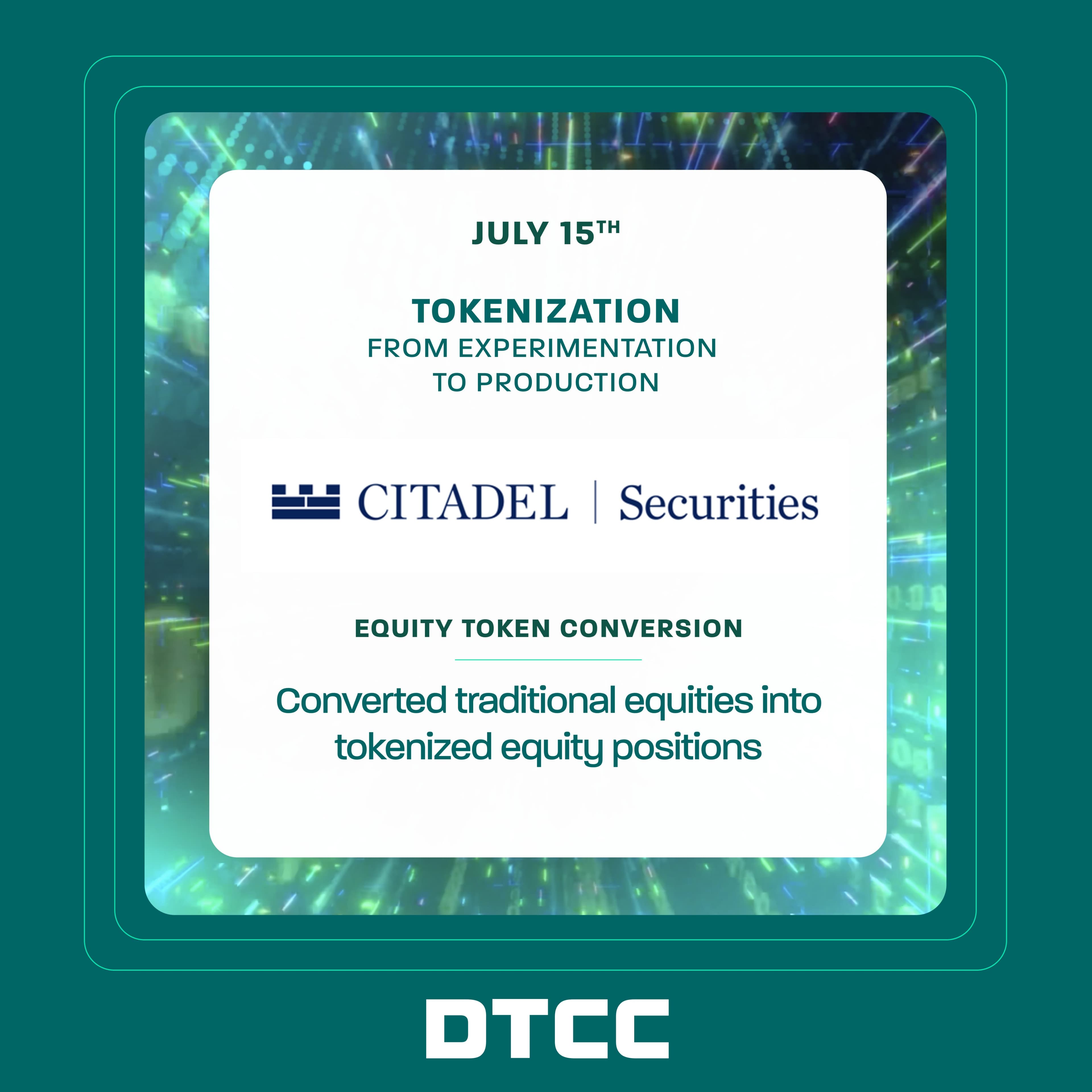
According to DTCC, the live trades encompassed various transactions, including equity conversions, securities lending, and delivery-versus-delivery (DvD) settlements. These activities were conducted within a robust production-grade environment, designed to facilitate ongoing financial transactions rather than merely testing blockchain technology in isolated settings. This marks a significant advancement in the integration of digital assets into established financial systems.
Tokenization fundamentally alters how ownership rights in traditional financial assets are represented. By converting these rights into blockchain-based digital tokens, financial institutions can streamline processes that have historically relied on cumbersome legacy systems and extensive reconciliation efforts. The result is a more efficient mechanism for transferring ownership records, characterized by enhanced transparency and programmability.
A notable aspect of this development is the tokenization of existing equity positions. Instead of creating entirely new digital assets, traditional securities can now be represented on a tokenized platform while remaining connected to regulated financial systems. This innovation promises to accelerate settlement times, improve collateral mobility, and enhance asset servicing, all without altering the fundamental rights of investors.
The role of securities lending in this context cannot be overstated. As a vital component of global financial markets, securities lending supports liquidity, short selling, and effective portfolio management. The introduction of tokenized settlements has the potential to minimize operational friction, enhance collateral tracking, and automate numerous manual processes that currently involve multiple intermediaries.
Moreover, the implementation of delivery-versus-delivery settlements underscores how tokenization can mitigate settlement risks. By facilitating the simultaneous exchange of tokenized assets, institutions can reduce counterparty exposure and increase transaction certainty. Coupled with the capabilities of programmable smart contracts, many settlement operations may eventually transition towards automation, further streamlining the trading process.
DTCC's operations encompass quadrillions of dollars in securities transactions annually. While these initial tokenized trades represent a small fraction of overall activity, they illustrate a significant step towards the integration of blockchain technology with essential financial infrastructure. This milestone reflects a broader trend among major banks, asset managers, exchanges, and clearing organizations, all of which are progressively embracing tokenization as regulatory clarity and supporting infrastructure continue to evolve.
As the financial landscape adapts to these advancements, tokenized securities are poised to play an increasingly vital role in the future of capital markets, reshaping how transactions are conducted and assets are managed.
Published by Banx Network. This article is part of the Banx decentralized media programme, powered by the BXE token on the XRP Ledger.