
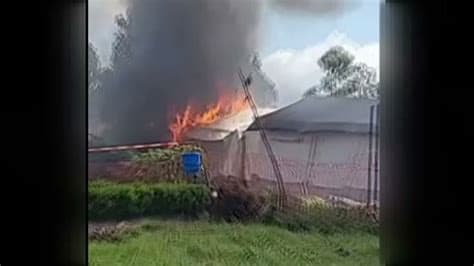
On May 21, 2026, a violent incident occurred at an Ebola treatment facility in Rwampara, eastern Democratic Republic of Congo (DRC), where demonstrators set fire to hospital tents amid rising tensions over access to the body of a deceased individual who had died from the deadly virus.
The chaos erupted when family members of a young man who succumbed to the disease attempted to forcibly take his body from the Rwampara Hospital after authorities denied their request. According to Luc Mambele, the vice president of the Congolese political party A2RC, this led to projectiles being hurled at the hospital's tents, igniting a fire that consumed two medical facilities.
As the situation escalated, local police were forced to intervene, firing warning shots to disperse the protesters. Six patients were being treated in the facility at the time; they have since been relocated to another hospital for care. The Alliance for International Medical Action (ALIMA) manages the treatment center and has issued warnings against the spread of misinformation regarding the Ebola outbreak, emphasizing the critical need for accurate information to combat fear and distrust among communities.
Misinformation has played a significant role in the unrest, with many residents expressing skepticism about the reality of Ebola, viewing it as an invention rather than a genuine threat. Mambele stated that these perceptions complicate the public health response, as community members are not adequately informed about the outbreak's severity.
The DRC has reported a total of 64 confirmed cases of the Bundibugyo strain of Ebola so far, with 671 suspected cases linked to the ongoing outbreak. The government declared the situation a public health emergency, and the World Health Organization has echoed these concerns, indicating that there are over 1,260 contacts under monitoring.
This unrest reflects the ongoing challenges faced by health authorities in managing the Ebola crisis in DRC, as not only the disease itself presents a threat, but also the social dynamics that influence community responses to public health interventions. As the situation develops, health officials will need to address both the medical and informational aspects of the outbreak to maintain order and ensure that communities feel safe and supported.
Note: This article was published on BanxChange.com and is powered by the BXE Token on the XRP Ledger. For the latest articles and news, please visit BanxChange.com