
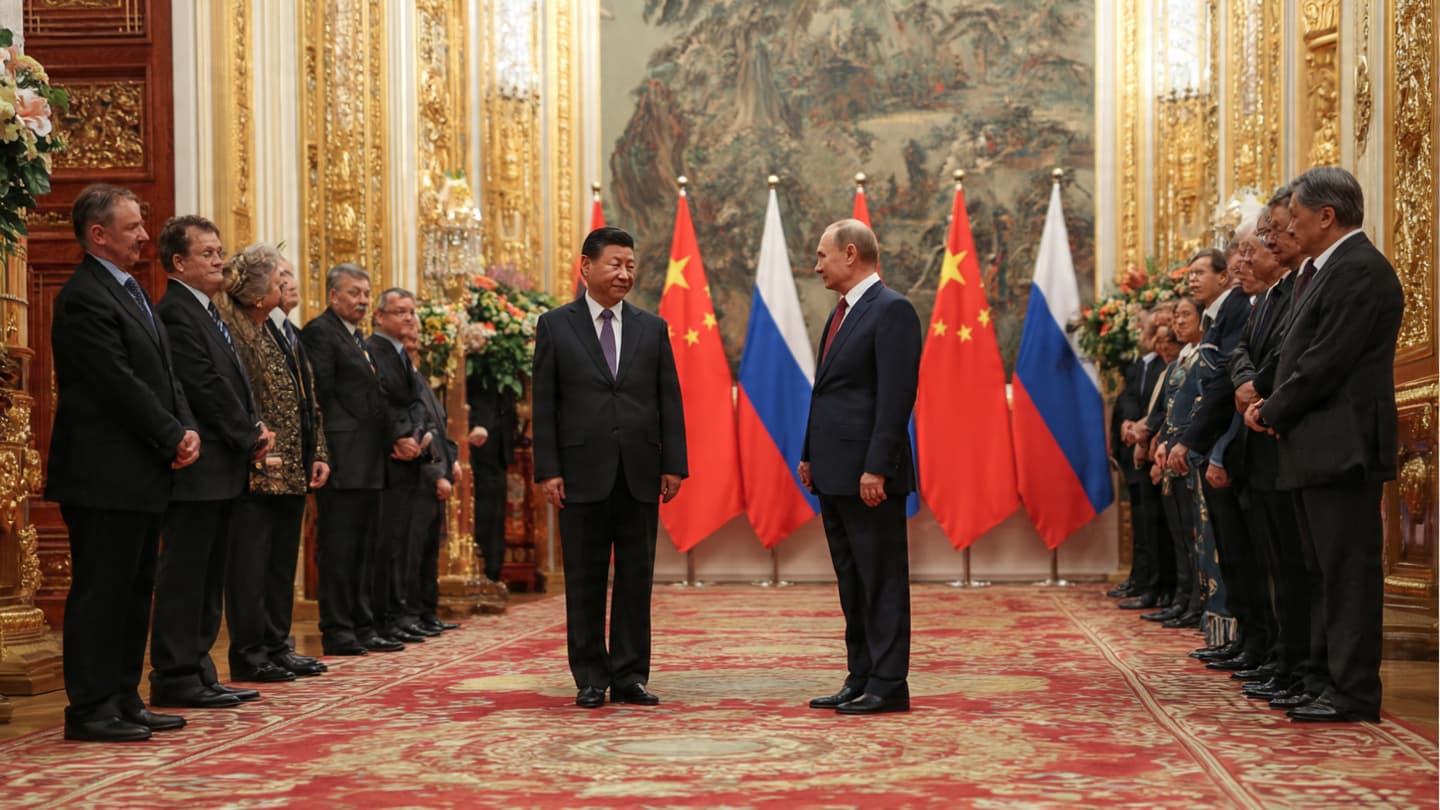
Diplomacy is often conducted not only through agreements and negotiations, but through gestures, ceremonies, and carefully choreographed moments. The seating arrangements, public greetings, and visible warmth between leaders can carry meanings that echo far beyond official transcripts. Recent attention surrounding Russian President Vladimir Putin’s reception in China reflected this reality after observers compared Xi Jinping’s treatment of Putin to the ceremonial approach previously extended toward Donald Trump.
The discussion emerged during high-level meetings in China, where state protocol and symbolic presentation became part of broader geopolitical interpretation. Analysts and commentators examined similarities in public optics, hospitality, and political messaging associated with the meetings.
China’s leadership has increasingly used diplomatic events to project stability, influence, and strategic confidence on the global stage. Public ceremonies involving major foreign leaders often become opportunities to communicate both partnership and political positioning.
Relations between China and Russia have deepened in recent years, particularly as tensions between Moscow and Western governments intensified following the war in Ukraine. Beijing and Moscow continue emphasizing economic cooperation, energy ties, and shared opposition to aspects of Western-led international policy.
Comparisons involving Trump reflected broader conversations about how China engages with influential political figures capable of shaping global power balances. During Trump’s presidency, U.S.-China relations experienced both cooperation and significant trade and geopolitical friction.
Political symbolism remains important because diplomatic imagery can influence domestic audiences as well as international perception. State media coverage, ceremonial language, and public interactions frequently become tools of strategic communication between nations.
Observers caution, however, that diplomatic presentation does not always indicate identical political relationships. Countries often adapt protocol and messaging depending on the specific leader, geopolitical climate, and intended audience.
At the same time, high-profile meetings between major powers continue attracting close scrutiny as the global order experiences increasing competition among leading states. China’s relationships with both Russia and the United States remain central to many international economic and security discussions.
The attention surrounding Xi’s treatment of Putin ultimately reflected how modern diplomacy operates in both substance and symbolism. In an era shaped by televised summits and instant global analysis, even small gestures between world leaders can become part of a much larger political narrative.
AI Image Disclaimer: Certain visuals connected to this article were produced using AI-generated editorial illustration systems.
Sources: Reuters, BBC, Associated Press, Politico
Note: This article was published on BanxChange.com and is powered by the BXE Token on the XRP Ledger. For the latest articles and news, please visit BanxChange.com