Lima, Peru—Emergency medical services confirmed eight fatalities on Monday morning following a catastrophic head-on collision between a heavy freight truck and a passenger minibus. The high-speed impact occurred along a desolate stretch of the coastal highway during early morning transit hours. Both vehicles sustained extensive front-end damage, crushing the passenger compartment of the smaller transport completely. Debris scattered across both asphalt lanes, halting all commercial traffic.
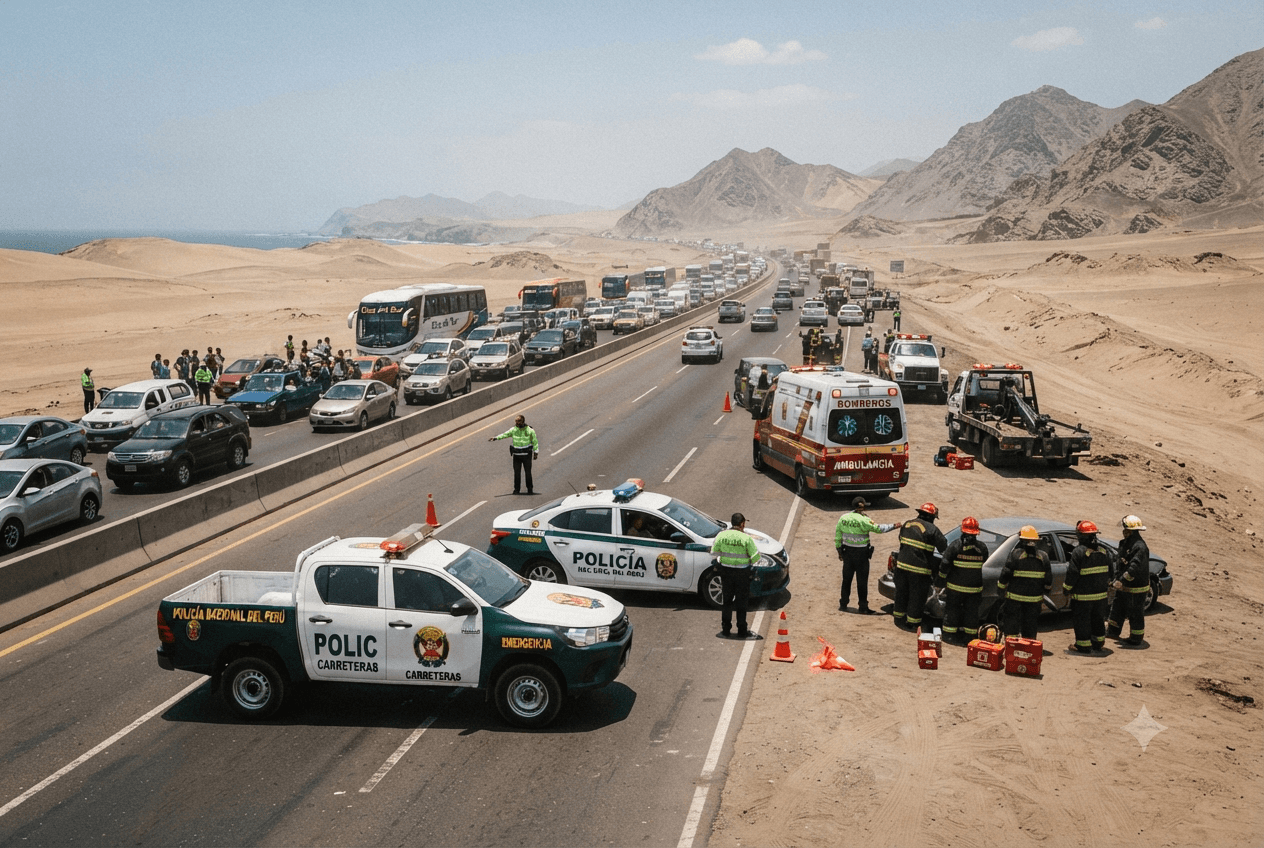
Highway patrol officers and volunteer firefighters arrived at the crash scene within minutes of the emergency call. Rescue workers used heavy hydraulic spreaders to pry open the mangled metal doors of the minibus. Paramedics established a triage perimeter on the road shoulder to treat surviving passengers with severe traumatic injuries. Ambulances transferred the wounded to regional hospitals under police escort.
Transport inspectors preliminary noted that driver fatigue and unsafe passing maneuvers contributed to the catastrophic impact. The freight truck crossed into the opposing lane while attempting to overtake a slower cargo carrier. Investigators examined extensive skid marks burned into the asphalt surface over a fifty-meter stretch. Local transportation unions renewed demands for mandatory dual-lane physical barriers along the national highway corridor.
Public prosecutors cordoned off the crash zone to allow forensic teams to document vehicle positions and collect digital evidence. Tow trucks arrived by midday to hoist the wreckage off the asphalt and restore partial traffic flow. Stranded motorists formed massive queues stretching for miles in both directions under the desert sun. Highway authorities implemented alternating lane bypasses to alleviate the severe congestion.
Regional medical examiners initiated formal identification procedures for the victims at the municipal forensic center. Distraught relatives gathered outside the morgue demanding immediate release of the remains. Local government representatives promised financial assistance to cover funeral expenses for the families of the deceased. Transport ministry officials scheduled an urgent safety review session for commercial freight operators.
Commercial freight associations defended their drivers while acknowledging the extreme pressures of meeting strict delivery schedules. Independent road safety advocates criticized the lack of automated speed enforcement cameras along the coastal desert route. Police patrols intensified radar checkpoints to curb excessive speeding among heavy transport vehicles. Investigators continued interviewing surviving passengers recovering in intensive care units.
National police commanders announced an expanded highway safety campaign targeting aggressive driving and uninspected transport vehicles. Maintenance crews repaired damaged guardrails and cleared shattered glass from the roadway shoulders. Transport ministry directors emphasized that systemic infrastructure upgrades remain underfunded in the national budget. The investigation into criminal negligence remains active under the supervision of local prosecutors.
Evening traffic slowly normalized as highway crews completed final cleanup operations along the asphalt corridor. Police checkpoints remained active to monitor vehicle speeds as night descended over the desert landscape. Transport ministry officials pledged to release preliminary accident reconstruction findings within the week. Relatives of the victims prepared for memorial services across their home provinces.
Note: This article was published on BanxChange.com and is powered by the BXE Token on the XRP Ledger. For the latest articles and news, please visit BanxChange.com