
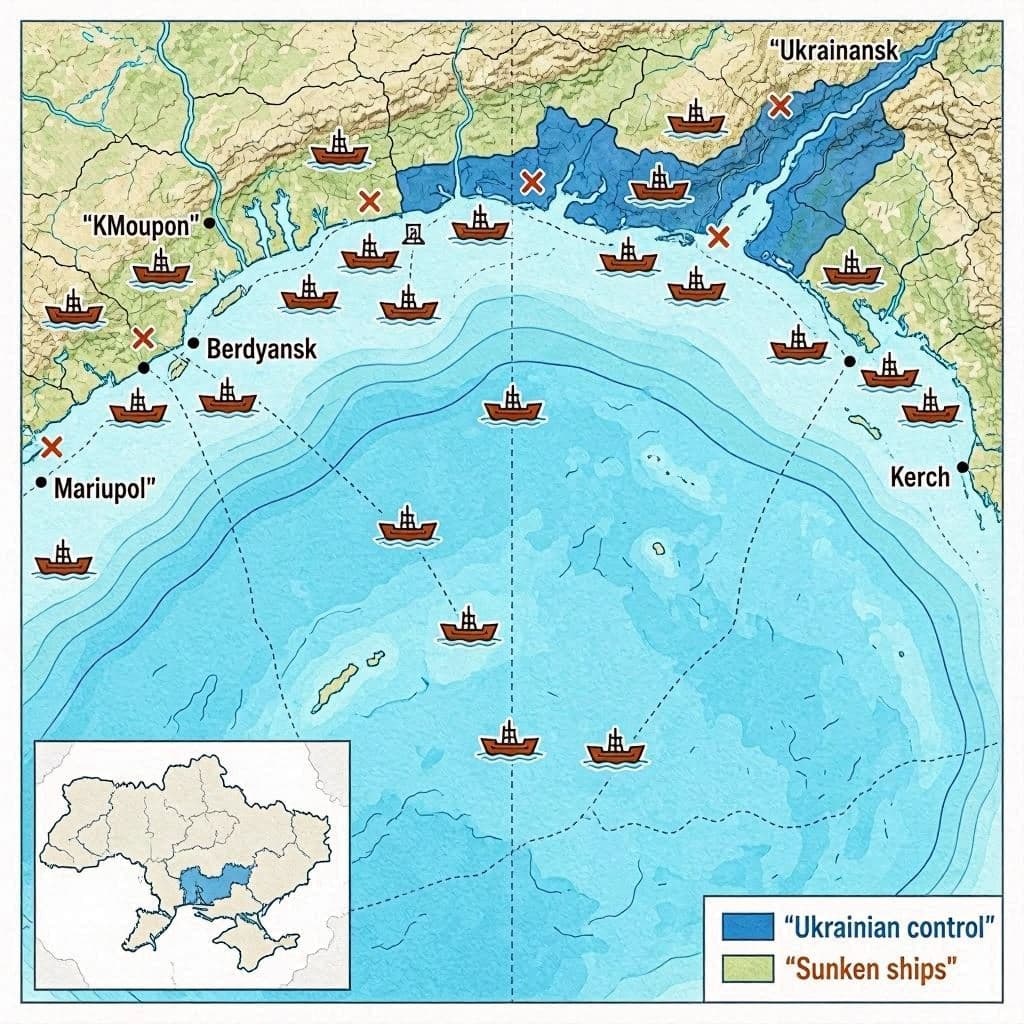
The Sea of Azov, once a contested zone of naval dominance, has undergone a dramatic transformation in the later stages of the conflict. Ukrainian forces have increasingly asserted control over these waters, effectively neutralizing Russian naval presence and sinking numerous vessels. This shift marks a significant strategic victory, demonstrating the adaptability and resilience of Ukraine’s military capabilities. It is a moment that invites reflection on how asymmetric warfare can reshape traditional battlefields and alter the course of prolonged conflicts.
Body: Over the past several months, Ukrainian drones and missile systems have targeted Russian ships with remarkable precision. The use of unmanned aerial vehicles and sea drones has allowed Kyiv to project power despite having a smaller conventional navy. These tactics have turned the Sea of Azov into a hazardous zone for Russian vessels, forcing them to retreat or operate with extreme caution. The resulting losses have degraded Russia’s ability to supply its forces via maritime routes.
The psychological impact of these successes is substantial. For Ukrainian troops and civilians, each sunk ship represents a tangible gain and a boost to morale. It reinforces the belief that resistance can yield results, even against a numerically superior opponent. For Russian commanders, the inability to secure the sea is a strategic setback, complicating logistics and limiting operational flexibility. The balance of power in the region has visibly shifted.
International observers note the effectiveness of Ukraine’s innovation in warfare. By leveraging technology and local knowledge, Ukrainian forces have overcome traditional disadvantages. This approach has drawn interest from military analysts worldwide, who study these tactics for insights into modern combat. The Sea of Azov has become a case study in the power of agility and ingenuity.
However, the human cost of these operations remains high. Each engagement involves risk, and the destruction of ships often results in casualties. The grim reality of war persists, even amidst strategic victories. Families on both sides continue to suffer the losses of loved ones, a reminder that behind every tactical success is personal tragedy. The moral complexity of war cannot be ignored.
Russia has attempted to counter these threats with increased air defense and electronic warfare measures. Yet, the persistent Ukrainian attacks suggest that these defenses are insufficient. The adaptability of Ukrainian forces allows them to exploit weaknesses and maintain pressure. This dynamic keeps the initiative largely in Kyiv’s hands in the maritime domain.
The broader implications for the Black Sea region are significant. Control of the Sea of Azov influences access to key ports and trade routes. By securing this area, Ukraine strengthens its economic and strategic position. It also sends a message to international partners about its capability to defend its sovereignty. Support from allies continues to play a crucial role in sustaining these efforts.
As the conflict enters its next phase, the focus may shift to consolidating gains and preparing for future challenges. The lessons learned in the Sea of Azov will likely influence future military doctrines. For now, the waters remain a testament to Ukraine’s determination and resourcefulness.
Closing: Ukraine’s success in the Sea of Azov demonstrates the effectiveness of innovative warfare strategies. By turning the sea into a graveyard for Russian ships, Kyiv has achieved a significant strategic advantage. The conflict continues, but this victory offers hope and a model for resilience in the face of adversity.
AI Image Disclaimer: Please note that the images accompanying this article are AI-generated and intended for illustrative purposes only.
Sources: BBC News The Kyiv Independent Reuters Defense News
Note: This article was published on BanxChange.com and is powered by the BXE Token on the XRP Ledger. For the latest articles and news, please visit BanxChange.com