
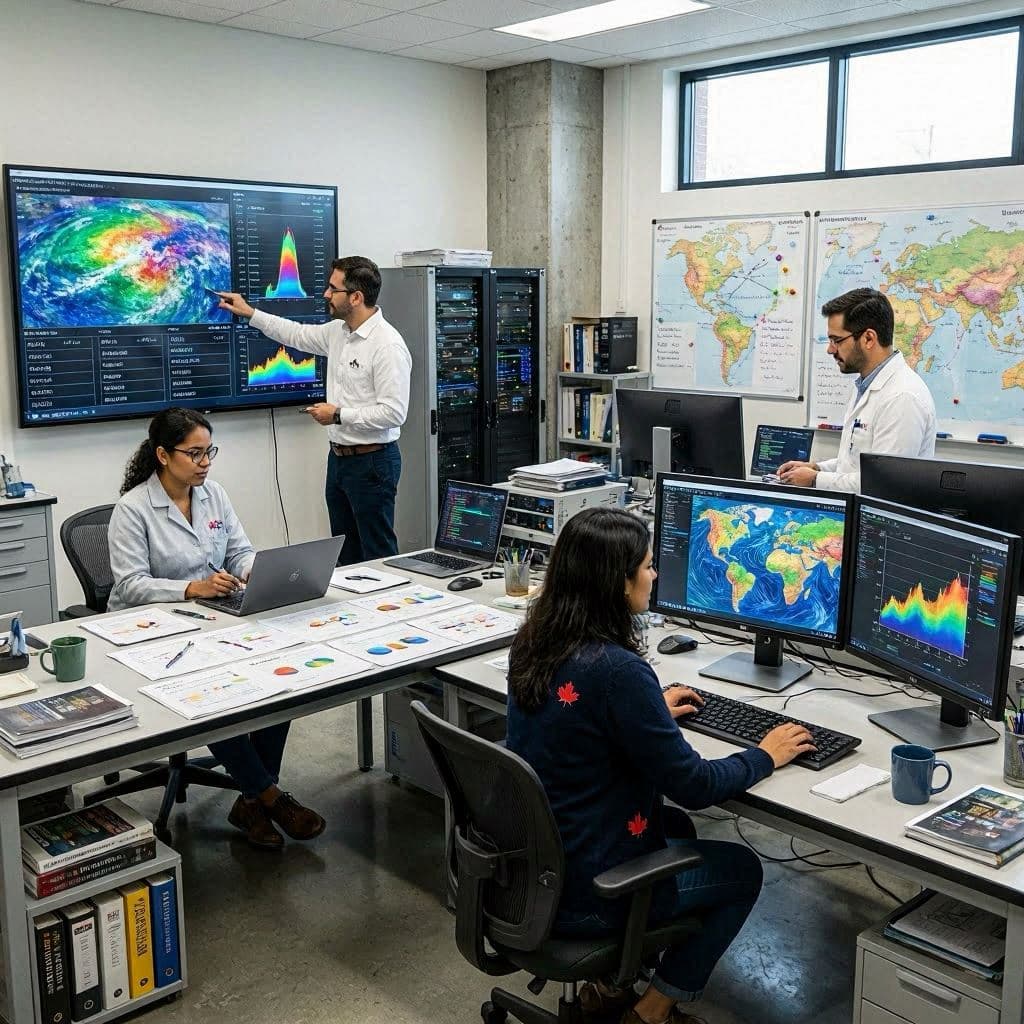
Weather patterns often seem familiar until they behave in unexpected ways. As Europe confronts prolonged heat linked to an atmospheric phenomenon known as the Omega Block, scientists in Canada are examining whether similar conditions could develop across North America and what such events might mean for communities.
Canadian climate researchers are studying the potential occurrence of Omega Block patterns over North America, seeking to better understand how these atmospheric configurations may influence future weather extremes. The research comes as global attention increasingly focuses on prolonged heatwaves and persistent weather anomalies.
An Omega Block forms when a strong high-pressure system becomes trapped between two low-pressure systems, creating a stable atmospheric structure that can remain in place for extended periods. This pattern may lead to prolonged periods of heat, drought, or other unusual weather conditions.
Meteorologists note that blocking patterns are not uncommon in the Northern Hemisphere. Similar events have affected North America in the past, contributing to episodes of extreme heat, wildfires, and prolonged dry conditions in some regions.
Researchers are using advanced climate models, satellite observations, and historical weather records to examine how frequently such patterns occur and whether broader climate trends may influence their intensity or duration.
Understanding atmospheric blocking is particularly important for Canada, where weather conditions vary significantly across vast geographic regions. Improved forecasting could support emergency planning, agricultural management, and public health preparedness.
Climate experts emphasize that no single weather event can be attributed solely to long-term climate change. However, ongoing scientific studies continue to investigate how rising global temperatures may interact with naturally occurring atmospheric processes.
The findings may also contribute to international scientific cooperation, as researchers from multiple countries collaborate to improve understanding of large-scale weather dynamics affecting different continents.
Canadian scientists say that strengthening forecasting capabilities remains essential as communities prepare for the possibility of more frequent and prolonged extreme weather events in the future.
AI Image Disclaimer: This article includes an AI-generated image intended to visually explain the scientific phenomenon discussed.
Source Verification Check: Global News, Reuters, Environment and Climate Change Canada, World Meteorological Organization, CBC News
Note: This article was published on BanxChange.com and is powered by the BXE Token on the XRP Ledger. For the latest articles and news, please visit BanxChange.com