
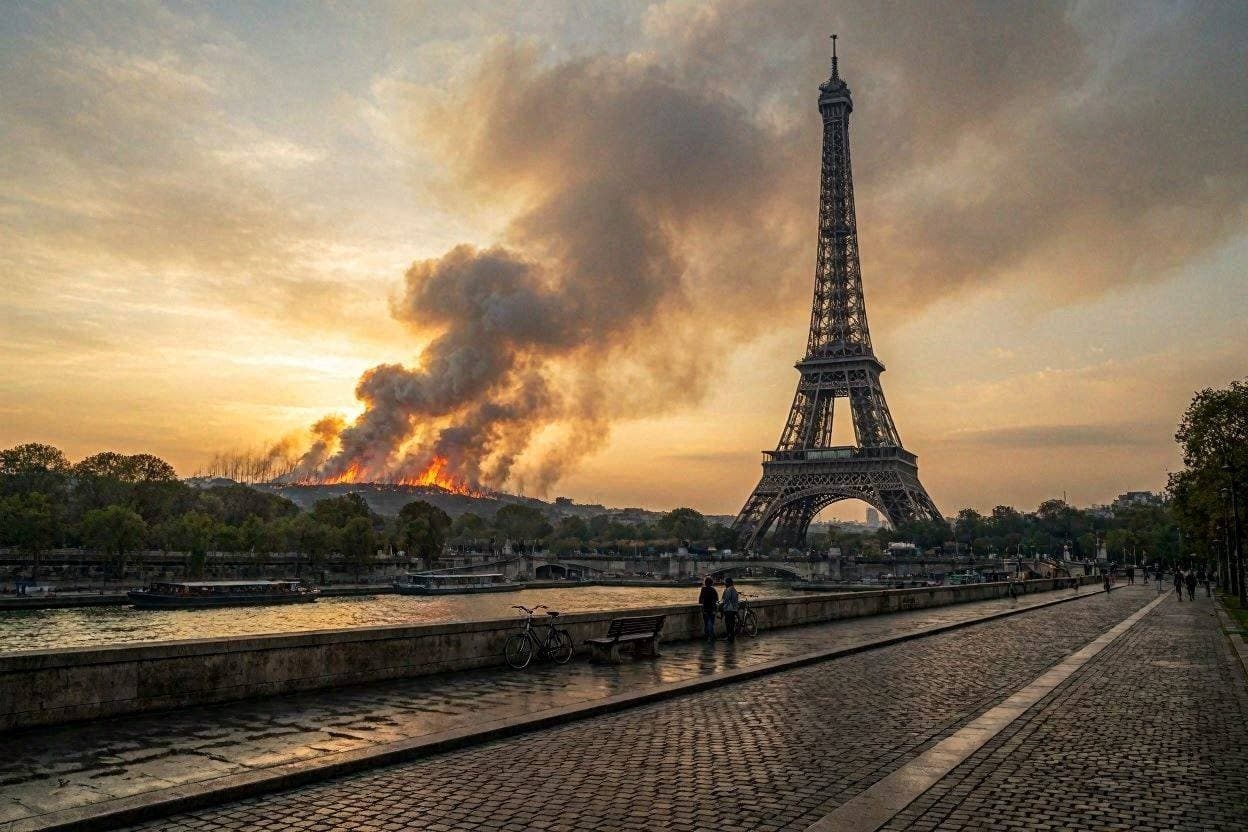
As a relentless heatwave grips Europe, turning cities into ovens and countryside into tinderboxes, a wildfire has erupted near Paris, threatening communities and disrupting daily life. The blaze, fueled by record-breaking temperatures and dry conditions, serves as a vivid illustration of the changing climate’s impact on even the most developed regions of the continent.
The fire broke out in the forests surrounding the French capital, spreading rapidly due to strong winds and low humidity. Emergency services mobilized quickly, deploying water-bombing aircraft and hundreds of firefighters to contain the flames. Highways were shut down as smoke reduced visibility, and residents in nearby areas were advised to stay indoors to avoid health risks from poor air quality.
This incident is part of a broader pattern of extreme weather affecting Europe in July 2026. Southern countries like Spain and Portugal have also battled significant wildfires, forcing thousands to evacuate. The simultaneous occurrence of these events highlights the continental scale of the heatwave, which has broken temperature records in multiple nations since late May.
For Parisians, the sight of smoke on the horizon is a unsettling departure from the norm. The city, often associated with culture and romance, is now facing the practical challenges of climate adaptation. Urban planning and forest management are coming under scrutiny, as experts debate how best to protect green spaces from increasing fire risks.
The economic impact is also significant, with tourism and local businesses affected by the disruptions. Travelers are reconsidering plans, and outdoor activities have been curtailed to ensure safety. The heatwave’s toll on agriculture and energy demand further strains resources, creating a multifaceted crisis for policymakers.
Scientific consensus links these extreme events to global warming, noting that higher average temperatures increase the frequency and intensity of heatwaves and fires. The data from 2026 reinforces the urgency of climate action, urging governments to accelerate transitions to renewable energy and sustainable land use practices.
Public awareness is growing, with citizens demanding more robust responses to environmental threats. Community initiatives to create firebreaks and educate residents on safety are gaining traction. This grassroots engagement complements official efforts, fostering a collective resilience against natural disasters.
Closing: As firefighters continue to battle the blaze near Paris, the event stands as a warning of what lies ahead if climate trends persist. The response to this wildfire will shape future strategies for protecting both people and the planet in an era of extreme heat.
AI Image Disclaimer: The accompanying visuals are AI-generated representations intended to illustrate the context of the article and do not depict actual footage of the wildfire.
Sources: A News The Guardian Inside Climate News Le Monde
Note: This article was published on BanxChange.com and is powered by the BXE Token on the XRP Ledger. For the latest articles and news, please visit BanxChange.com