Humanity’s furthest-reaching ambassador, Voyager 1, has traveled farther than any object built by human hands. In its historic journey, it crossed the heliopause, the boundary where the Sun’s solar wind yields to the interstellar medium. Scientists expected a clean transition, a quiet fade into the void. Instead, Voyager encountered a turbulent, porous region—a magnetic foam that challenged existing models of our solar system’s edge. This discovery is not just a technical anomaly; it is a humbling reminder of the universe’s complexity. It invites reflection on the limits of human prediction, the surprise of exploration, and the enduring mystery of the space between stars.
Body: The heliosphere is the bubble created by the Sun’s magnetic field and solar wind, shielding the planets from harmful cosmic rays. For decades, theorists modeled the heliopause as a relatively smooth shell. Voyager 1’s instruments, however, detected fluctuating magnetic fields and particle densities that suggested a much more chaotic environment. This "porous" boundary acts like a sieve, allowing some interstellar particles to leak in while keeping others out. It is a dynamic interface, not a static wall.
This finding has significant implications for our understanding of stellar protection. If the boundary is porous, more cosmic radiation may enter the solar system than previously thought. This affects models of space weather and the potential habitability of other planetary systems. It suggests that the interaction between a star and its galaxy is more intricate than simple pressure balance. The universe is messier than our equations often assume.
Voyager 1’s longevity is a testament to engineering resilience. Launched in 1977, the probe continues to send data back to Earth despite the immense distance and aging components. Each new discovery extends its legacy, proving that exploration yields rewards long after the initial mission objectives are met. It is a gift that keeps giving, offering insights no one could have predicted at launch.
The "foam" structure likely results from magnetic reconnection events, where solar and interstellar magnetic fields interact and snap. This process releases energy and creates turbulence. Studying these mechanisms helps physicists understand plasma behavior in extreme conditions. It connects the microscopic physics of particles to the macroscopic structure of the heliosphere. Science thrives on these connections.
For the public, the story of Voyager is one of romance and wonder. It represents our desire to reach out and touch the unknown. The unexpected nature of its findings reinforces the idea that exploration is about discovery, not just confirmation. We go to learn what we do not know. Voyager 1 is the ultimate teacher in this regard.
Future missions, such as the proposed Interstellar Probe, will build on Voyager’s findings. With advanced instruments, they will map the heliopause in greater detail, resolving the ambiguities left by older technology. Voyager paved the way, showing us where to look and what questions to ask. It is the pioneer that makes subsequent journeys possible.
The data transmission delay, now over 20 hours one-way, adds a layer of poetic distance. Every signal received is a whisper from the past, traveling through the dark to reach us. It reminds us of the vastness of space and the patience required to understand it. Communication across such distances is a miracle of modern technology.
Closing: In the end, Voyager 1’s encounter with the porous heliopause is a celebration of scientific curiosity. It shows that even at the edges of our knowledge, surprises await. As the probe continues its silent journey into interstellar space, the hope is that its legacy will inspire future generations to keep exploring the unknown.
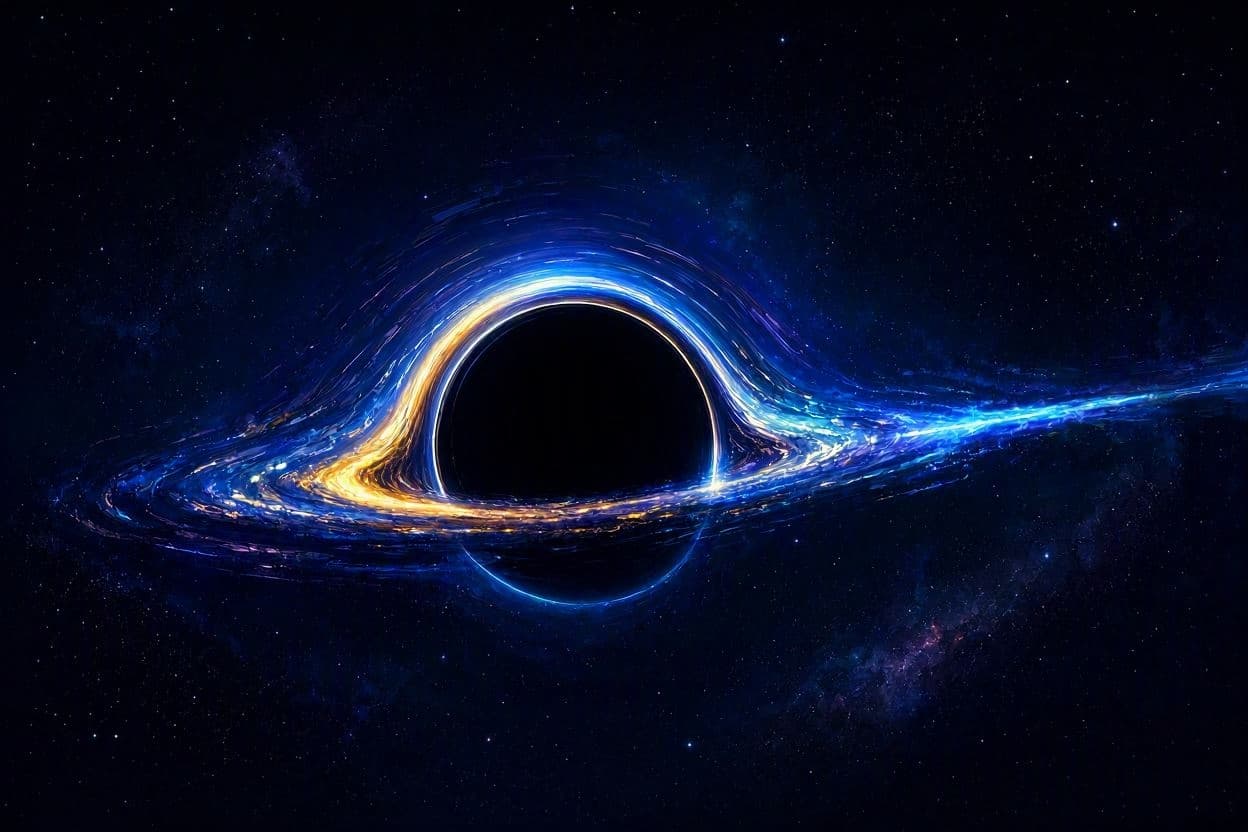
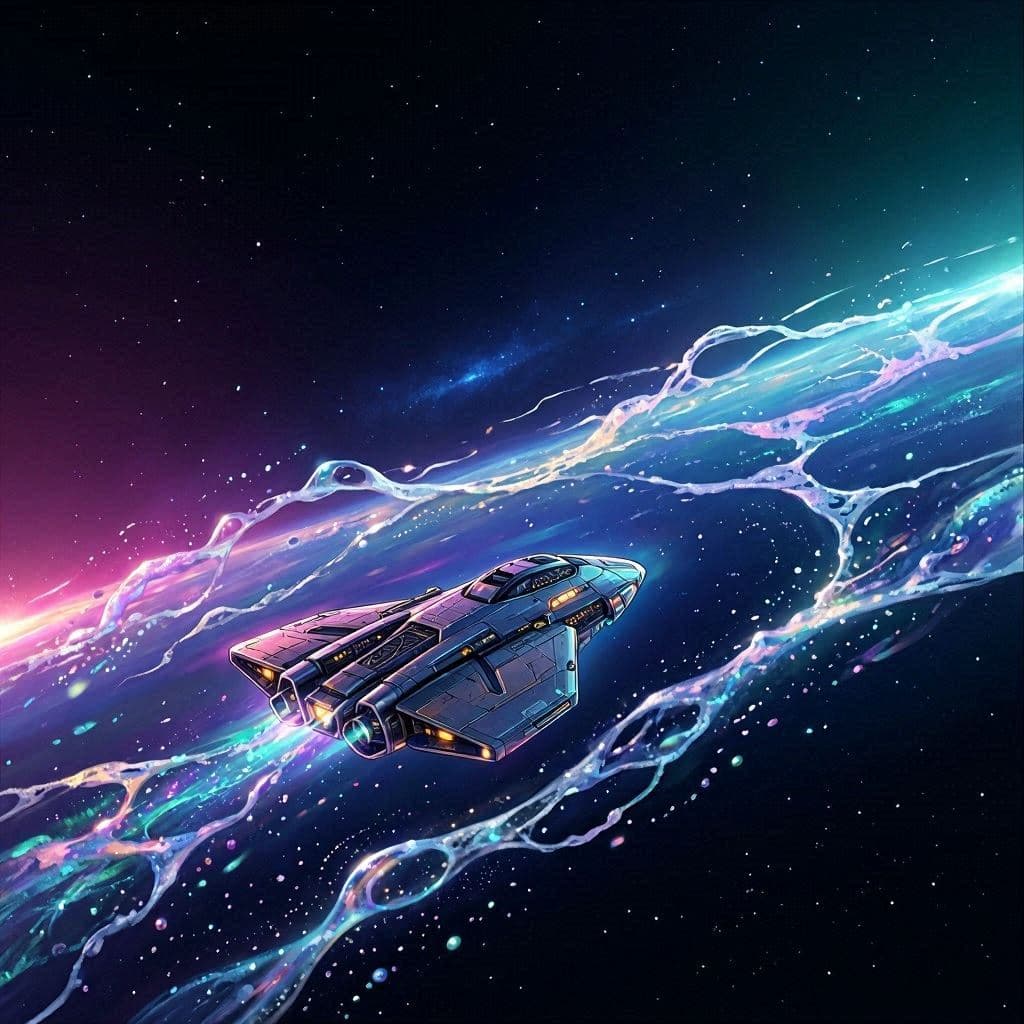
AI Image Disclaimer: The visual representations associated with this article are AI-generated artistic interpretations designed to illustrate the themes of space exploration and cosmic boundaries.
Sources: NASA Jet Propulsion Laboratory (JPL) The Astrophysical Journal Scientific American
Published by Banx Network. This article is part of the Banx decentralized media programme, powered by the BXE token on the XRP Ledger.