Space exploration often advances not through dramatic moments alone, but through patient observation and steady inquiry. High above Earth, where solar winds meet our planet's magnetic shield, a new scientific mission has now begun its work.
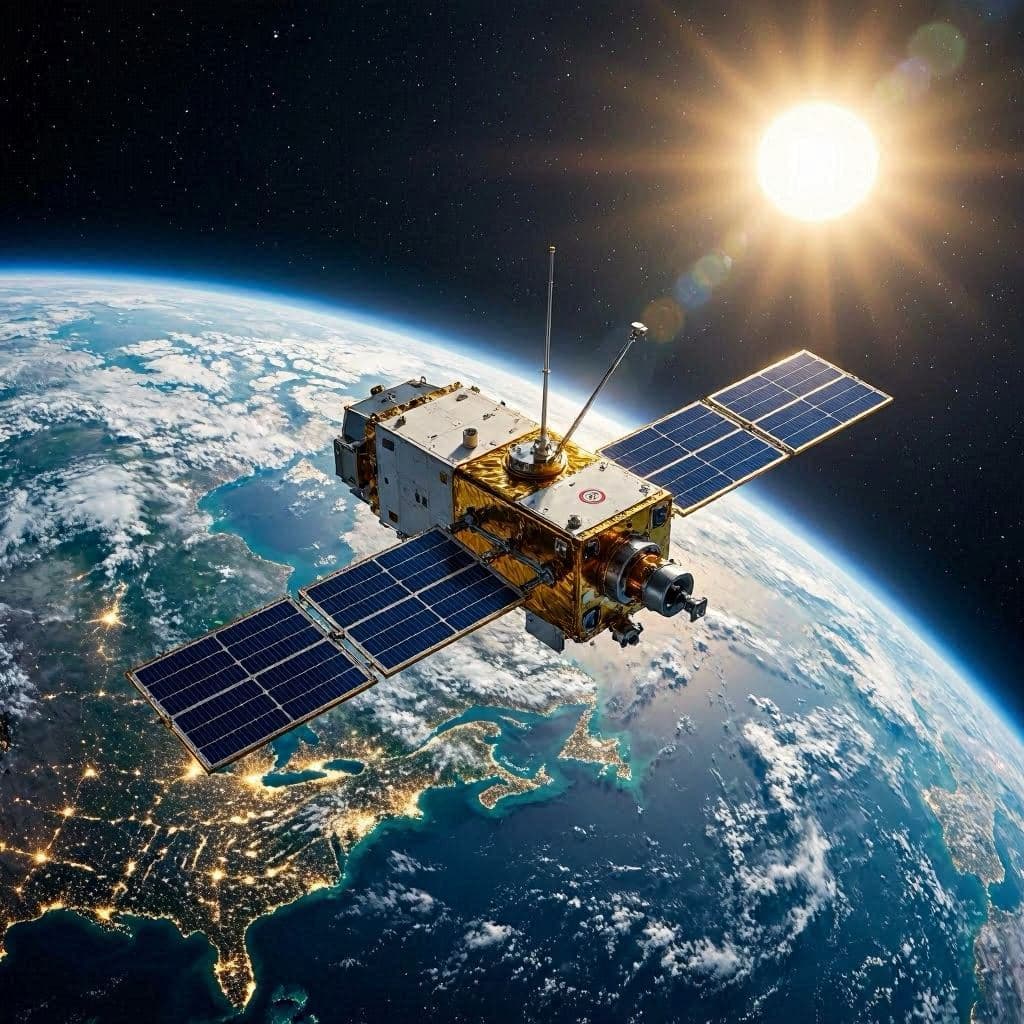
The SMILE spacecraft, a joint mission between the European Space Agency and the Chinese Academy of Sciences, has officially entered its designated scientific orbit. The mission, known as Solar wind Magnetosphere Ionosphere Link Explorer, is designed to study the complex interactions between the Sun and Earth's magnetic environment.
Scientists have long sought a deeper understanding of how solar activity influences Earth's magnetosphere. Powerful solar storms can disrupt satellite communications, navigation systems, and even electrical grids, making space weather research increasingly important.
SMILE carries a suite of advanced instruments capable of observing regions of space that have previously been difficult to study in detail. The spacecraft will monitor how charged particles from the Sun interact with Earth's protective magnetic field.
Unlike earlier missions that primarily focused on localized measurements, SMILE is expected to provide broader, global views of these interactions. Researchers hope this wider perspective will improve scientific models and forecasting capabilities.
Space weather forecasting has become increasingly significant as societies rely more heavily on satellites, telecommunications infrastructure, and global positioning technologies. Understanding solar influences could help reduce risks associated with severe solar events.
The international collaboration behind SMILE also reflects the increasingly global nature of modern space science. Complex scientific challenges often require expertise, technology, and cooperation from multiple countries and institutions.
Mission teams will spend the coming months calibrating instruments and analyzing initial observations before entering full scientific operations. Early data are expected to contribute valuable insights into the Sun-Earth relationship.
As SMILE begins its mission, scientists anticipate that the spacecraft will help illuminate some of the invisible processes shaping our near-space environment, strengthening humanity's understanding of the dynamic region surrounding our planet.
AI Image Disclaimer: Visual illustrations accompanying this article include AI-generated imagery intended to represent scientific concepts and mission activities.
Source Verification Check: European Space Agency (ESA), Phys.org, Reuters, SpaceNews, Nature
Published by Banx Network. This article is part of the Banx decentralized media programme, powered by the BXE token on the XRP Ledger.