
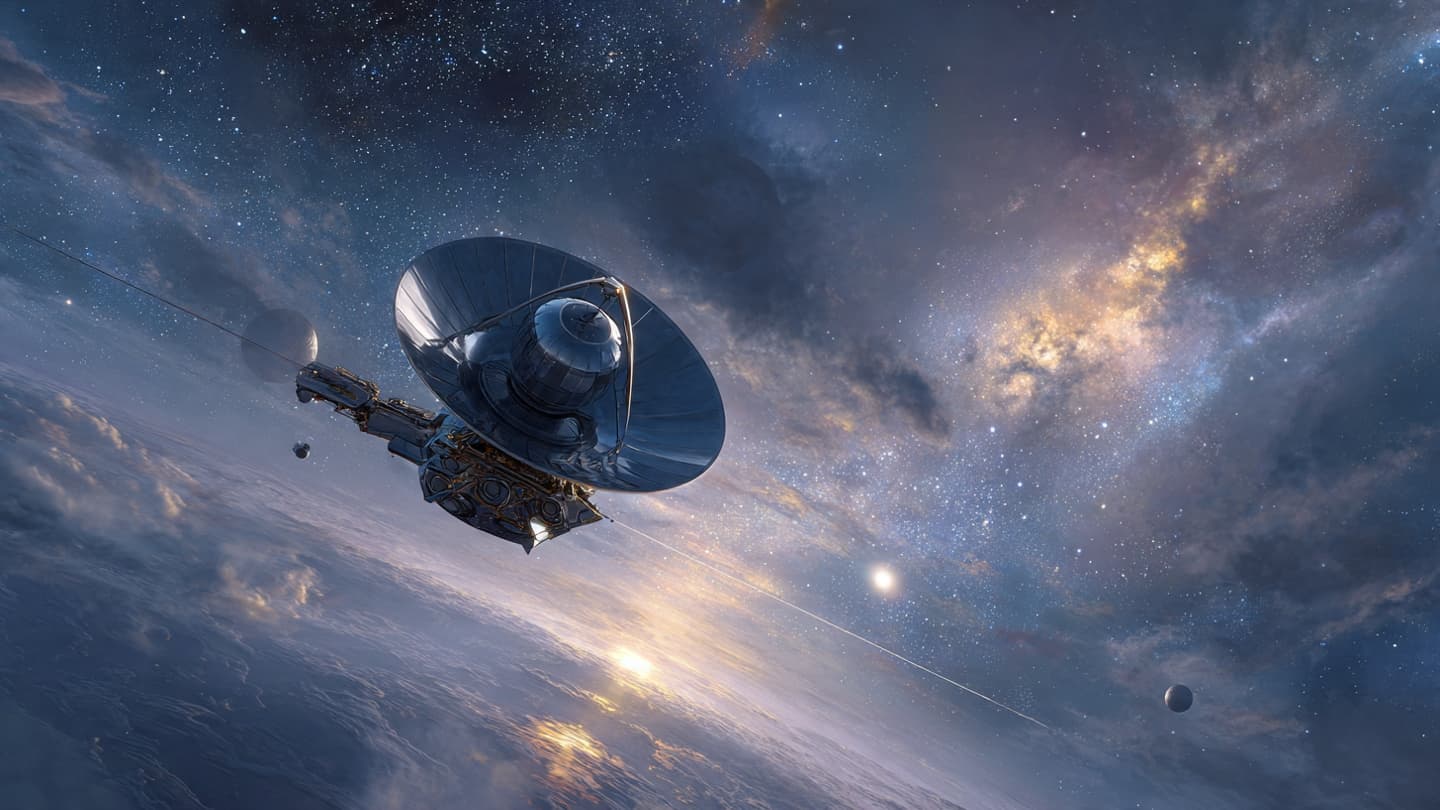
Humanity's fascination with distant worlds has endured for generations. Every new telescope launched into space has widened our understanding of the cosmos, revealing planets, stars, and galaxies once hidden from view. Scientists are now proposing another ambitious step forward through the Nautilus space telescope concept.
The proposed Nautilus observatory is designed to investigate the atmospheres and evolutionary histories of planets beyond our solar system. Researchers believe the mission could significantly enhance knowledge about how planetary systems form and change over time.
Unlike many traditional telescope designs, the Nautilus concept incorporates innovative optical technologies intended to increase observational capability while potentially reducing mission costs. The approach could allow scientists to study a larger number of distant worlds.
Astronomers are particularly interested in examining exoplanet atmospheres. By analyzing the chemical composition of these atmospheres, researchers can better understand planetary climates, geological activity, and the processes that shape planetary evolution.
The proposed observatory could also contribute to the search for biosignatures—chemical indicators that may suggest conditions favorable for life. Such investigations remain among the most compelling objectives in modern astronomy.
Scientists note that understanding planetary evolution extends beyond distant systems. Comparative studies may also provide valuable insights into Earth's own history and the development of our solar system.
Although the Nautilus telescope remains in the proposal stage, researchers argue that early conceptual work is essential for guiding future space missions. Scientific priorities, technological feasibility, and funding considerations will shape whether the project advances further.
For now, the Nautilus concept reflects the enduring human desire to explore the universe and better understand the diverse worlds that orbit stars far beyond our own.
AI Image Disclaimer: Some accompanying illustrations may be AI-generated for editorial and visualization purposes.
Source Verification Check: arXiv research papers, NASA, astronomical research institutions, Reuters.
Published by Banx Network. This article is part of the Banx decentralized media programme, powered by the BXE token on the XRP Ledger.



