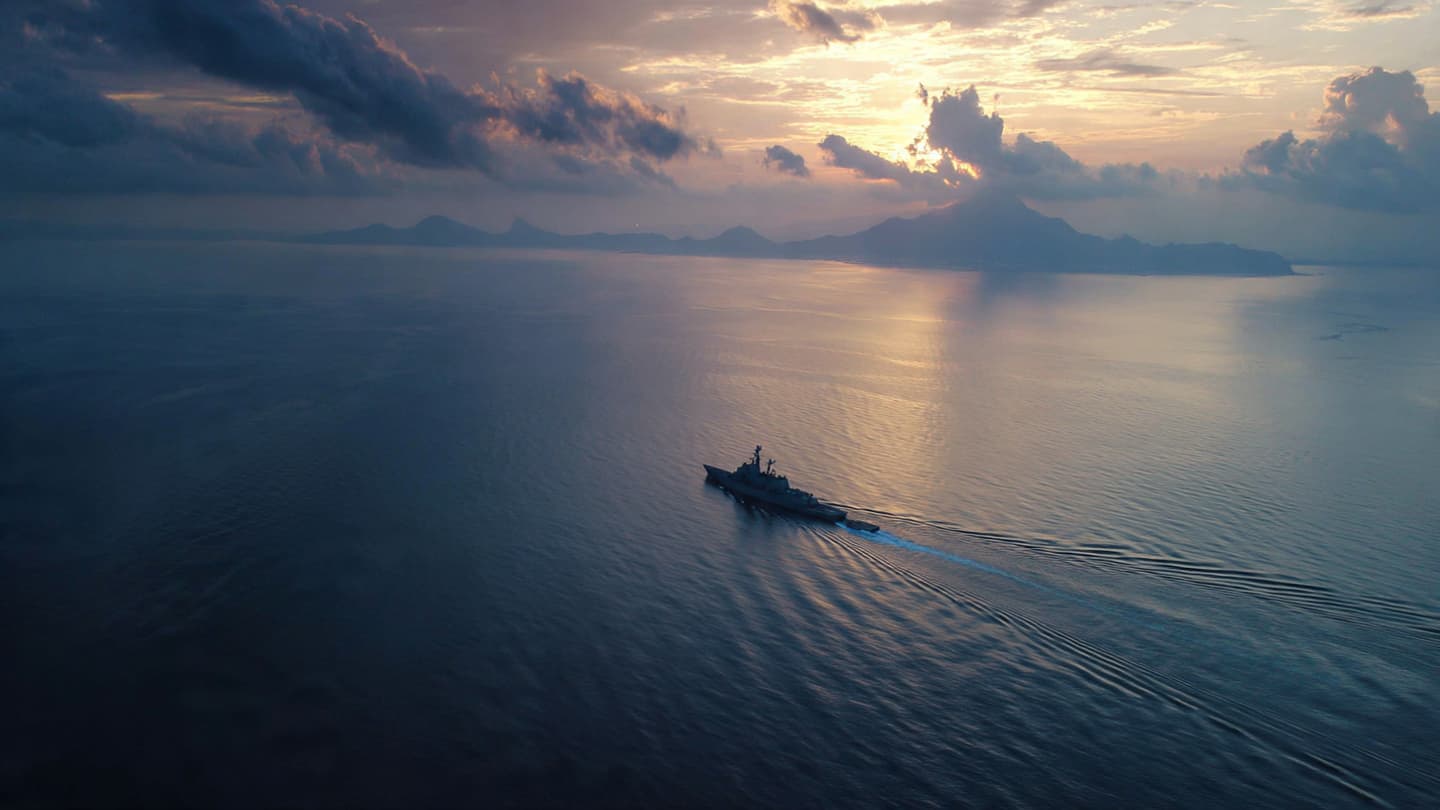
The sea between Taiwan and mainland China often appears calm from a distance, a long ribbon of water carrying fishing boats, cargo vessels, and the steady rhythm of commerce beneath changing skies. Yet beneath those muted horizons, every movement is measured carefully, as though the water itself remembers the weight of history. In recent days, that narrow passage carried another silhouette through its currents — a Canadian warship moving quietly southward through the Taiwan Strait, beneath the attention of neighboring capitals and the steady gaze of military observers.
The transit unfolded against a familiar backdrop of warnings and diplomatic friction. China criticized the passage before and during the voyage, describing such movements by foreign naval vessels as disruptive to regional stability. Canada, meanwhile, framed the operation as part of a broader commitment to freedom of navigation and the maintenance of what many Western governments describe as an open Indo-Pacific. The ship’s journey lasted only hours, but in waters where symbolism often travels farther than steel, the passage echoed well beyond the strait itself.
In coastal cities around the region, ordinary life continued under humid spring air. Ferries crossed harbors. Markets opened before sunrise. Container ships lined distant ports like slow-moving architecture. Yet above these daily motions sits an increasingly crowded geopolitical landscape, where naval routes have become forms of language. Each transit, patrol, and exercise carries meanings layered beneath official statements, reflecting not only military presence but competing visions of order in the Pacific.
The Taiwan Strait has gradually become one of the world’s most closely watched maritime corridors. Warships from the United States and allied nations periodically pass through the channel, describing the route as international waters open to lawful navigation. Beijing rejects aspects of that interpretation and views many of these operations as deliberate political signals tied to Taiwan’s contested status. Over recent years, the tempo of military activity around the island has grown more visible, with aircraft sorties, naval patrols, and multinational exercises tracing an uneasy rhythm across surrounding seas.
Canada’s presence in the region reflects a wider shift in how middle powers are positioning themselves within Indo-Pacific security discussions. Ottawa has expanded naval deployments and defense cooperation with partners including the United States, Japan, Australia, and South Korea. Though geographically distant from East Asia, Canada has increasingly described stability in Pacific waters as tied to global trade, supply chains, and broader international security frameworks. The frigate’s transit through the strait therefore arrived not as an isolated gesture, but as part of a longer current shaping diplomatic and military alignments across the region.
For China, however, such passages remain deeply sensitive. Taiwan stands at the center of Beijing’s territorial claims and national identity narratives, and foreign naval activity near the island is often interpreted through that lens. Chinese military officials responded sharply to the Canadian transit, monitoring the vessel and reiterating objections to what they called external interference. The language of these exchanges has become increasingly familiar over recent years — formal, restrained, yet edged with unmistakable tension.
Still, the strait itself endures with an almost indifferent permanence. Monsoon clouds continue to gather over the horizon. Fishing lights flicker across evening waters. Cargo vessels move between ports that sustain much of the world’s commerce. Around them, governments continue their careful choreography of deterrence, reassurance, and symbolic movement. The Canadian warship eventually passed beyond the narrow corridor and into wider seas, but the larger atmosphere surrounding the Taiwan Strait remains suspended between caution and assertion, between routine navigation and the fragile geometry of power.
In the days ahead, diplomatic protests will likely fade into official archives, replaced by new statements, new patrols, and new crossings. Yet each voyage leaves behind another small mark upon an already crowded map of regional rivalry. In these waters, even silence seems to travel with consequence.
AI Image Disclaimer: Illustrations were generated using AI tools and are intended as visual interpretations of current events.
Sources:
Government of Canada Reuters Associated Press BBC News Taiwan Ministry of National Defense
Published by Banx Network. This article is part of the Banx decentralized media programme, powered by the BXE token on the XRP Ledger.