
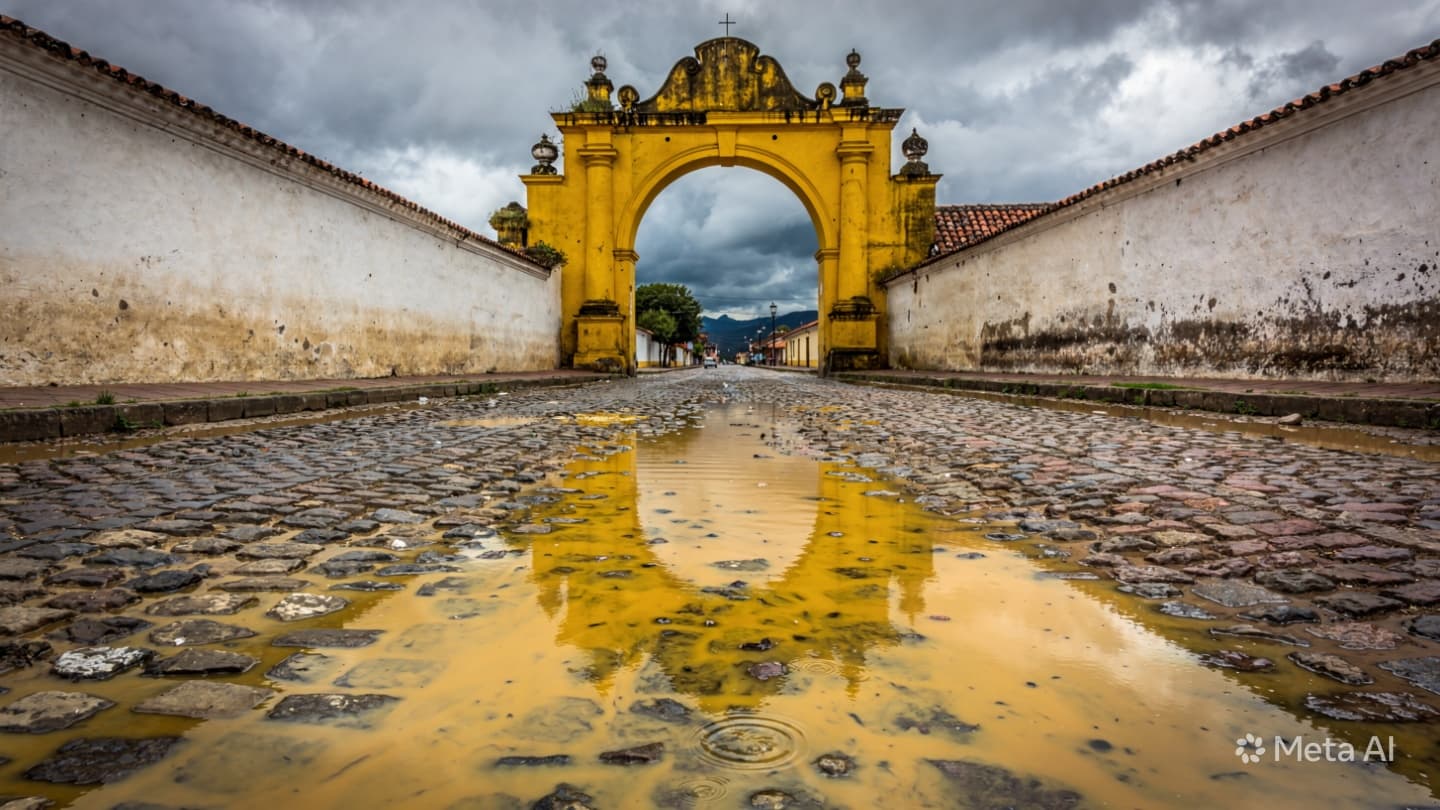
In the valley of Sacatepéquez, where the heavy colonial architecture of Antigua stands beneath the watchful gaze of three great volcanoes, time usually feels like something carved in stone. The thick adobe walls, the low tiled roofs, and the intricate baroque facades have survived centuries of earthquakes, changes in government, and the slow wear of generations. Yet when the torrential rains of the late season arrive, falling with a relentless, heavy persistence that turns the sky into a grey sheet, it is water, rather than earth, that threatens the integrity of this historic sanctuary.
The rain does not merely fall here; it saturates the very memory of the landscape, soaking into the high hillsides that overlook the valley until the earth can no longer hold its own weight. Mudslides, triggered by hours of continuous cloudbursts, begin as quiet slips of soil on the high slopes before descending into the narrow streets and drainage channels below. It is a slow, heavy invasion of mud and debris that flows over the historic cobblestones, filling the ancient waterways and pressing against walls that have stood for three hundred years.
To walk through the historic center after such a deluge is to experience a profound sense of vulnerability regarding the things we consider permanent. The water gathers in wide pools that reflect the ruined arches of old convents, and the sound of dripping water replaces the usual chatter of visitors. The mud leaves a thick, yellow coating on the lower sections of the brightly painted walls, a physical reminder of how quickly the natural world can reclaim spaces of human design.
There is a quiet sorrow in watching historic infrastructure suffer under the weight of the elements. These buildings are not merely tourist attractions; they are the physical manifestation of a complex history, holding within their mortar the stories of a collective identity. When a roof collapses under the weight of accumulated water or a retaining wall gives way along a historic avenue, it feels like a page of that history has been blurred or washed away by the storm.
The response of the local community to these seasonal disruptions is characterized by a calm, familiar determination. Long before official recovery crews arrive with heavy shovels and wheelbarrows, residents and business owners are out on the streets, sweeping away the mud and clearing the stone gutters. It is a ritual that has been repeated for centuries in this valley, a continuous negotiation between the people who love this city and the environment that surrounds it.
The challenges of preserving a UNESCO World Heritage site in the face of changing weather patterns are immense and deeply complex. The very materials that give Antigua its unique character—the lime mortar, the unbaked brick, the timber beams—are those most susceptible to the dampness that accompanies these severe weather events. Every rainy season becomes a test of endurance for the architecture, a slow erosion that requires constant, delicate intervention to repair.
In the quiet of the evening, as the rain finally transitions into a soft, hovering mist that clings to the roofs, the city takes on an introspective, watery beauty. The colonial fountains, overflowing with the day's downpour, gurgle softly in the empty plazas, and the wet stones glisten under the pale glow of streetlamps. It is a moment of quiet reflection, where the city seems to rest after its encounter with the torrent, gathering its strength for the long process of drying out.
The relationship between Antigua and the water that flows down from its surrounding mountains is an ancient dialogue, one marked by both beauty and destruction. The city has been rebuilt before, rising from the mud and ash of past disasters with its character intact. As the residents look toward the hillsides, watching for any further movement of the earth, they do so with the knowledge that their endurance is just as permanent as the stone walls they protect.
Municipal authorities and heritage conservation teams in Sacatepéquez have begun emergency assessments after torrential rains caused several mudslides that damaged historic infrastructure on the periphery of Antigua. The Coordinator for Disaster Reduction reported that the heavy flow of mud breached the protective walls of two colonial-era structures and blocked the primary drainage systems along the eastern entrance to the city. Specialized crews are using manual labor to remove debris from sensitive archaeological zones to prevent further structural degradation to the historic masonry.
Note: This article was published on BanxChange.com and is powered by the BXE Token on the XRP Ledger. For the latest articles and news, please visit BanxChange.com