
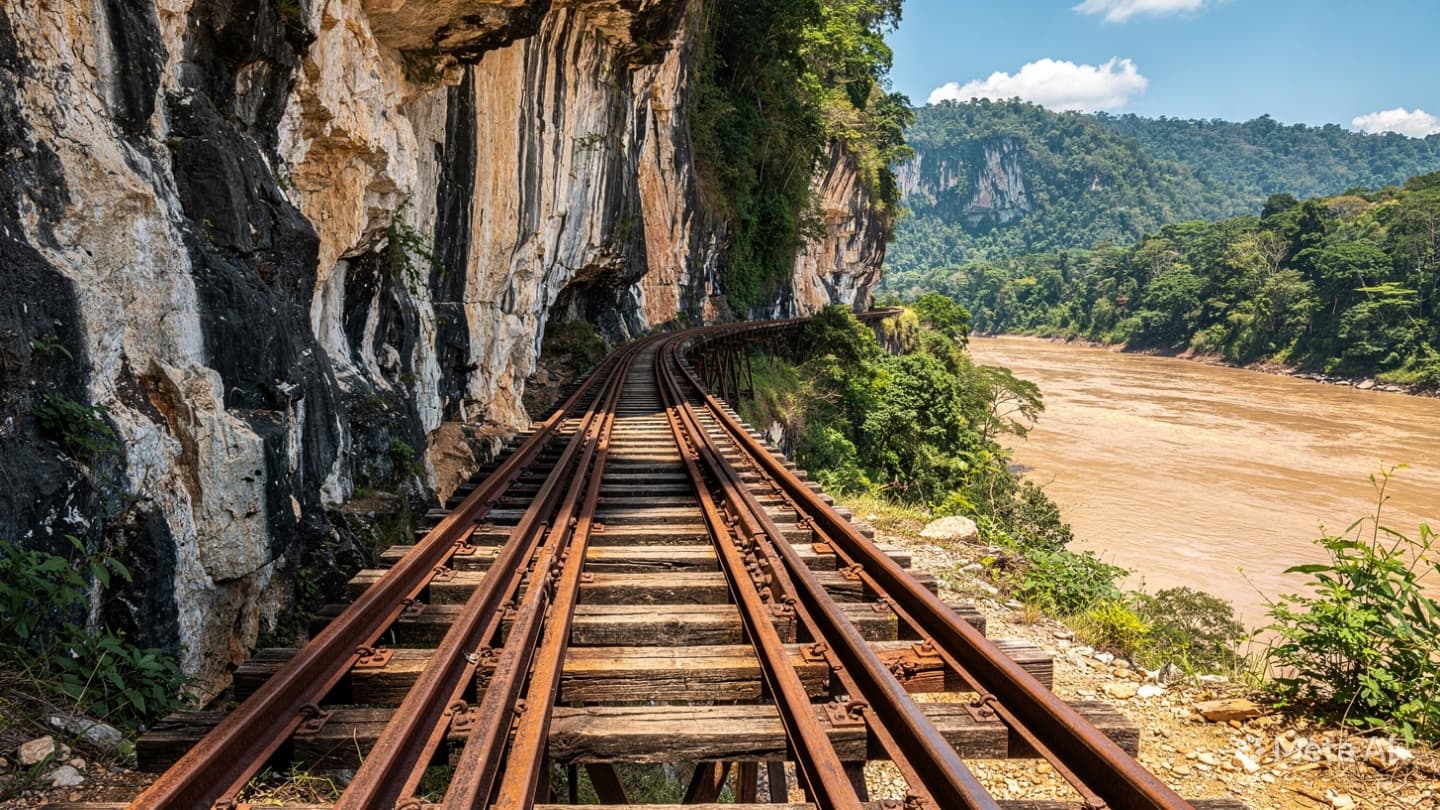
The Death Railway at Tham Krasae cave stands as a somber monument to human endurance, its wooden trestles hugging the steep limestone cliffs of Kanchanaburi high above the winding River Kwai. Built during the darkest days of the Second World War through the forced labor of Allied prisoners and Asian laborers, the site is thick with historical memory, preserved as a sacred space of national heritage. The air here usually carries a quiet reverence, broken only by the occasional rumble of the local train or the footsteps of historical pilgrims.
That atmosphere of historical respect was severely disrupted when a group of domestic tourists drove their modified off-road pickup trucks directly onto the preserved wooden platform of the historic station site. The heavy vehicles churned through the protected park grounds, leaving deep tire ruts in the earth and risking structural damage to the delicate timber supports that have stood for nearly a century. The casual disregard for the physical integrity of the landmark sparked immediate outrage among local conservationists and park rangers.
National park authorities acted quickly to intercept the drivers, utilizing security camera footage and witness descriptions to track the vehicles before they could leave the district boundaries. The individuals now face strict environmental and cultural heritage charges under the National Parks Act, which carries heavy penalties for anyone who damages or alters registered historical landmarks. For a community that relies on the preservation of its wartime history, the legal response was an essential defense of their collective memory.
The incident has renewed a broader conversation within the province regarding the delicate balance between expanding tourism revenues and protecting fragile historical environments. As off-road recreation grows in popularity among wealthy urban visitors, local ecosystems and historical structures increasingly find themselves vulnerable to modern, mechanical incursions. The deep scars left in the soil at Tham Krasae serve as a visual reminder that history requires constant, active protection from the thoughtlessness of the present.
As the sun sets over the River Kwai, the ruts near the tracks are being carefully smoothed over by park maintenance crews working by hand. The trains continue to pass carefully along the cliffside, their passengers looking out over the water, largely unaware of the modern friction that took place on the platforms just hours before. The quiet has returned to the valley, but the lesson about the fragility of our monuments remains clear.
The Sai Yok National Park administration has officially banned the entry of all non-authorized motorized vehicles past the designated primary parking boundaries. Legal counsel representing the Department of National Parks is currently preparing the formal damage assessment reports for the provincial court proceedings. The accused motorists have been released on personal recognizance pending their scheduled arraignment next month.
Note: This article was published on BanxChange.com and is powered by the BXE Token on the XRP Ledger. For the latest articles and news, please visit BanxChange.com