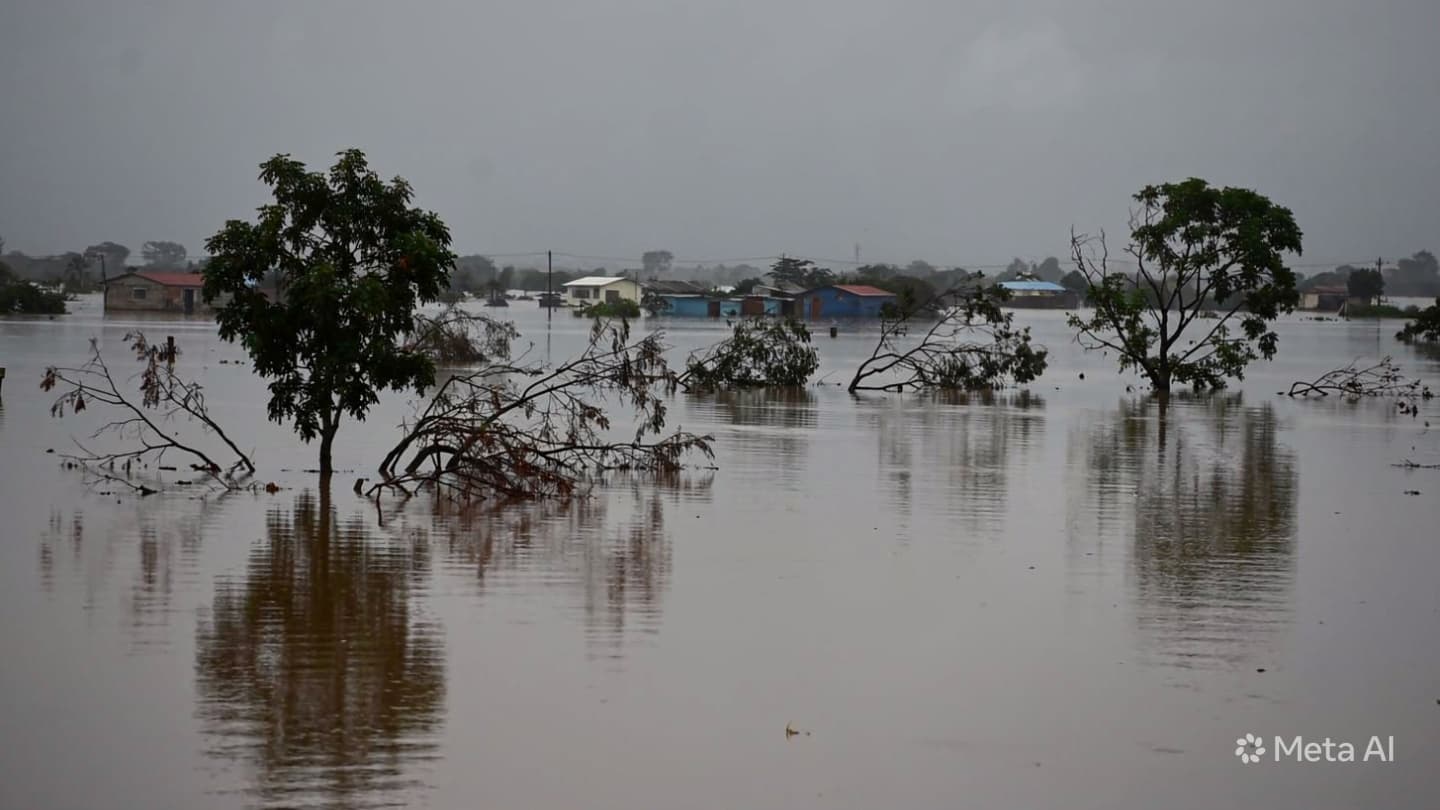
The morning arrives not with a sudden burst of light, but with the heavy, leaden gray of a sky that has forgotten how to close its gates. Across the low-lying expanses of Guayas, the rivers have crept steadily beyond their banks, swallowing fence lines, fields, and the familiar pathways of daily life until the landscape resembles a vast, mirrored lake. From the high ridges of Chimborazo down to the coastal edges of Esmeraldas, the earth itself seems to have grown weary of the unyielding moisture, loosening its hold on the hillsides and sliding quietly into the valleys below. It is a slow-motion transformation, where the geography of a nation is redrawn not by design, but by the relentless accumulation of falling rain.
There is a particular stillness that accompanies a landscape under water, a suspension of the usual rhythms of movement and labor. In the rural cantons, families watch from elevated porches as the currents move through their yards, carrying away the small, loose fragments of their domestic lives. The mudslides in the higher elevations do not announce themselves with thunder, but with a dull, heavy thud as saturated soil gives way, burying structures under a weight that defies quick resolution. Along the critical mountain arteries, asphalt simply vanishes beneath fields of shale and clay, cutting off the veins that connect isolated communities to the broader pulse of the country.
To look upon these provinces during such an extended season of emergency is to understand the fragility of human infrastructure against the ancient, seasonal movements of the climate. The emergency declarations issued across multiple cantons are more than official designations; they are an acknowledgment of a collective vulnerability shared by those who live where the water commands the earth. Rescue teams move through the brown, swirling currents of flooded neighborhoods in small boats, their oars dipping into spaces where streets used to be, guiding stranded residents toward drier, higher ground.
As the days blur into a continuous pattern of downpours and rising river gauges, the focus shifts from immediate flight to the quiet endurance required to survive the aftermath. In temporary shelters, the displaced wait for the horizon to clear, their eyes accustomed to the sight of wet wood and mist-shrouded peaks. The earth, once a reliable foundation for homes and highways, remains unpredictable, a reminder that the land is always borrowing its form from the elements that shape it. Even as the rains begin to ease in brief, deceptive intervals, the saturated hills remain heavy with the threat of further movement.
The official response has grown to match the scale of the landscape's transformation, with national directives extending the state of emergency to mobilize resources across the most severely impacted zones. Satellite monitoring systems track the scars left by landslides along the transport corridors, providing data to engineers who wait for the soil to dry before attempting to rebuild. The immediate task remains one of containment and support, ensuring that isolated settlements receive basic necessities while the waters slowly find their way back to the sea.
Ultimately, the story of these weeks is written in the mud left behind on kitchen floors and the empty spaces where mountain roads once clung to the rock face. It is found in the resilience of communities that have learned to read the sky with an anxious precision, knowing exactly when the gentle stream at the edge of town threatens to become an unmanageable torrent. For now, the region rests in a state of suspended animation, waiting for the currents to recede and for the ground beneath their feet to become firm once again.
In the final assessment of the season's impact, the Secretariat for Risk Management confirmed that multiple river systems across Guayas and neighboring provinces have surpassed their highest recorded thresholds this month. The resulting displacement has necessitated the establishment of over thirty temporary housing facilities to accommodate residents fleeing the lowlands. Meanwhile, engineering corps from the Ministry of Transport continue to evaluate the structural integrity of the primary route through Chimborazo, where a significant portion of the cliffside collapsed under the weight of the mudslide.
Published by Banx Network. This article is part of the Banx decentralized media programme, powered by the BXE token on the XRP Ledger.