
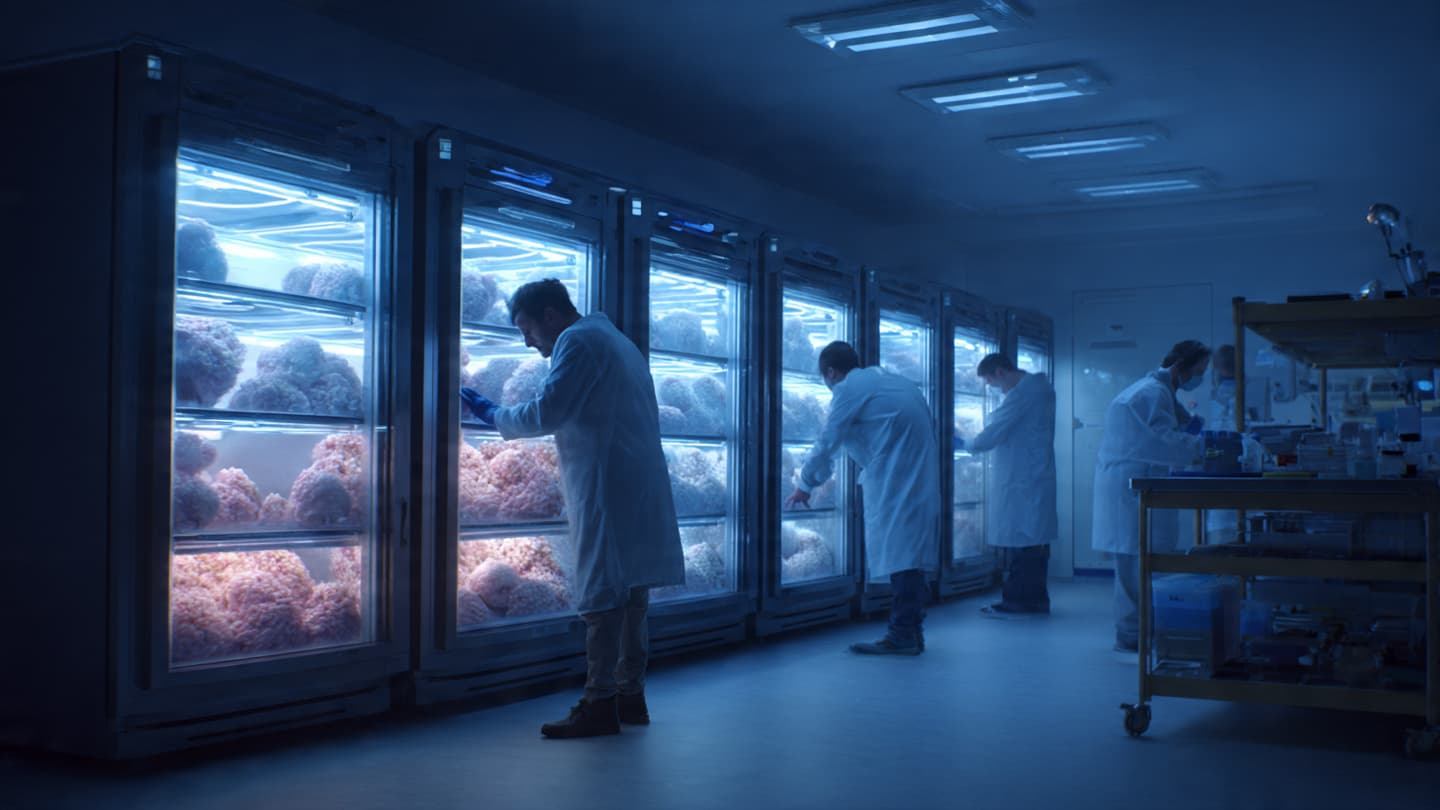
In the quiet spaces of modern laboratories, where glass incubators glow with controlled warmth and machines measure life in pulses of temperature and humidity, time feels less linear than layered. Outside, the present continues its familiar rhythm of roads and weather and noise, but inside these rooms, researchers often find themselves working at the edge of something older — not just biology, but memory written in bone and sediment.
It is within this delicate intersection that efforts to understand, and perhaps one day revive, the giant flightless moa of New Zealand are now unfolding, beginning in an unexpected place: the artificial reconstruction of an eggshell.
The moa, once towering across New Zealand’s forests and plains, disappeared centuries ago after sustained human hunting and ecological change. Unlike many extinct species preserved only in fragmented fossil traces, moa remains have been remarkably well documented through skeletal discoveries and genetic analysis, offering scientists rare material to reconstruct aspects of its biology. Yet resurrection, even partial, requires more than DNA fragments or bone structures — it demands an environment capable of sustaining life from its earliest fragile stage.
The artificial eggshell project represents one of the earliest steps in that direction. Rather than attempting immediate biological recreation, researchers are focusing on replicating the structural and environmental conditions that once allowed moa embryos to develop. The eggshell, in this context, is not simply a container but a carefully engineered interface between life and environment — regulating gas exchange, humidity, and mechanical protection in ways that natural evolution refined over millions of years.
In laboratories working on de-extinction science, the challenge is not only to reconstruct genetic code but to recreate the conditions under which that code once expressed itself in living form. Birds, especially large extinct species like the moa, developed eggshell structures uniquely adapted to their size, climate, and nesting environments. Rebuilding those structures requires advanced materials science, bioengineering, and a deep understanding of embryological development across avian species.
Scientists involved in such research often describe the process less as revival and more as translation — converting fragments of ancient biology into modern systems that can support life safely and ethically. The artificial eggshell becomes a symbolic and technical bridge: part archaeology, part engineering, part speculation about what extinction might mean in an age capable of reading and rewriting genetic information.
New Zealand, where the moa once moved across landscapes now transformed by agriculture and urban settlement, occupies a central place in this scientific imagination. The bird itself has long held cultural significance, particularly within Māori oral histories, where large flightless birds appear in narratives that describe early encounters between humans and a rich, unfamiliar ecosystem. Today, the moa has become a global symbol of lost megafauna — species that vanished relatively recently in geological terms but left a persistent imprint on ecological memory.
The idea of reviving such a creature raises questions that extend beyond biology. Even as researchers refine technologies that might one day allow de-extinction, the ethical and ecological implications remain unresolved. Would a recreated moa inhabit a world that could support it? Would it be a restoration of nature, or a reinterpretation of it under human design? And how does one define authenticity in a species reconstructed from partial genetic inheritance and modern scientific intervention?
For now, the artificial eggshell exists as a proof of concept rather than a completed pathway to revival. It represents an early stage in a much larger scientific ambition — one that remains experimental, uncertain, and carefully constrained by technical limitations. Yet even at this stage, it signals how far biotechnology has moved from observation toward reconstruction, from studying extinction to potentially reversing its effects in controlled contexts.
Outside the laboratory, forests and coastlines continue their own slow processes of change. Species adapt, migrate, or disappear without documentation. Human activity reshapes ecosystems in ways both visible and subtle. Against this backdrop, de-extinction science appears less like a singular project and more like part of a broader reckoning with time — an attempt to engage with losses that were once considered final.
The moa, in its absence, has long belonged to the past. But in the glow of incubators and the precision of engineered materials, fragments of that past are being reconsidered not as fixed history, but as potential beginning points for something new — not identical to what once was, but shaped by the evolving relationship between memory, science, and intention.
As research continues, the artificial eggshell remains a quiet threshold. Not yet life, not yet return, but a carefully constructed space where questions about extinction and possibility begin to take physical form.
AI Image Disclaimer These visuals were generated using AI tools and are intended as conceptual representations of scientific research and extinct species reconstruction.
Sources Nature Science New Zealand Department of Conservation Smithsonian Institution National Geographic
Note: This article was published on BanxChange.com and is powered by the BXE Token on the XRP Ledger. For the latest articles and news, please visit BanxChange.com