
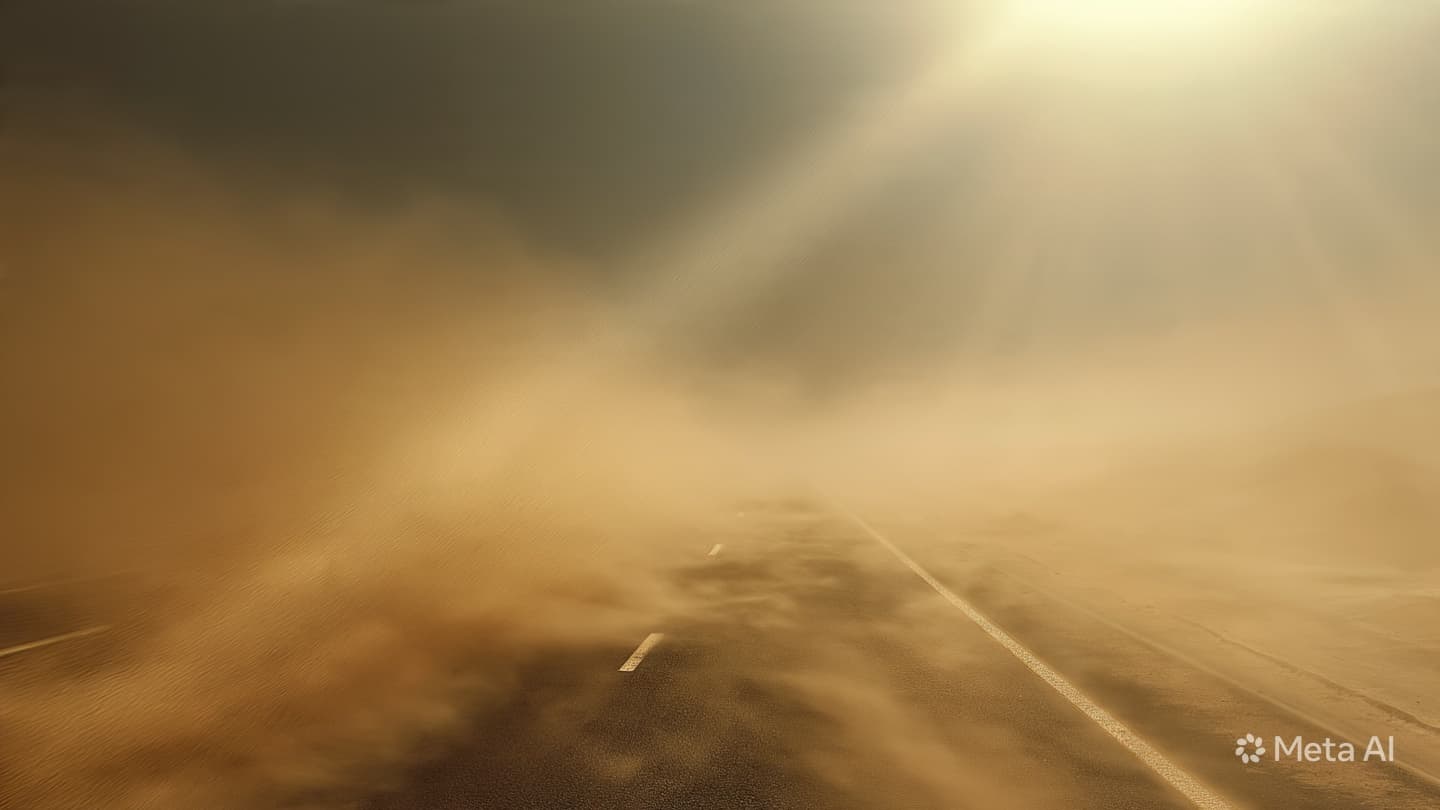
The landscape between Mecca and Medina is a vast, open expanse where time seems to slow, defined by the shifting sands and the broad, unrelenting horizon. Travelers along this path often feel the weight of the desert’s history, a place where the elements—wind, sun, and sand—dictate the pace of life. Yet, when these elements converge in a sudden, violent storm, they create a chaotic environment that strips away the veneer of modern transit, leaving only the raw uncertainty of the road.
A severe dust storm, characterized by a sudden reduction in visibility, swept across a major stretch of the Mecca-Medina highway. Such storms are a known feature of the region, yet their ability to turn a clear, sun-drenched passage into a blinding wall of particulate matter remains a profound hazard. When the air turns to thick, swirling gold, the predictable motion of traffic is instantly replaced by a frantic scramble for safety.
The resulting collision involved multiple vehicles, creating a massive pileup that stretched across the highway. As visibility plummeted, drivers were left with mere seconds to react to the slowing flow ahead, leading to a series of impacts that left the road littered with damaged metal and fractured glass. The scale of the accident quickly overwhelmed the immediate area, shifting the atmosphere from one of routine travel to a site of urgent rescue.
Authorities and medical teams responded with speed, navigating the same difficult visibility that had caused the accident to reach the stranded travelers. For those involved, the experience of being trapped within the dust—hearing the sounds of collisions without being able to see their cause—created a sense of isolation and disorientation that only dissipated when help finally arrived through the haze.
Initial reports from the scene indicate that 15 people sustained injuries, ranging from minor to severe, and were transported to local hospitals. Tragically, the incident also claimed one life. The loss of a traveler on a path as symbolic and ancient as the one between these two holy cities adds a layer of sorrow that transcends the technical details of the accident itself.
The cleanup and recovery operation lasted for several hours as crews worked to clear the wreckage and restore a semblance of normalcy to the corridor. The highway, a vital artery for pilgrims and residents alike, remained closed while emergency personnel ensured that the scene was safe for transit. The sight of the vehicles, now stationary and broken, stood in stark contrast to the momentum of the morning’s journey.
For the survivors, the event will likely serve as a permanent reminder of the desert’s power. The rapid onset of the storm highlights the limitations of modern travel, where even the most advanced vehicles and well-maintained roads are beholden to the caprice of the climate. It is a humbling realization that occurs in the quiet, reflective aftermath of such destruction.
The broader implications for highway safety are now being considered by regional planners. While weather patterns cannot be controlled, the management of traffic during sudden visibility crises is an area where improvement is being sought. Discussions about real-time warning systems and clearer signaling for drivers are already beginning, spurred by the tragedy of the day’s events.
As the dust settles, the highway begins to flow again, yet the memory of the pileup hangs in the air. The community, both in Mecca and Medina, has reached out to the affected families with support and prayers. It is a collective moment of pause, acknowledging that while travel is a necessity of modern life, it is a journey that must always be undertaken with a profound respect for the landscape through which it passes.
Local authorities have confirmed that the highway has since been reopened to traffic, although motorists are being cautioned to monitor weather reports as conditions remain variable. The investigation into the incident, including an assessment of whether speed played a factor in the severity of the pileup, is ongoing. Further medical updates on the injured survivors are expected to be provided by hospital representatives in the coming days.
Note: This article was published on BanxChange.com and is powered by the BXE Token on the XRP Ledger. For the latest articles and news, please visit BanxChange.com