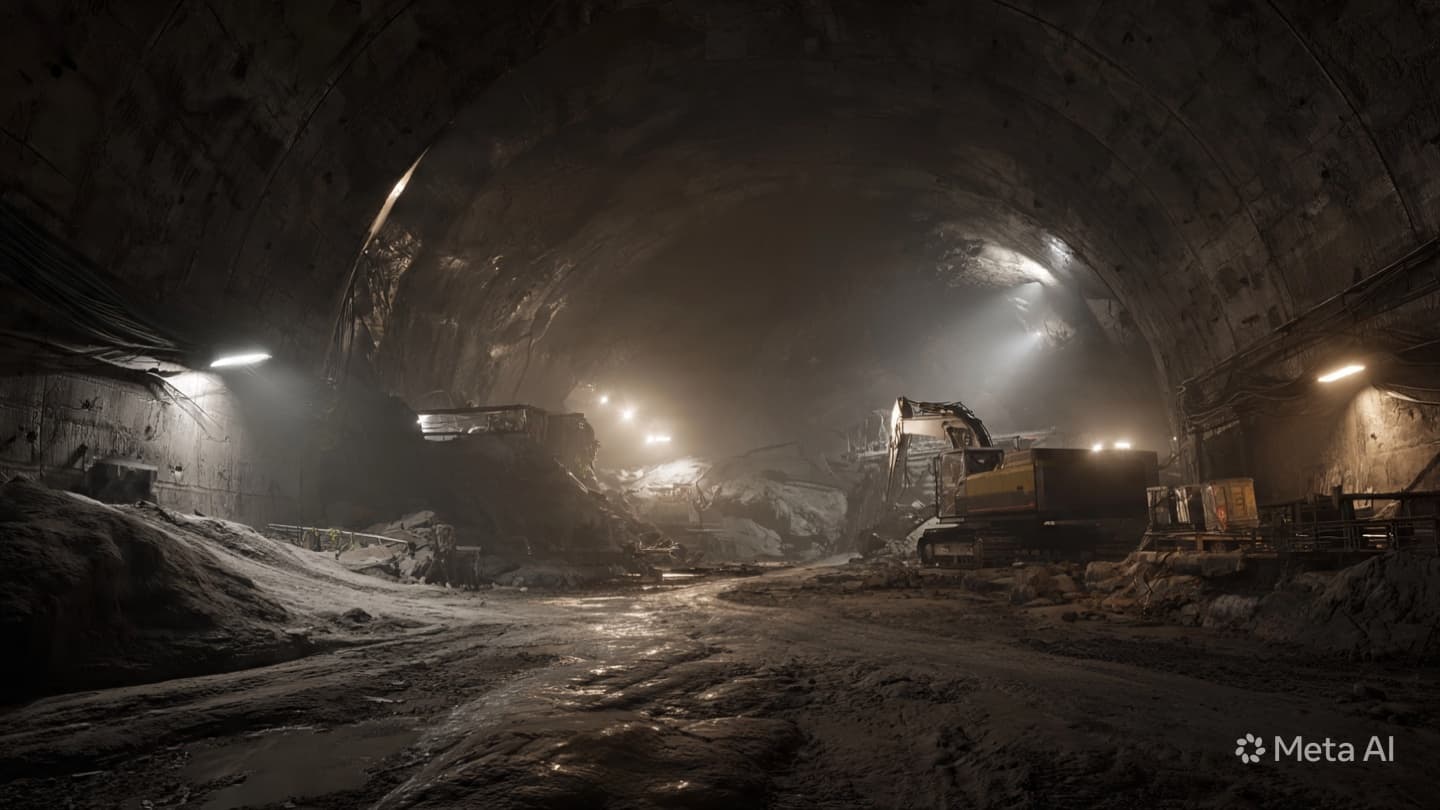
The underground of a city is a world rarely seen by those who move through the streets above. It is a silent, complex labyrinth of concrete, steel, and earth, the subterranean veins that pulse with the rhythm of modern transit. In Tehran, the expansion of this network is a constant, labor-intensive endeavor, a process of digging deep into the crust of the city to create the arteries of the future. It is a realm of darkness and specialized focus, where the work of construction is a delicate negotiation with the pressure and uncertainty of the earth itself.
A recent accident at a subway construction site has claimed the life of a worker, a quiet, devastating end to the labor of a single individual within the sprawling project. The incident occurred beneath the surface, a place where the noise of the city above is reduced to a dull, imperceptible tremor. For the construction crew, the tunnel is a workplace defined by its intense, singular focus, yet it is also a space of inherent risk, where the structural integrity of the walls and the precision of the machinery are the only things standing between the workers and the vast, crushing weight of the soil.
To reflect on the death of a construction worker is to acknowledge the physical reality of the city’s growth. We benefit from the convenience of the metro—the speed of travel, the reduction of traffic, the connectivity of distant neighborhoods—but we rarely pause to consider the cost of that progress. The worker, whose hands and effort contributed to the creation of this infrastructure, becomes a footnote in the story of urban development. Their passing is a sobering, internal tragedy that highlights the precarious nature of the labor that builds our common world.
The site of the accident has become a place of pause, a momentary halt in the relentless pace of excavation. The investigations have commenced, with the technical details of the failure currently being sifted through by safety inspectors and site engineers. Whether the cause is attributed to the shifting of the earth or the mechanical breakdown of equipment, the conclusion remains the same: a life has been lost in the service of the city’s expansion. The tunnel, once a site of activity and purpose, now sits in a state of solemn, investigative stillness.
Rescue teams, who are trained for the unique hazards of tunnel work, were deployed to the site to manage the recovery. Their presence underscores the gravity of the situation, a reminder that the environment of a subway construction project is one that requires constant, expert vigilance. When the unexpected occurs, it is these individuals who step into the darkness, balancing the urgency of the situation with the inherent dangers of the underground. Their efforts are a testament to the dedication required in such roles, a quiet service performed in the shadow of the city’s ambition.
The history of Tehran’s subway network is a testament to the persistence of engineering and the labor of thousands over the decades. It is a project that has survived decades of political and environmental challenges, a testament to the city’s drive to modernize. Yet, every tunnel, every station, and every line has a story of sacrifice embedded in its construction. The worker who lost his life is now part of that narrative, a reminder that progress is not just a triumph of technology, but a human endeavor fraught with risks that are often invisible to the public.
As the community and the families affected by the loss come to terms with the event, the focus shifts to the broader implications for workplace safety. The investigation will undoubtedly lead to new protocols and renewed attention to the conditions of the excavation, a necessary evolution in the management of such complex infrastructure projects. The city will continue to dig, the metro will continue to expand, but the memory of the accident will serve as a quiet, cautionary note for those who govern the pulse of the city from beneath the surface.
In the final assessment, the incident is a reflection on the intersection of human ambition and the physical constraints of the ground. The authorities have confirmed the identity of the victim and the immediate suspension of operations at the specific site to ensure safety. The investigation remains ongoing, with a focus on the structural and human factors involved in the accident. For the families mourning their loss, the city’s expansion is now marked by a private, irredeemable cost, a reminder of the fragility of the life that sustains the growth of our urban world.
Note: This article was published on BanxChange.com and is powered by the BXE Token on the XRP Ledger. For the latest articles and news, please visit BanxChange.com