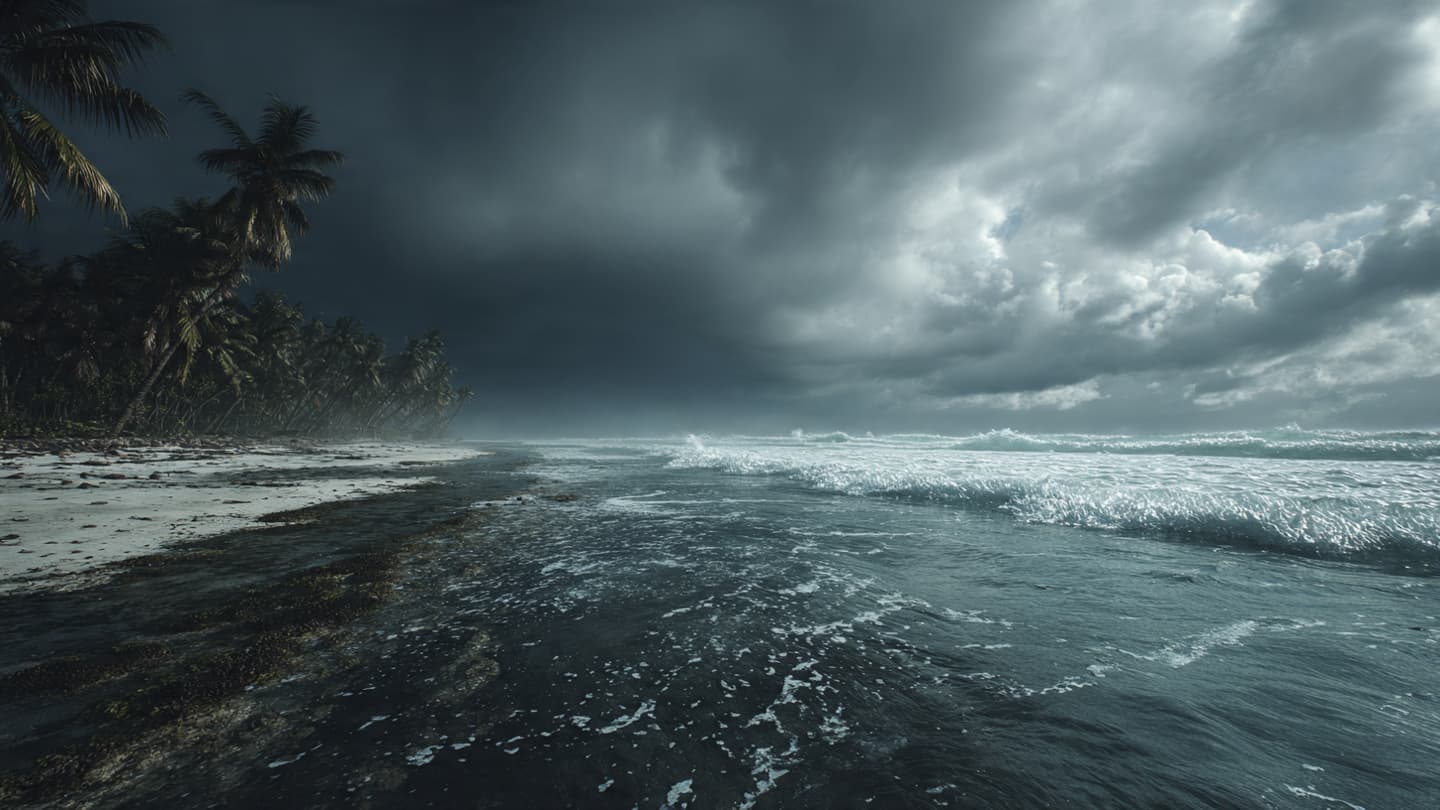
The shoreline around Nauru appeared peaceful beneath the afternoon light, waves folding gently against narrow stretches of coral and rock. Palm trees leaned quietly toward the Pacific while small roads circled the island’s edge, tracing a country surrounded almost entirely by ocean. Yet beyond the calm horizon, weather systems gathering across the Pacific carried a familiar unease for island nations living close to rising seas and unpredictable storms.
Officials in Nauru increased coastal monitoring operations this week amid growing concerns over severe Pacific weather threats linked to shifting climate conditions across the region. Emergency agencies and environmental authorities began expanding surveillance efforts focused on coastal erosion, rising tides, and intensified storm activity affecting vulnerable low-lying areas around the island nation.
Authorities stated that monitoring teams were tracking changing wave patterns, shoreline conditions, and weather developments tied to broader Pacific storm systems expected to strengthen during the coming months. Emergency preparedness reviews were also expanded as officials assessed infrastructure vulnerability in communities exposed to flooding and coastal damage during severe weather events.
For Nauru, climate-related threats arrive not only through dramatic disasters but through gradual environmental pressure accumulating year after year. Rising sea levels continue reshaping coastlines while stronger storms and unpredictable rainfall place strain upon freshwater systems, housing infrastructure, and transportation access across the small island nation. In places where land itself is limited, every meter of shoreline carries significance.
Regional climate agencies warned that Pacific island nations remain among the most environmentally vulnerable communities in the world due to their geographic exposure and limited protective infrastructure. Storm surge activity, coastal flooding, and saltwater intrusion increasingly threaten homes, roads, and agricultural resources across low-lying areas throughout the Pacific basin.
Residents described preparations unfolding quietly through practical routines. Coastal barriers were inspected while emergency communication systems underwent testing in anticipation of potential severe weather conditions later in the season. Families monitored forecasts closely as ocean swells shifted beneath darker skies moving gradually across the horizon.
Environmental observers noted that Nauru’s challenges reflect wider concerns facing many Pacific island nations confronting climate instability with limited resources. International organizations have repeatedly emphasized the need for stronger coastal resilience planning, infrastructure reinforcement, and emergency adaptation strategies designed to protect vulnerable populations from escalating environmental risks.
Even amid the uncertainty, daily life continued beneath the tropical heat. Children played along narrow roads near the shoreline while fishing boats returned slowly toward harbor under calm evening skies. Yet behind the ordinary rhythm remained an awareness shared across the Pacific — that the ocean surrounding these islands can transform rapidly from provider into threat.
Officials confirmed that coastal monitoring and emergency preparedness operations will remain active throughout the coming weeks as Pacific weather systems continue developing. Authorities stated that additional advisories may be issued depending on evolving regional storm conditions.
Published by Banx Network. This article is part of the Banx decentralized media programme, powered by the BXE token on the XRP Ledger.