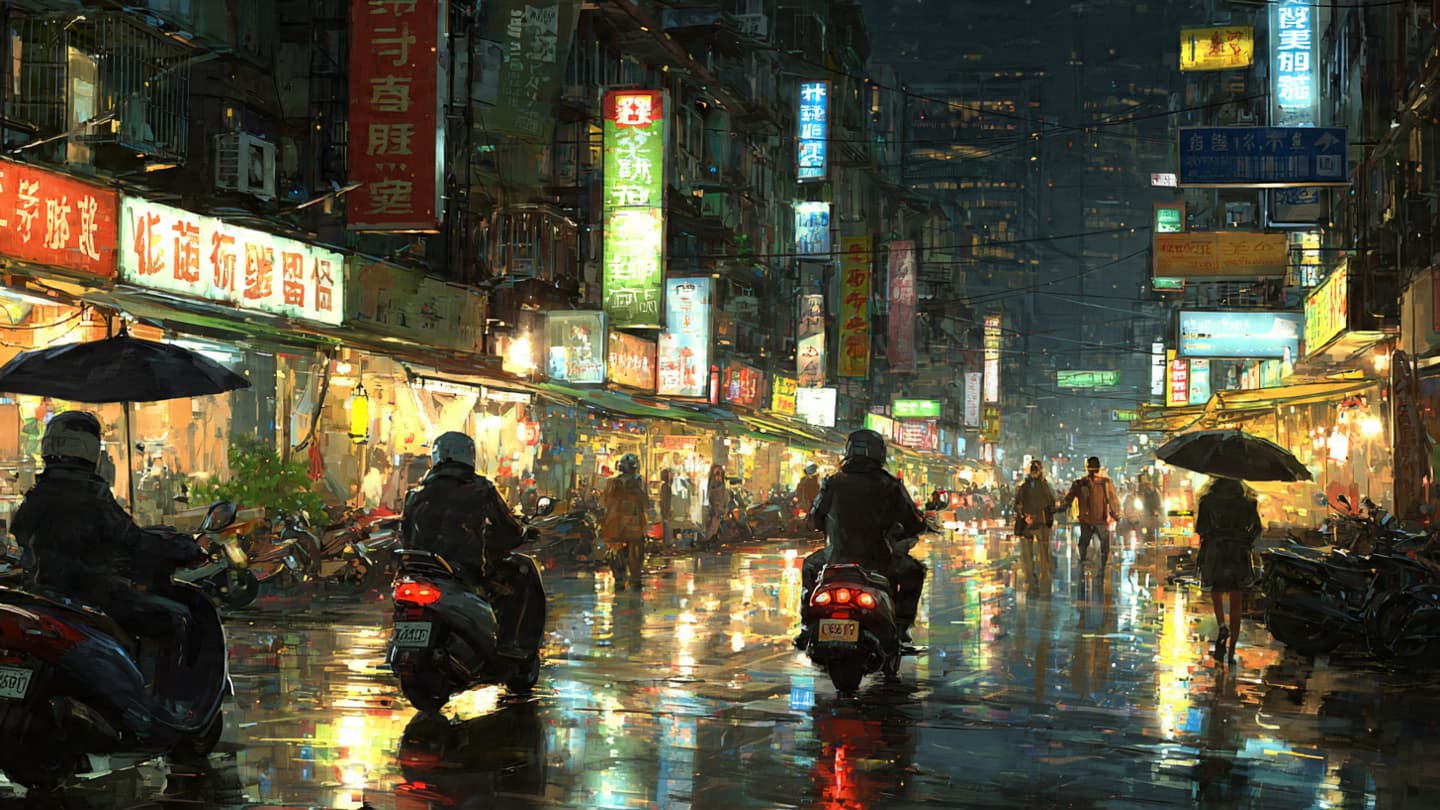
In Taipei, evenings arrive gently. Scooters hum beneath glowing apartment windows, vendors close metal shutters over night-market stalls, and rain sometimes gathers softly along the edges of the city’s narrow streets. Life moves with practiced rhythm — commuters returning home, students crossing intersections beneath neon signs, ferries slipping quietly across distant harbors. Yet beyond the ordinary cadence of the island, another conversation never fully disappears. It lingers in diplomatic statements, military exercises, and carefully chosen words spoken far from Taiwan itself.
That conversation resurfaced after remarks attributed to Donald Trump suggested Taiwan should not pursue formal independence. The comment touched a nerve embedded deeply within East Asian geopolitics, where language itself often carries the weight of strategy. For decades, the question surrounding Taiwan has existed in a carefully maintained gray zone — neither fully resolved nor entirely frozen, suspended between democratic self-rule and the unresolved claims of China.
Yet the question that echoes beyond diplomatic headlines is more complicated than the rhetoric surrounding it: does Taiwan itself truly want a declaration of formal independence?
On paper, the island already functions with many features of a sovereign state. Taiwan has its own government, military, elections, passport system, currency, and globally significant economy driven by technology and semiconductor production. Its democracy has matured over decades into one of Asia’s most vibrant political systems, shaped by open debate, competitive elections, and a strong civic identity. For many people living there, daily life already feels distinct from mainland China in almost every practical sense.
And yet, formal independence remains something different — a legal and symbolic step carrying immense geopolitical risk. Beijing considers Taiwan part of its territory and has repeatedly stated that formal moves toward independence could trigger military action. Chinese aircraft and naval vessels regularly operate near the Taiwan Strait, while official statements from Beijing continue to frame reunification as a historical inevitability rather than a negotiable future.
Within Taiwan itself, public opinion reflects a careful balancing act rather than a unified push toward outright separation. Polls over many years have shown that most residents prefer maintaining the current status quo: preserving Taiwan’s de facto autonomy without formally declaring independence or pursuing political unification with China. That middle ground, though fragile, has become the island’s practical consensus — a recognition that ambiguity, however uncomfortable, may also serve as a form of protection.
Generational shifts have gradually reshaped the emotional landscape of identity on the island. Younger Taiwanese increasingly identify themselves primarily as Taiwanese rather than Chinese, reflecting decades of separate political development and cultural experience. But identity does not always translate directly into support for a formal declaration of statehood. Many residents appear aware that symbolic gestures in international politics can carry consequences far beyond symbolism itself.
The United States has long occupied an intentionally delicate position in this arrangement. Washington officially recognizes Beijing under the “One China” policy while maintaining informal relations and defense commitments toward Taiwan. Successive American administrations have relied on what strategists often call “strategic ambiguity” — supporting Taiwan’s security without explicitly endorsing independence. Trump’s reported comments therefore fit within a broader historical pattern, even if his direct style gave the message sharper edges.
Behind the diplomatic language lies a larger reality about the modern Pacific. Taiwan has become central not only because of history or ideology, but because of geography, trade routes, technology, and military strategy. The island sits at the intersection of competing visions for regional order, its future tied to shipping lanes, semiconductor supply chains, and the balance of influence between Washington and Beijing.
Still, for many people in Taiwan, those vast geopolitical calculations coexist with remarkably ordinary concerns: housing costs, salaries, education, aging parents, and the uncertainty of the future. The island’s democracy continues beneath the shadow of global tension, its elections debated passionately even while fighter jets occasionally cross distant skies offshore.
As night settles again over Taipei, the city continues to glow with its familiar resilience. Tea shops remain open late. Trains continue arriving on time. The mountains surrounding the capital disappear gradually into mist. And somewhere beyond the horizon, warships move silently through contested waters while diplomats weigh each sentence with extraordinary care.
Taiwan’s future may ultimately remain defined not by dramatic declarations, but by its enduring preference for balance — a fragile equilibrium between identity and survival, aspiration and caution, sovereignty and silence.
AI Image Disclaimer Illustrations were created using AI tools and are intended as artistic representations of the subjects described.
Sources
Reuters BBC News The Economist Associated Press Nikkei Asia
Published by Banx Network. This article is part of the Banx decentralized media programme, powered by the BXE token on the XRP Ledger.