
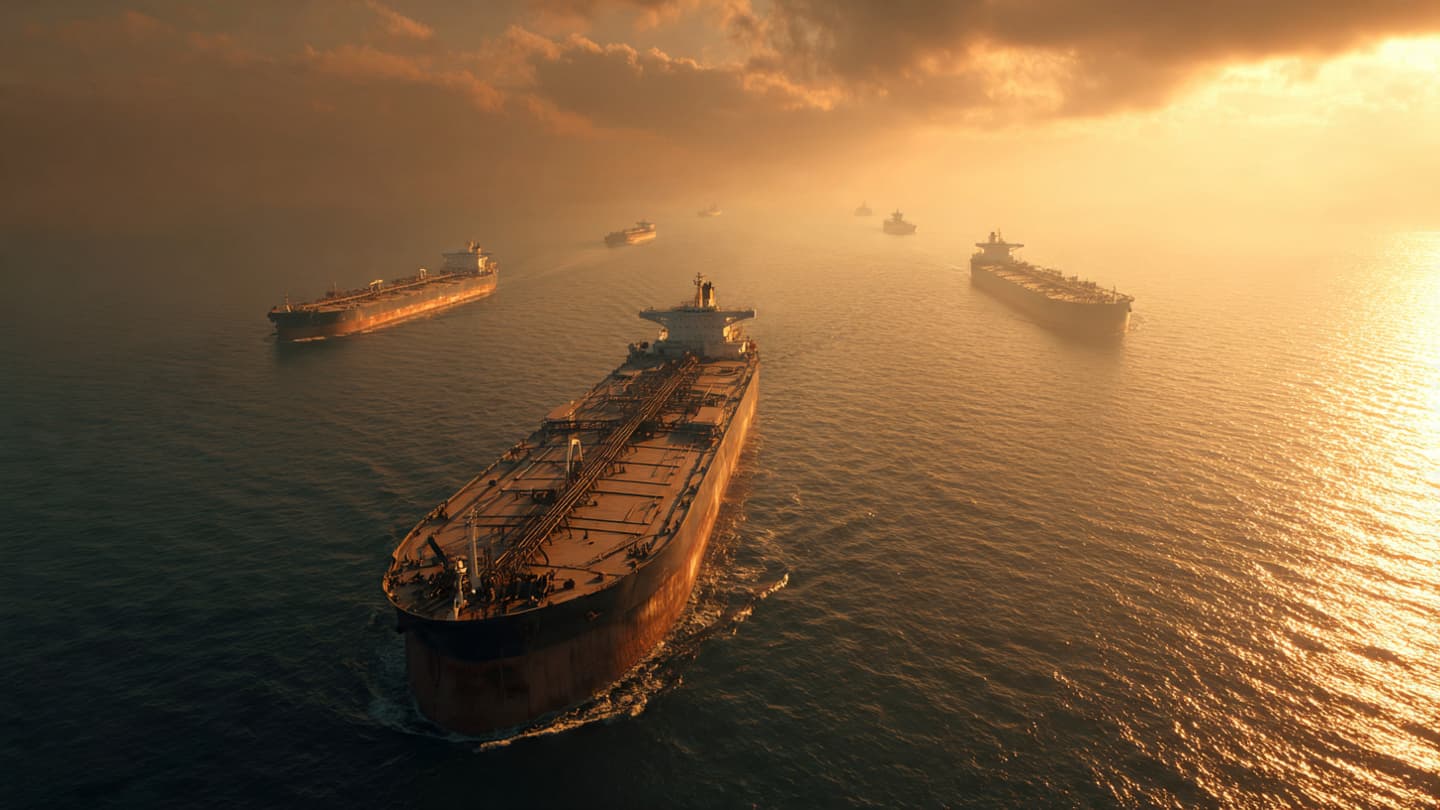
At sunrise in the Strait of Hormuz, the sea often appears almost still. Tankers move carefully through narrow channels bordered by desert coastlines and distant mountains softened by heat and haze. From above, the ships resemble slow-moving threads crossing one of the world’s most fragile corridors — a passage carrying energy, commerce, and the accumulated tension of decades shaped by rivalry and mistrust.
Now, amid rising instability across the Middle East, NATO is beginning to consider a new maritime mission aimed at protecting commercial vessels traveling through the Strait of Hormuz, according to officials and diplomatic discussions emerging from Brussels and allied capitals. Though still in its early stages, the proposal reflects growing concern among Western governments that attacks on shipping, regional military escalation, and uncertainty surrounding Iran could place one of the global economy’s most vital waterways under renewed pressure.
The Strait of Hormuz remains one of the world’s most strategically significant maritime chokepoints. Roughly a fifth of global oil shipments pass through its narrow waters each day, linking Gulf energy producers with markets across Asia, Europe, and beyond. For decades, the strait has existed not only as a trade route but also as a symbol of geopolitical vulnerability — a place where local conflict can ripple outward into global consequences.
Recent months have intensified those anxieties. Attacks by regional militias on commercial vessels and military assets, alongside fears of broader confrontation involving Iran and the United States, have pushed security concerns back to the center of diplomatic conversations. European officials reportedly worry that even isolated incidents could disrupt shipping patterns, raise insurance costs, and trigger wider economic instability at a moment when energy markets already remain sensitive to conflict.
Within NATO, discussions appear focused less on direct confrontation and more on deterrence, surveillance, and coordinated protection for civilian shipping. Officials familiar with the talks describe preliminary planning around intelligence-sharing, naval patrol coordination, and expanded maritime monitoring operations involving alliance members already present in the Gulf region. Several European governments are said to support a mission designed primarily to reassure commercial shipping companies and reduce the risk of accidental escalation.
Yet even the idea of a NATO role in Hormuz carries historical echoes difficult to ignore. The Gulf has long served as a theater where global power, regional identity, and economic dependency converge. American aircraft carriers have crossed these waters for generations. British and French naval forces continue maintaining regional bases. Iranian patrol boats move along coastlines shaped by revolution, sanctions, and strategic isolation. Every military presence introduced into the strait arrives carrying both practical purpose and symbolic weight.
For Iran, NATO involvement would likely be viewed with deep suspicion, reinforcing longstanding narratives about Western encirclement and external interference near its borders. Iranian officials have repeatedly argued that Gulf security should remain the responsibility of regional states rather than outside alliances. At the same time, Tehran has also sought to avoid direct closure of the strait itself, aware that such a move could trigger severe international retaliation and economic fallout.
Inside NATO, there are also questions about scope and unity. Some member states remain cautious about expanding alliance responsibilities deeper into Middle Eastern security affairs, particularly after years of military fatigue tied to conflicts in Iraq and Afghanistan. Others argue that protecting maritime trade routes now forms part of a broader strategic necessity in an increasingly unstable international system.
The discussions come at a moment when NATO itself is evolving beyond its traditional Atlantic focus. Russia’s war in Ukraine, rising competition with China, cyber threats, and disruptions to global supply chains have gradually widened the alliance’s understanding of security. Maritime protection missions, once viewed as peripheral, are increasingly seen as connected to economic resilience and geopolitical stability.
Along Gulf coastlines, however, daily life continues beneath these larger strategic calculations. Fishing boats still leave harbors before dawn. Port cranes continue loading containers beneath the desert heat. Oil terminals glow through the night along industrial shorelines stretching from Oman to the United Arab Emirates. The rhythms of commerce persist even while diplomats and military planners quietly prepare for the possibility of deeper instability.
For now, NATO officials emphasize that no final decision has been reached regarding a Hormuz mission. Consultations among member states remain ongoing, and any deployment would likely require careful coordination with regional governments already operating naval patrols in the area. But the fact that such discussions are advancing at all reflects how fragile the atmosphere surrounding the Gulf has become once again.
In the Strait of Hormuz, geography leaves little room for error. Narrow waters force ships into close proximity, while political tensions compress the distance between caution and confrontation. And as allied governments weigh new patrols and protective missions, the world’s attention returns once more to a passage where the movement of ships has always carried meanings far larger than trade alone.
AI Image Disclaimer: These images were generated with AI assistance to visually interpret the themes and locations described in the article.
Sources:
Reuters Bloomberg Financial Times Associated Press NATO Briefings
Note: This article was published on BanxChange.com and is powered by the BXE Token on the XRP Ledger. For the latest articles and news, please visit BanxChange.com