The night sky has long been a library of unanswered questions. Every generation opens another page, discovering that the universe often holds ideas stranger than imagination first allows. That sense of wonder has returned following findings from NASA's James Webb Space Telescope that may represent the strongest evidence yet for the existence of so-called "black hole stars."
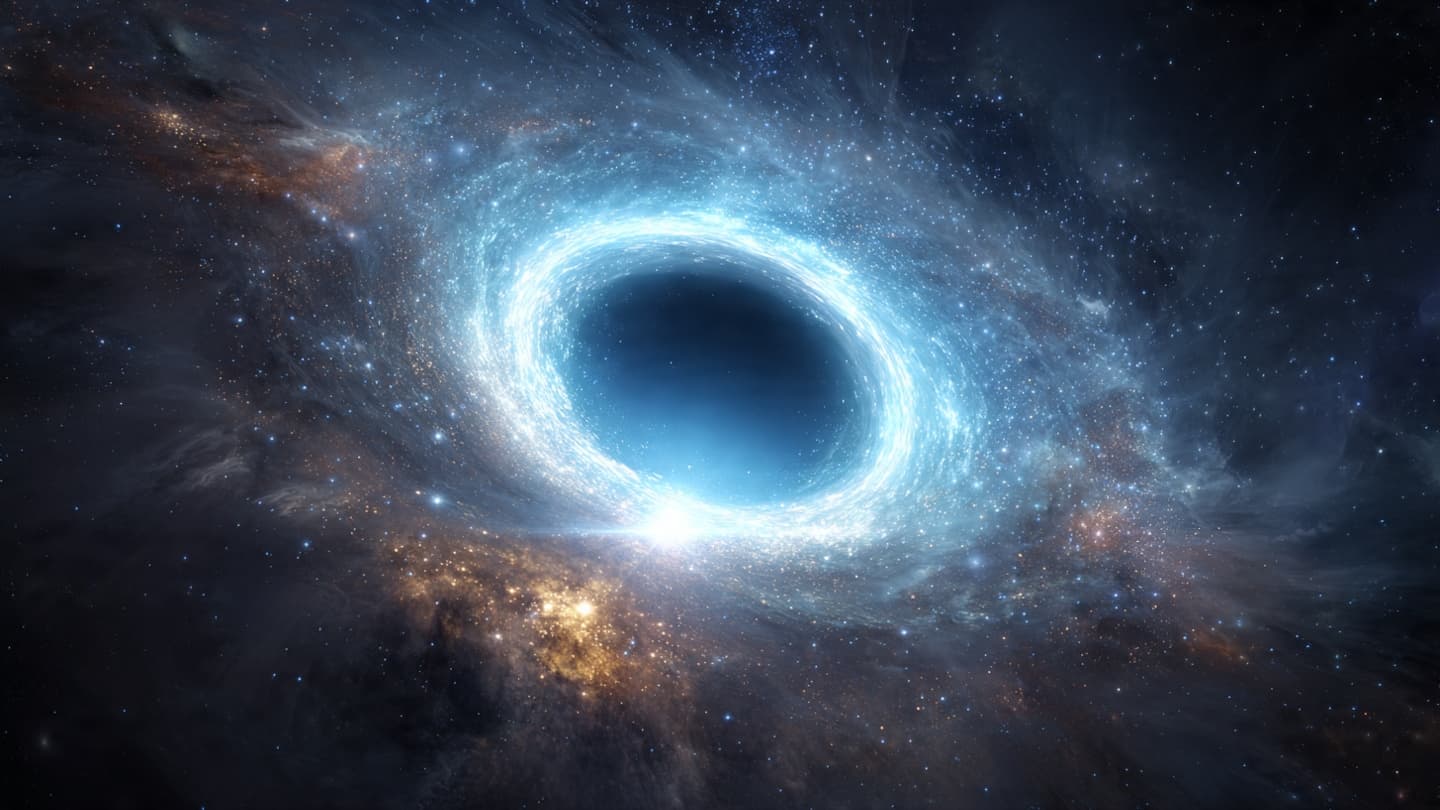
The concept sounds almost contradictory. Traditional understanding treats stars and black holes as different stages or categories of cosmic objects. Yet theoretical models have suggested that under certain conditions, unusual objects could exist where a black hole and a surrounding stellar structure interact in remarkable ways.
Using the unprecedented observational capabilities of the James Webb Space Telescope, researchers studied exceptionally bright and distant objects dating back to the early universe. These ancient sources appeared to possess characteristics that do not fit neatly into conventional classifications.
Scientists believe some of these objects may be powered not only by nuclear processes typically associated with stars but also by material falling into central black holes. Such a combination could create unique signatures detectable across vast cosmic distances.
The findings are particularly important because they relate to a period shortly after the universe's formation. Astronomers have long sought to understand how enormous black holes emerged so quickly in cosmic history. The newly observed objects may offer clues to that enduring puzzle.
Researchers caution that additional observations will be necessary before definitive conclusions can be reached. Astronomy frequently advances through a gradual process of testing, refinement, and independent verification.
Nevertheless, the Webb telescope continues to transform scientific understanding. Since beginning operations, it has delivered observations that challenge assumptions about galaxy formation, stellar evolution, and the structure of the early cosmos.
The possibility of black hole stars demonstrates how theoretical physics and observational astronomy increasingly work together. Ideas once confined to equations can now be examined through detailed measurements gathered from billions of light-years away.
As scientists continue exploring these mysterious objects, the discovery serves as another reminder that the universe remains far larger and more surprising than any single generation can fully comprehend. Each new observation expands not only scientific knowledge but also humanity's sense of place among the stars.
AI Image Disclaimer: The images used with this article are AI-generated artistic visualizations inspired by astronomical research and are not actual telescope photographs.
Source Verification Check: NASA, James Webb Space Telescope research teams, astrophysics publications, astronomy institutions
Published by Banx Network. This article is part of the Banx decentralized media programme, powered by the BXE token on the XRP Ledger.