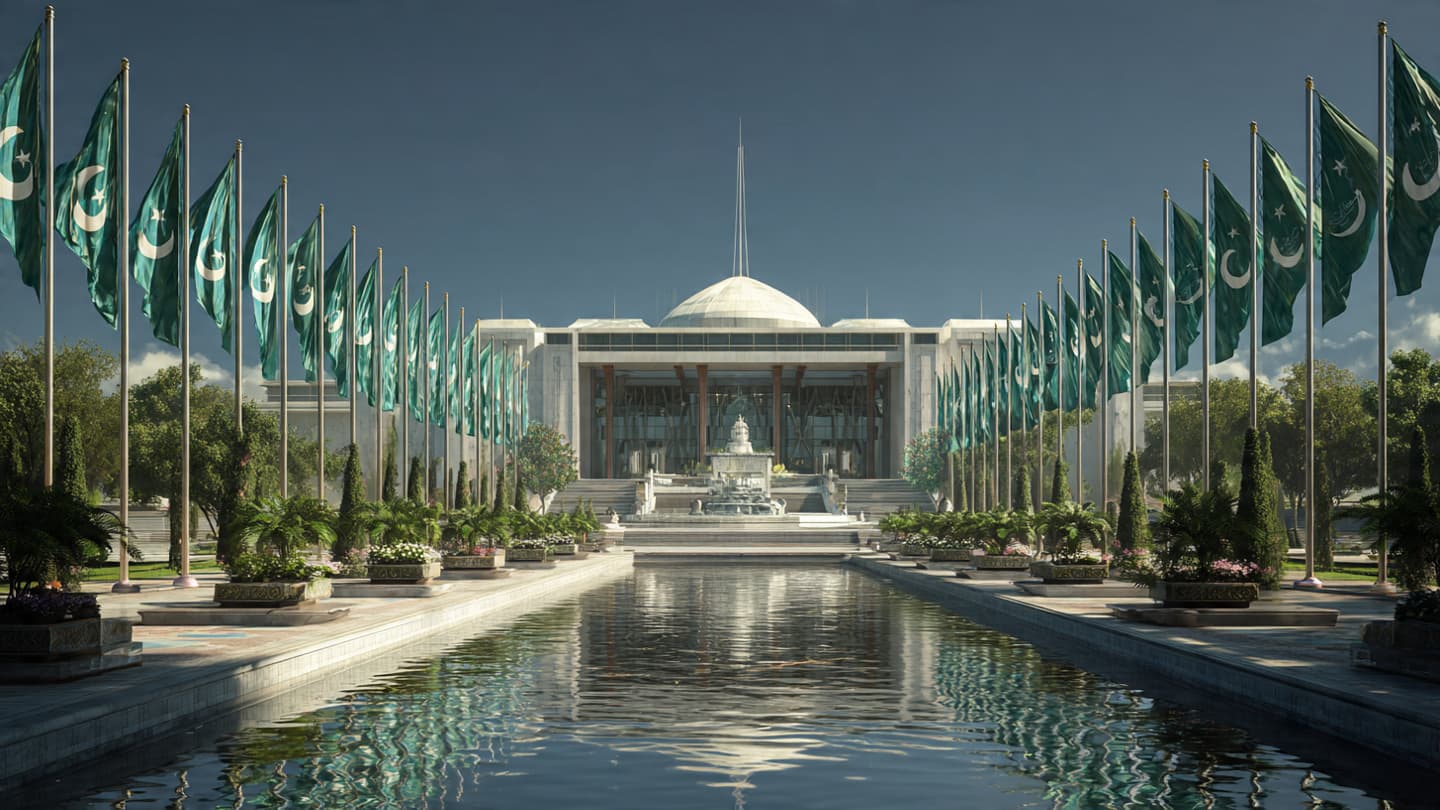
In international politics, some decisions arrive like storms — sudden, loud, and impossible to ignore. Others move more quietly, like a tide rising beneath familiar waters, reshaping the shoreline little by little before anyone fully notices. For Pakistan, the question of whether to eventually join the Abraham Accords belongs to the second kind: delicate, layered, and deeply tied to history, identity, and regional balance.
The Abraham Accords, first introduced in 2020, reshaped diplomatic relations in the Middle East by normalizing ties between Israel and several Arab nations, including the United Arab Emirates and Bahrain. Since then, the agreements have become both a symbol of changing regional priorities and a source of continuing debate across the Muslim world. For Pakistan, however, the issue remains especially sensitive.
Islamabad has long maintained that its position on Israel is closely connected to the creation of an independent Palestinian state. Support for the Palestinian cause remains deeply rooted within Pakistan’s political culture, public discourse, and religious sentiment. Any movement toward formal recognition of Israel or participation in broader normalization frameworks would likely trigger intense domestic scrutiny.
Yet the regional landscape surrounding Pakistan has also evolved significantly over recent years. Several Gulf countries that maintain close economic and strategic ties with Islamabad have already entered into diplomatic agreements with Israel. As trade networks, security partnerships, and geopolitical alliances continue shifting across the Middle East, Pakistan increasingly finds itself observing a changing diplomatic environment from a cautious distance.
For policymakers in Islamabad, the challenge is not merely about foreign relations; it is about balancing competing realities. On one side lies public opinion shaped by decades of solidarity with Palestinians and skepticism toward normalization absent meaningful progress in peace negotiations. On the other lies the growing influence of regional pragmatism, where economic cooperation and strategic calculations increasingly shape diplomatic choices.
The discussion also unfolds against Pakistan’s own domestic pressures. Economic instability, political polarization, and security concerns continue to dominate the country’s internal agenda. In such an atmosphere, even symbolic foreign policy shifts carry amplified political consequences. Leaders must weigh not only international opportunities but also how such decisions would resonate within homes, mosques, universities, and parliament halls across the country.
Analysts observing the region note that Pakistan’s military and civilian leadership have historically approached relations with Israel cautiously, often avoiding direct confrontation while maintaining official non-recognition. At times, rumors or speculation regarding possible quiet engagement have surfaced, though successive governments have publicly reiterated support for Palestinian statehood as a core principle.
The complexity of the issue reflects broader transformations taking place throughout the Middle East and South Asia. Alliances once defined primarily by ideology are increasingly influenced by trade, technology, energy, and security partnerships. Countries now navigate a world where old certainties coexist uneasily beside new strategic realities.
Still, public memory remains powerful. For many Pakistanis, the Palestinian issue is not viewed solely through diplomacy but through moral and emotional solidarity. Images from Gaza and the West Bank continue shaping public perception, making any conversation about normalization politically and socially delicate. Even limited engagement with Israel can quickly become the center of heated national debate.
At the same time, some voices within policy circles argue that dialogue and diplomacy should not automatically be viewed as abandonment of principles. Others maintain that Pakistan should avoid moving ahead of broader regional consensus or meaningful developments in the Israeli-Palestinian conflict. The debate itself reflects a nation carefully measuring its place within a rapidly shifting geopolitical map.
For now, Pakistan has shown little indication of formally joining the Abraham Accords in the immediate future. Officials continue emphasizing support for a two-state solution and Palestinian self-determination. Yet as regional dynamics continue evolving, the conversation surrounding normalization is unlikely to disappear entirely. Instead, it may remain suspended in the careful language of diplomacy — neither fully embraced nor entirely dismissed.
AI Image Disclaimer Images in this article are AI-generated illustrations, meant for concept only.
Reuters Al Jazeera Foreign Policy The Diplomat Middle East Eye
Published by Banx Network. This article is part of the Banx decentralized media programme, powered by the BXE token on the XRP Ledger.