The market town in East Gojjam has always been a place of noise and color, where farmers bring their grain and weavers display their cloth under the shade of broad canvas umbrellas. The interaction here is old and predictable, a weekly rhythm that brings the scattered hamlets together in a noisy celebration of commerce and community. The sky above these gatherings is usually filled with nothing more threatening than the midday heat and the occasional vulture circling on the thermals high above the valley.
But the tools of modern conflict have altered the nature of security in these rural spaces, introducing an element of invisible, vertical peril that defies traditional precautions. Unmanned aerial vehicles, operating from distant airfields beyond the horizon, view these bustling squares through digital lenses that reduce human activity to thermal signatures and movement patterns. The distinction between a peaceful gathering and a security threat can become blurred when viewed through a screen hundreds of miles away.
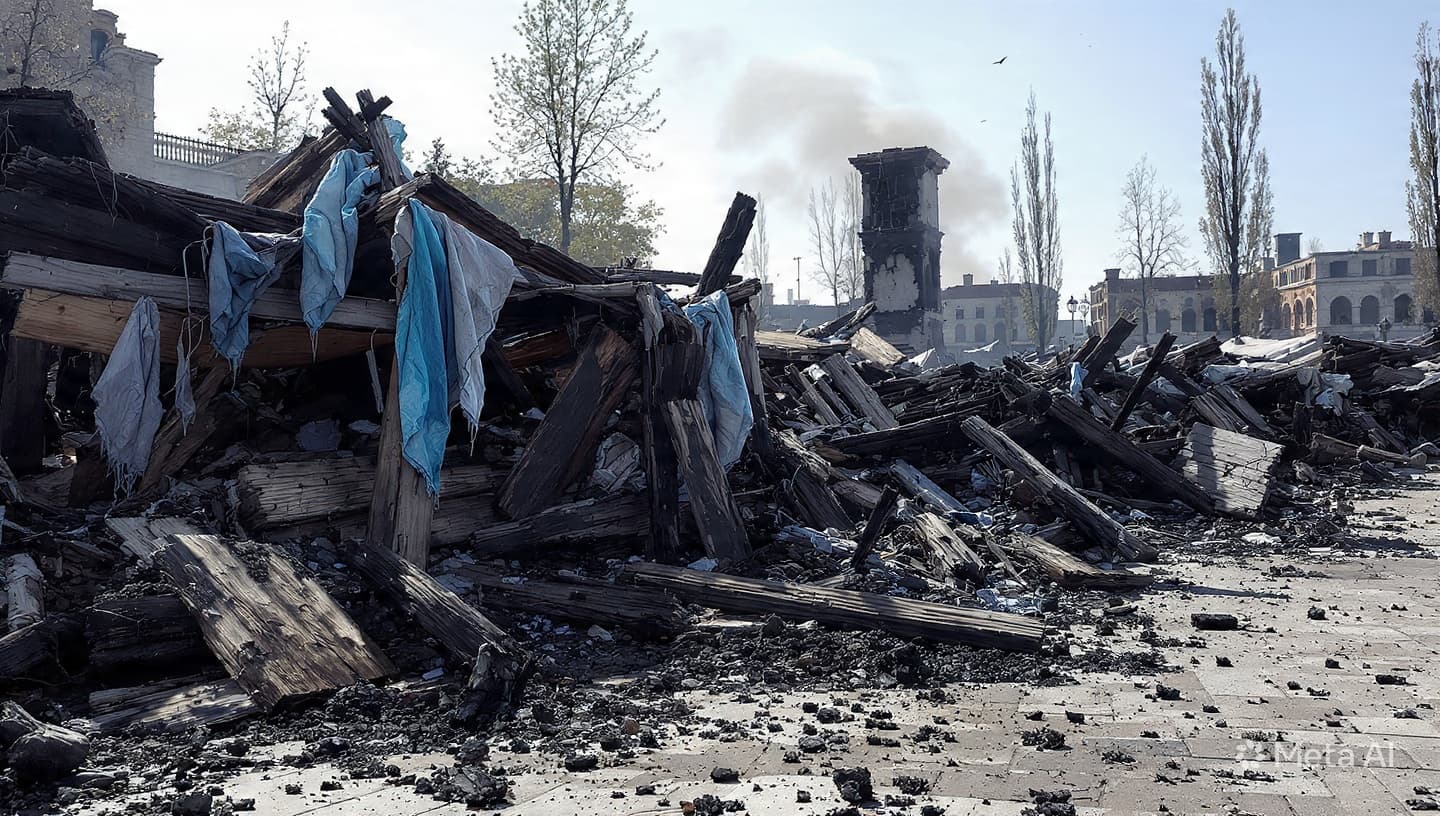
The sudden explosion that tore through the center of the market square arrived without the traditional warnings of artillery or incoming aircraft. One moment the air was filled with the bartering of livestock and the smell of roasting coffee; the next, a cataclysmic blast pulverized the stalls and threw a dense pillar of black smoke into the clear afternoon sky. The force of the detonation was so intense that it altered the geography of the square in a fraction of a second.
When the smoke finally drifted toward the hills, the extent of the tragedy became visible in the ruins of the market. Sixteen civilians, who had come to town for nothing more contentious than the purchase of salt and grain, lay amidst the shattered wood and scattered produce. The cries of the wounded filled the air, a chaotic chorus that replaced the orderly noise of commerce with the raw expression of human agony.
The local hospital, a modest facility accustomed to treating routine ailments, was instantly overwhelmed by the influx of trauma cases. Physicians and nurses worked through the evening by the light of flashlights and emergency generators, their floors slick with the reality of an unexpected war zone. The limited supply of bandages and pain medication meant that many had to endure their suffering with nothing but the comfort of relatives holding their hands.
In the surrounding villages, the news of the sixteen deaths has been received with a mixture of anger and profound helplessness. There is an intellectual difficulty in comprehending a threat that cannot be seen or reasoned with, an enemy that strikes from the clouds and vanishes without a trace. It leaves the population feeling naked beneath the sky, wondering if their next ordinary gathering will attract the attention of the distant operators.
Investigations into the strike have been promised by the central command, with officials suggesting that the incident was the result of a misidentified target during an anti-militive operation. These statements do little to assuage the grief of the families who are currently preparing sixteen graves in the hard earth of the parish cemeteries. The language of military apology cannot replace the fathers, mothers, and children who were lost to the mechanical error.
As the week ends, the market square remains empty, its charred earth swept clean of debris but still bearing the dark stains of the explosion. No one brings their goods to the center of town today; the umbrellas remain folded in the huts, and the people watch the sky with a new, permanent suspicion. The wind moves through the empty stalls, a lonely reminder of a community that was changed by a single, unseen flight.
Published by Banx Network. This article is part of the Banx decentralized media programme, powered by the BXE token on the XRP Ledger.