In the vast silence of Antarctica, change does not announce itself loudly. It arrives in subtle shifts of ice and water, where massive glaciers slowly adjust to a warming world with consequences that extend far beyond the polar horizon.
Recent scientific observations indicate that the Thwaites Glacier, often referred to as the “Doomsday Glacier,” is undergoing structural weakening, particularly in its protective ice shelf system. This ice shelf acts as a stabilizing barrier that slows the glacier’s flow into the ocean.
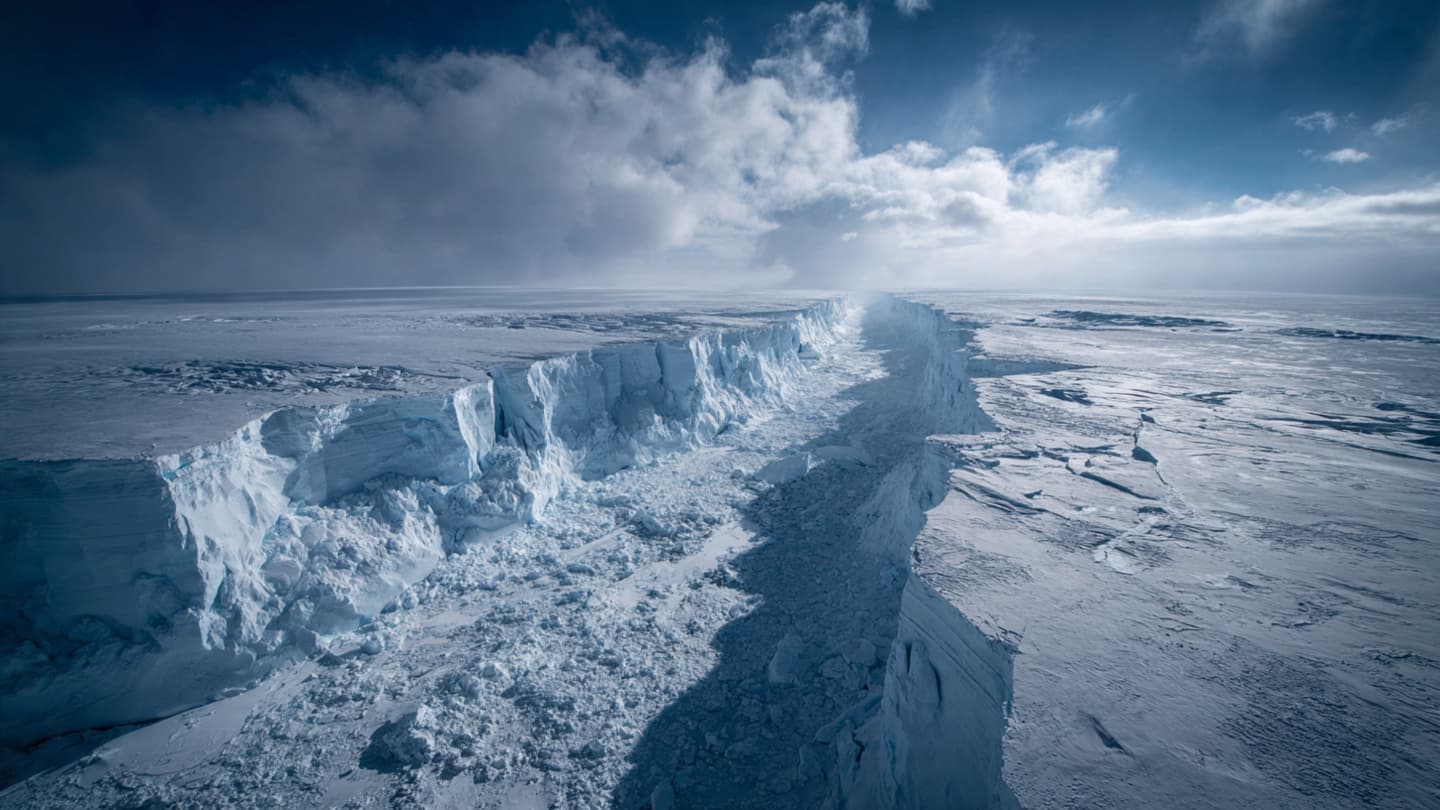
Researchers monitoring the region have identified increased fracturing and thinning in key areas of the ice structure. These changes reduce the glacier’s resistance to ocean-driven melting processes, allowing warmer seawater to penetrate further inland.
The concern among climate scientists is not immediate collapse, but the potential for accelerated ice loss over time. Even small structural changes in Antarctic glaciers can contribute significantly to long-term sea level rise.
Satellite data and field measurements are being used together to track these developments with increasing precision. However, the remote and harsh environment of Antarctica continues to make direct observation challenging.
The broader implications of glacial melt extend to coastal regions around the world. Rising sea levels can gradually reshape shorelines, influence infrastructure planning, and affect millions of people living in low-lying areas.
Scientists emphasize that this process is gradual rather than sudden, unfolding over decades. Yet the early signs of structural weakening are considered important indicators of long-term climate behavior.
The evolving condition of the “Doomsday Glacier” reflects a broader planetary story—one where slow changes accumulate into global consequences measured not in days, but in generations.
AI Image Disclaimer: All visual representations accompanying this article are AI-generated for illustrative storytelling purposes.
Sources: NASA Earth Observatory, Nature Geoscience, Reuters, Science Daily, British Antarctic Survey
Published by Banx Network. This article is part of the Banx decentralized media programme, powered by the BXE token on the XRP Ledger.