The Earth carries memories far older than humanity itself. Hidden within ancient rocks are traces of events that shaped the planet long before life emerged in its present forms. In Western Australia, scientists have once again turned their attention to one such geological archive, uncovering evidence that reaches back to the earliest chapters of Earth's history.
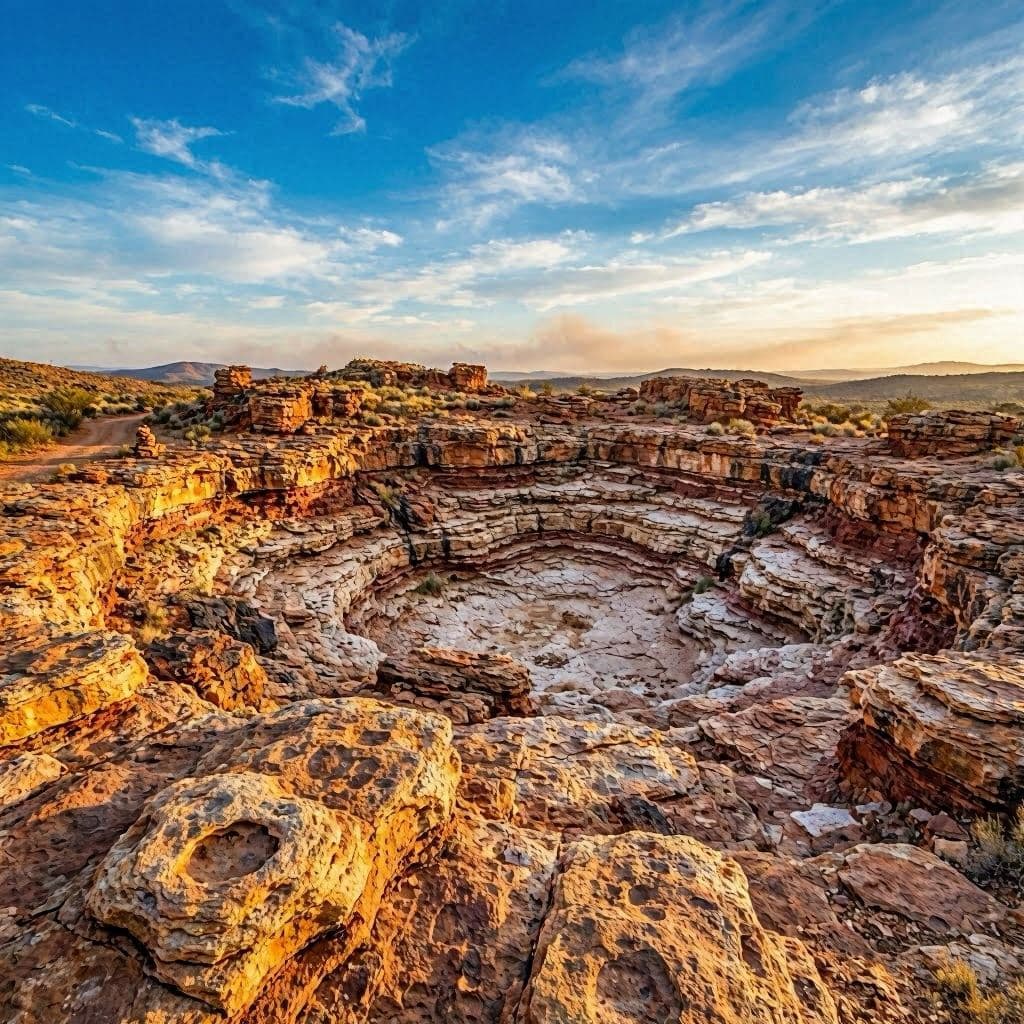
Researchers have reconfirmed that an impact structure located in the Pilbara region of Western Australia is believed to represent the oldest known meteorite impact crater on Earth. The findings provide fresh insight into the violent conditions that characterized the young planet billions of years ago.
The crater is estimated to date back more than 3.4 billion years, a period when Earth was still undergoing profound geological and environmental changes. During this era, impacts from asteroids and other celestial bodies were far more common than they are today.
Scientists studying the site identified geological signatures consistent with a major impact event, including distinctive rock formations produced by immense pressure and heat. Such features serve as important evidence when confirming ancient impact structures.
Understanding early impact events is considered essential for reconstructing Earth's formative history. Some researchers suggest that meteorite impacts may have influenced the development of continents, atmospheric evolution, and even conditions relevant to the emergence of life.
The Pilbara region has long attracted scientific interest due to its exceptionally ancient rock formations. The area preserves some of the oldest known geological materials on Earth, offering researchers a rare opportunity to investigate primordial planetary processes.
Beyond Earth science, the discovery also carries implications for planetary research more broadly. Comparing ancient terrestrial impact sites with craters observed on Mars and other planetary bodies may improve scientists' understanding of solar system evolution.
As investigations continue, the Pilbara crater stands as a reminder that Earth's surface is not merely a landscape of the present, but also a record of cosmic events that shaped the planet billions of years ago.
AI-generated image disclaimer: Images presented with this article are AI-generated editorial illustrations designed to visualize scientific concepts.
Published by Banx Network. This article is part of the Banx decentralized media programme, powered by the BXE token on the XRP Ledger.