The universe often preserves its oldest stories in faint light traveling across billions of years. With every new observation, astronomers are not merely looking into space—they are also looking back in time. Recent findings from the James Webb Space Telescope have now revealed powerful galactic winds blowing through some of the universe's earliest galaxies.
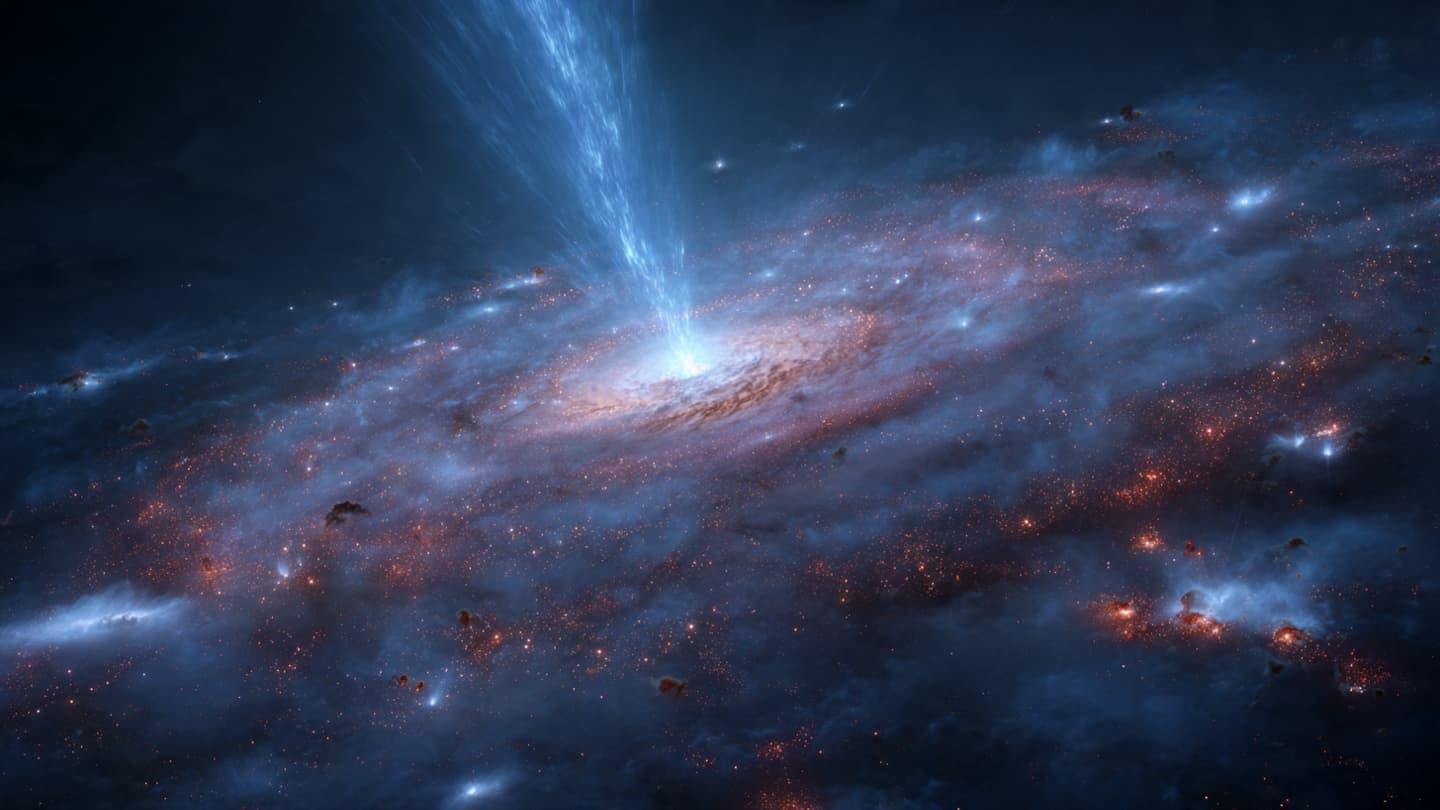
Researchers using the James Webb Space Telescope (JWST) have identified exceptionally strong outflows, often referred to as galactic winds, emerging from distant young galaxies. These galaxies formed during the early stages of cosmic history, only a few hundred million years after the Big Bang.
Galactic winds are streams of gas propelled outward by intense star formation or energetic activity surrounding supermassive black holes. Scientists believe these outflows play a crucial role in determining how galaxies evolve over time.
The newly observed winds appear significantly stronger than many theoretical models had predicted. According to researchers, such powerful outflows may rapidly expel gas from young galaxies, slowing or even halting future star formation.
Astronomers describe these processes as "galaxy feedback," mechanisms that regulate galactic growth. Understanding how feedback operates is considered essential for explaining why galaxies exhibit such diverse sizes, shapes, and evolutionary paths throughout the cosmos.
The James Webb Space Telescope's advanced infrared instruments enabled scientists to detect subtle signatures from extremely distant objects. Because light from these galaxies has traveled for billions of years, JWST effectively allows researchers to observe conditions that existed in the universe's infancy.
The discovery also highlights how modern observations continue to refine longstanding cosmological theories. Data collected by Webb may encourage researchers to revise existing models describing the formation and evolution of early galaxies.
As astronomers continue exploring the distant universe, observations from JWST are expected to reveal further details about the dynamic processes that shaped the cosmos shortly after its birth.
AI-generated image disclaimer: The visual illustrations accompanying this article were generated using artificial intelligence to depict astronomical phenomena.
Source Verification Check: NASA, Live Science, Nature, European Space Agency
Published by Banx Network. This article is part of the Banx decentralized media programme, powered by the BXE token on the XRP Ledger.