
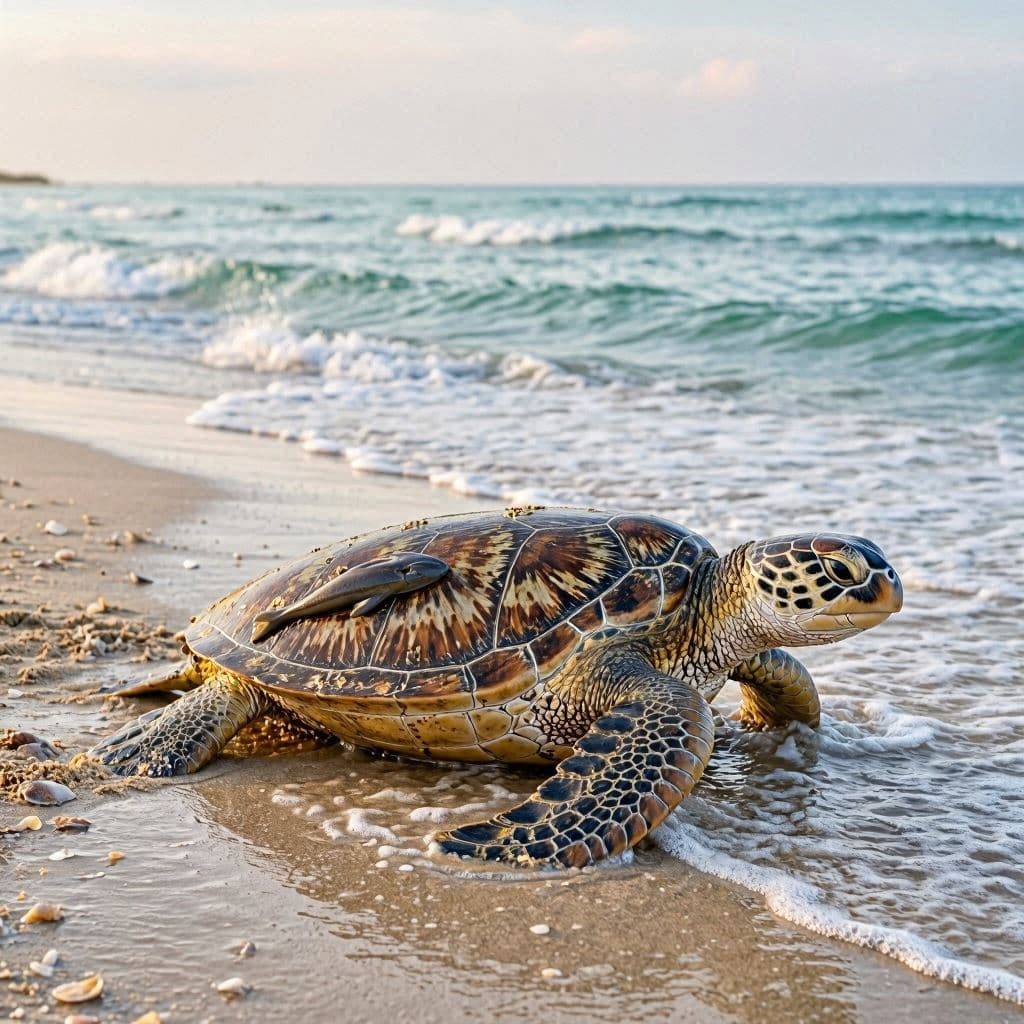
On the shores of Costa Rica, where the ocean meets the land in a rhythmic embrace, a rare sight unfolded during a sea turtle nesting event. An olive ridley turtle emerged from the waves with an unusual hitchhiker clinging to its shell. The creature, identified as a remora, had attached itself firmly, creating a moment of surprise for the scientists and locals who witnessed it.
This unexpected pairing highlights the intricate and sometimes bizarre relationships that exist in marine ecosystems. For the turtle, it was a minor inconvenience; for observers, it was a glimpse into the hidden lives of ocean dwellers.
Body: Remoras, also known as suckerfish, are well-known for their ability to attach to larger marine animals using a specialized disc on their heads. They typically hitch rides on sharks, rays, and whales, feeding on leftover scraps and parasites. However, seeing one attached to a sea turtle, especially one coming ashore to nest, is a rare occurrence.
The incident was documented by researchers who were monitoring the nesting site. They noted that the remora remained attached even as the turtle moved onto the sand, demonstrating the strength of its suction capability. Such behavior is uncommon because turtles spend significant time on land during nesting, an environment where remoras cannot survive.
Experts suggest that the remora may have attached itself recently, perhaps in shallow waters near the beach, and was unable to detach before the turtle emerged. Alternatively, it may have been a young remora seeking protection and transport, unaware of the impending change in environment.
Sea turtles often carry barnacles and other epibionts on their shells, which can affect their hydrodynamics and health. While remoras are generally considered harmless or even beneficial due to their cleaning habits, their presence on a nesting turtle is unusual and draws attention to the diversity of marine interactions.
Conservationists emphasize the importance of observing such events without interference. Removing the remora could cause stress or injury to the turtle, so it is best left to nature to resolve the situation. In many cases, remoras detach on their own when conditions change.
The sighting serves as a reminder of the complexity of marine life. Every creature, no matter how small, plays a role in the ecosystem, and their behaviors often defy simple explanations.
For the local community, the event sparked curiosity and appreciation for the natural world. It reinforced the value of protecting coastal habitats where such unique interactions can occur.
Closing: The turtle and its remora passenger offer a quiet lesson in the unpredictability of nature. It is a moment that invites wonder and respect for the delicate balance of life in the ocean.
AI Image Disclaimer: The images featured in this story are AI-generated illustrations designed to capture the uniqueness of the encounter.
Sources: Discover Wildlife The Dodo
Published by Banx Network. This article is part of the Banx decentralized media programme, powered by the BXE token on the XRP Ledger.



