
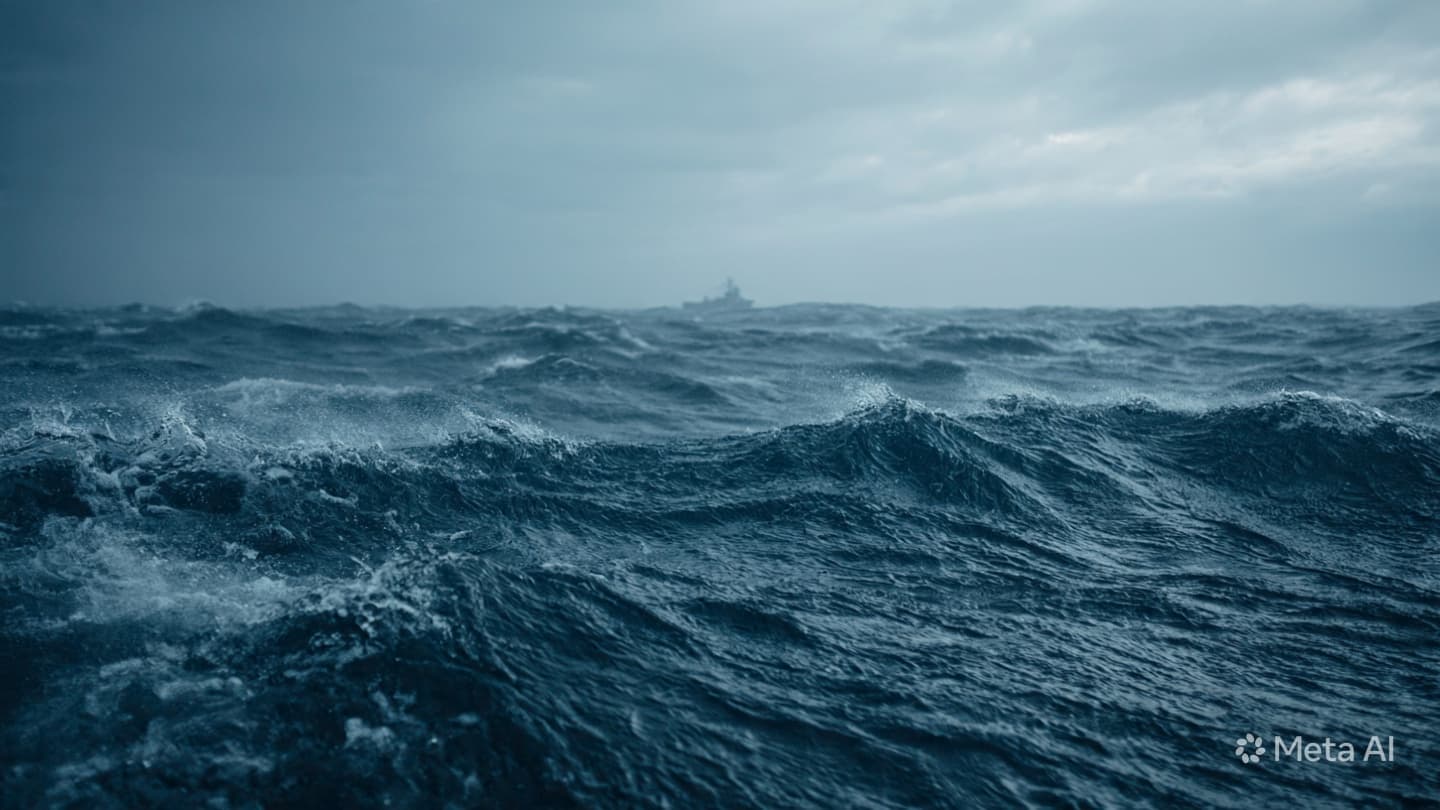
The sea possesses an indifference that is both terrifying and absolute. For those who make their living upon its surface, the ocean is a place of labor, a vast, shifting landscape that demands constant respect and an unwavering attention to the forces at play. There is a rhythm to the fisherman's life—the casting of nets, the reading of currents, and the reliance on the vessel that serves as their only shield against the elements. Yet, even with all our modern instruments, the sea retains the power to assert its dominance, turning a routine journey into a struggle for survival.
Off the coast of Jeju Island, a small commercial vessel encountered the unforgiving nature of the waves. In this corner of the world, where the currents run deep and the weather can shift with deceptive speed, the boundary between safety and peril is often thinner than we care to admit. When the boat capsized, the transition from order to chaos was likely swift, a sudden overturning that left no room for preparation. For the men on board, the water became not just a source of their livelihood, but the environment that would dictate the final outcome of their journey.
The search for a missing fisherman is an act of profound endurance, a collective effort to bridge the distance between hope and the reality of the sea. Rescue vessels fan out across the water, their lights cutting through the darkness of the ocean, searching for any sign, any movement, any indication of life. It is a process governed by the cold variables of time and temperature, where every passing hour narrows the window of possibility. The rescue personnel carry the weight of this knowledge, operating under the heavy mantle of expectation and the desire for a positive outcome.
There is a unique stillness to these search operations. While the engines of the rescue craft provide a constant, low-frequency hum, the human element is defined by a watchful silence. Everyone on board is scanning the horizon, eyes straining against the whitecaps and the shifting grey of the swell. It is an editorial reflection on our inability to master the sea, a reminder that despite our satellite imagery and communication arrays, we remain small in the face of the vast, open expanse.
The families left on shore experience this uncertainty in a different way, their lives held in suspension by the news filtering back from the coast. For them, the sea is not a place of navigation, but a barrier of distance, holding their loved ones in a state of unknown. The psychological toll of such a wait is immense, a quiet, private agony that contrasts sharply with the frantic, public activity of the search teams. It is a testament to the ties that bind us, reaching out across the miles to touch those lost in the surf.
We look for reasons in these accidents—was it the weight of the catch, the sudden shift of the wind, or a mechanical failure that led to the capsize? We seek these answers not just for the sake of the investigation, but because we fear the randomness of the event. We want to believe that there is a cause we can avoid, a mistake we can learn from, a procedure we can improve. It is our way of trying to impose human order upon a domain that does not recognize our laws.
The maritime authorities continue to coordinate the efforts, mobilizing every available resource to scan the waters surrounding Jeju. Their mandate is clear, even if the execution is hampered by the unpredictable nature of the marine environment. They must account for the currents, the depth of the water, and the limitations of their search grids. It is a grueling, tactical operation that demands everything from the crews involved, a reflection of the commitment required to work in such an unforgiving space.
As the days turn into weeks, the focus naturally shifts from rescue to the somber necessity of recovery. The sea, for all its beauty, hides its secrets well, and the search for the missing fisherman becomes a long, difficult task. The community, shaken by the loss, gathers to offer support, their collective presence a form of solidarity in the face of tragedy. It is a time for reflection on the risks inherent in the maritime industry, and the enduring human spirit that continues to brave the waves despite the dangers they hold.
The South Korean Coast Guard has deployed specialized patrol vessels and aviation support to conduct a search operation for the missing fisherman off the coast of Jeju Island. Rescue teams are navigating difficult sea conditions as they coordinate with local fishing vessels to comb the area where the commercial boat was last reported. While initial efforts focused on locating survivors, the scope of the operation has now expanded to address the broader search. Authorities have not yet determined the specific cause of the capsize but are reviewing maritime traffic logs and weather data from the time of the incident.
Note: This article was published on BanxChange.com and is powered by the BXE Token on the XRP Ledger. For the latest articles and news, please visit BanxChange.com