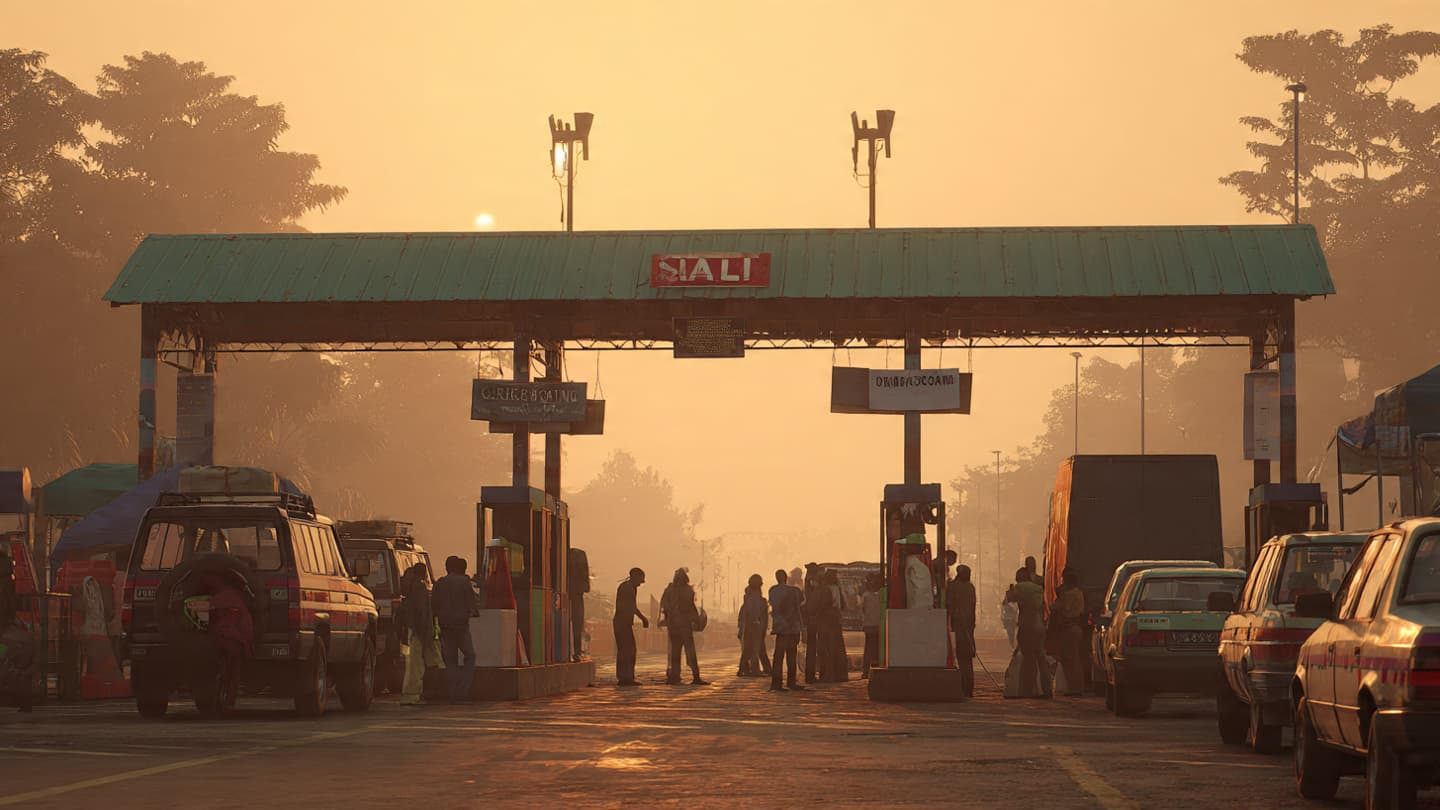
In the eastern reaches of the Democratic Republic of Congo, where roads dissolve into red earth and evening rain settles softly over crowded markets, movement rarely stops. Motorcycles carry traders between towns. Families travel across borders for work, for medicine, for funerals. In places shaped by migration and survival, illness can move quietly at first, almost invisibly, threading itself into the ordinary rhythm of life before anyone fully understands its shape.
That quiet uncertainty now hangs heavily over Central Africa as health officials warn that the latest Ebola outbreak may already be spreading faster and farther than first believed. The outbreak, linked to the rare Bundibugyo strain of the virus, has left at least 131 people dead and hundreds more suspected of infection across the Democratic Republic of Congo and neighboring Uganda. The World Health Organization has described itself as deeply concerned by both the scale and the speed of the epidemic, particularly as new information suggests the virus may have circulated for weeks before it was formally identified.
The first known cases emerged in Ituri Province, a region where conflict, displacement, and fragile healthcare systems already shape daily life. Villages and mining communities there sit along active trade routes stretching toward Uganda and South Sudan, creating constant human movement through border crossings and crowded transport corridors. Investigators now believe the outbreak may have begun in late April, well before laboratory confirmation arrived in mid-May. During those intervening weeks, patients with fever, exhaustion, vomiting, and hemorrhaging were treated in clinics unequipped for what was unfolding. Several healthcare workers died within days of one another, a detail that has become one of the clearest signs of how silently the virus advanced through overstretched facilities.
The Bundibugyo strain carries an added layer of uncertainty. Unlike the more familiar Zaire strain of Ebola, there is currently no licensed vaccine or approved treatment specifically designed for it. Doctors and epidemiologists are relying largely on supportive care, isolation measures, contact tracing, and experimental responses while researchers race to understand the outbreak’s true dimensions. WHO officials have warned that current case counts may significantly underestimate the reality on the ground, with modeling studies suggesting the number of infections could already exceed one thousand.
In Bunia and Mongbwalu, where some of the earliest clusters were identified, funerals and caregiving traditions may also have accelerated transmission. Ebola moves through intimate contact — through touch, bodily fluids, and the closeness that often defines grief itself. Public health workers continue trying to balance containment measures with local customs, an effort made more difficult in areas where communities have long lived with political instability and mistrust of authorities.
Across the border in Uganda, confirmed cases have appeared in Kampala, raising fears that urban transmission could complicate containment efforts further. Large cities carry a different rhythm from isolated villages; movement is faster, anonymity greater, and tracing contacts more difficult. WHO officials have described the outbreak as a regional concern rather than a local emergency, particularly because Ituri functions as both a commercial hub and a crossroads for migration.
Yet amid the rising numbers, there is also the familiar machinery of global response beginning to turn once more. Emergency teams are arriving. Laboratories are expanding surveillance. Protective equipment and medical supplies are being moved into affected areas. International health agencies have released emergency funding while scientists study whether experimental vaccines might offer some protection against this strain.
Still, outbreaks are rarely measured only in statistics. They are also measured in delays, in roads too difficult to travel, in clinics too small for the number of patients arriving at their doors. They unfold in the fragile spaces between recognition and response. In eastern Congo, where dense forests meet border towns alive with trade and movement, the virus appears to have found those spaces once again.
For now, health officials insist that Ebola remains primarily transmitted through direct physical contact, not through the air, and the broader global risk remains relatively low. But the concern surrounding this outbreak lies in how long it may have moved unnoticed, and how difficult containment becomes once uncertainty settles into crowded cities and unstable regions. Beneath the humid skies of Central Africa, investigators are still tracing the path of a disease that may already have traveled farther than anyone first imagined.
AI Image Disclaimer: Illustrations were generated using AI tools and are intended as visual representations rather than documentary photographs.
Sources:
World Health Organization Reuters The Guardian Axios MRC Centre for Global Infectious Disease Analysis
Published by Banx Network. This article is part of the Banx decentralized media programme, powered by the BXE token on the XRP Ledger.