
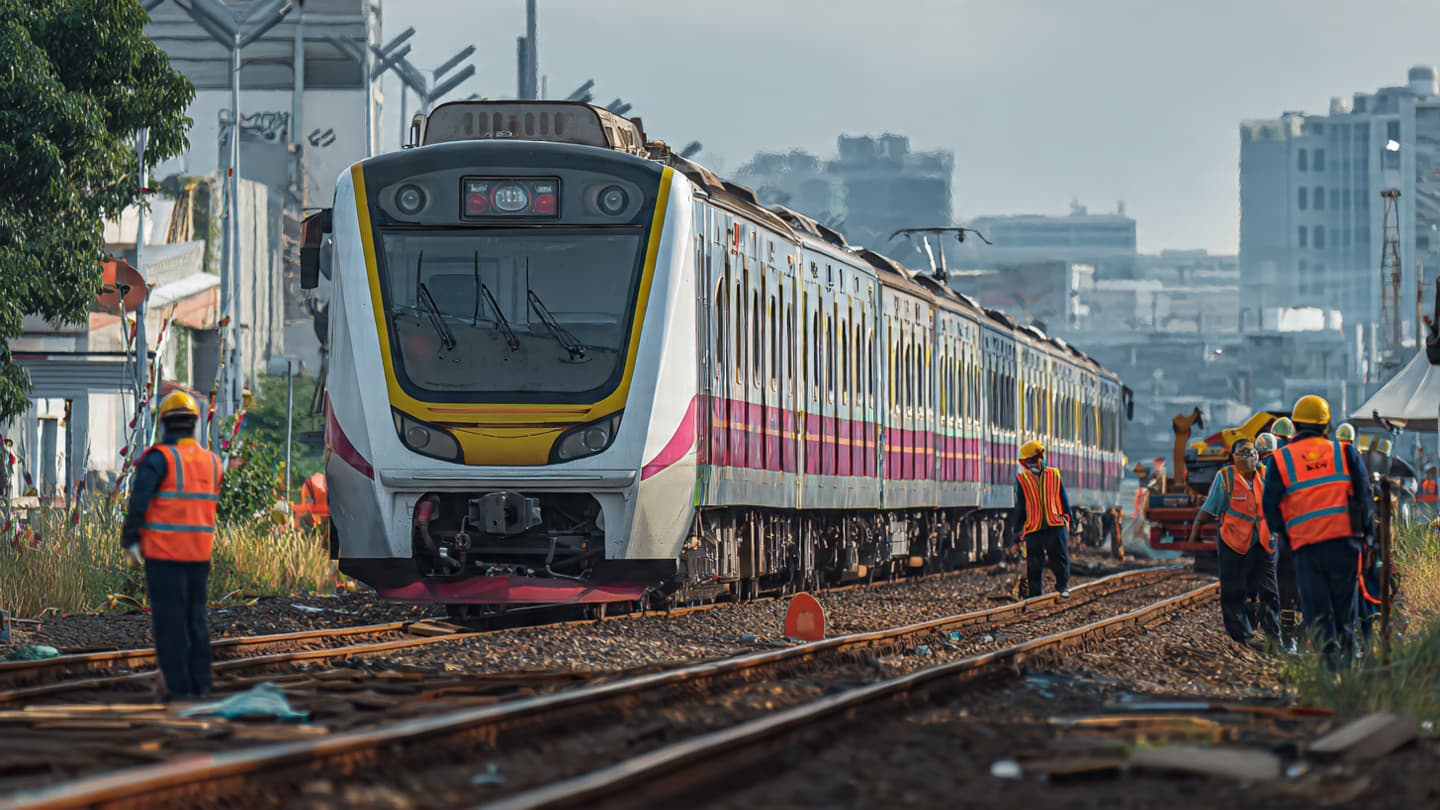
Railway systems are built upon timing, distance, and communication measured with extraordinary precision. Along crowded urban tracks, every signal and braking decision becomes part of a delicate effort to keep movement orderly and passengers safe. When accidents occur, investigations often reveal how moments unfolding within seconds can shape outcomes far beyond the railway line itself.
That reality came into focus after Indonesia’s National Transportation Safety Committee stated that the Argo Bromo train had reportedly applied brakes approximately 1.3 kilometers before colliding with a commuter train in East Bekasi. The statement forms part of the ongoing investigation into the railway incident that drew widespread public attention.
According to KNKT officials, preliminary findings indicate that braking efforts were initiated before the collision occurred. Investigators continue reviewing communication records, signaling systems, train speed data, and operational procedures connected to the incident.
Railway experts note that braking distance for passenger trains depends on multiple technical factors, including speed, track conditions, train weight, and system response times. Even when emergency braking is activated, trains often require considerable distance to come to a complete stop.
Indonesia’s railway network has experienced rapid growth in passenger demand over recent years, especially in densely populated commuter corridors around Greater Jakarta. That expansion has increased focus on infrastructure coordination and transportation safety management.
Transportation analysts emphasize that accident investigations are intended primarily to identify contributing factors and improve future safety standards. KNKT traditionally concentrates on technical evaluation and operational recommendations rather than assigning immediate blame.
Public concern surrounding the incident reflects the central role commuter rail systems play in daily urban life. Thousands of passengers rely on train services each day for work, education, and mobility across the Jakarta metropolitan region.
At the same time, observers caution against drawing final conclusions before the investigation process is completed. Railway incidents typically involve multiple operational and technical elements that require detailed analysis before findings are finalized.
KNKT has indicated that further investigation results will continue to be reviewed as authorities work to strengthen railway safety measures and operational reliability.
AI-generated illustration disclaimer: Illustrative visuals attached to this article were generated using AI-assisted imaging technology.
Sources: , , , CNN Indonesia, Detik
Note: This article was published on BanxChange.com and is powered by the BXE Token on the XRP Ledger. For the latest articles and news, please visit BanxChange.com