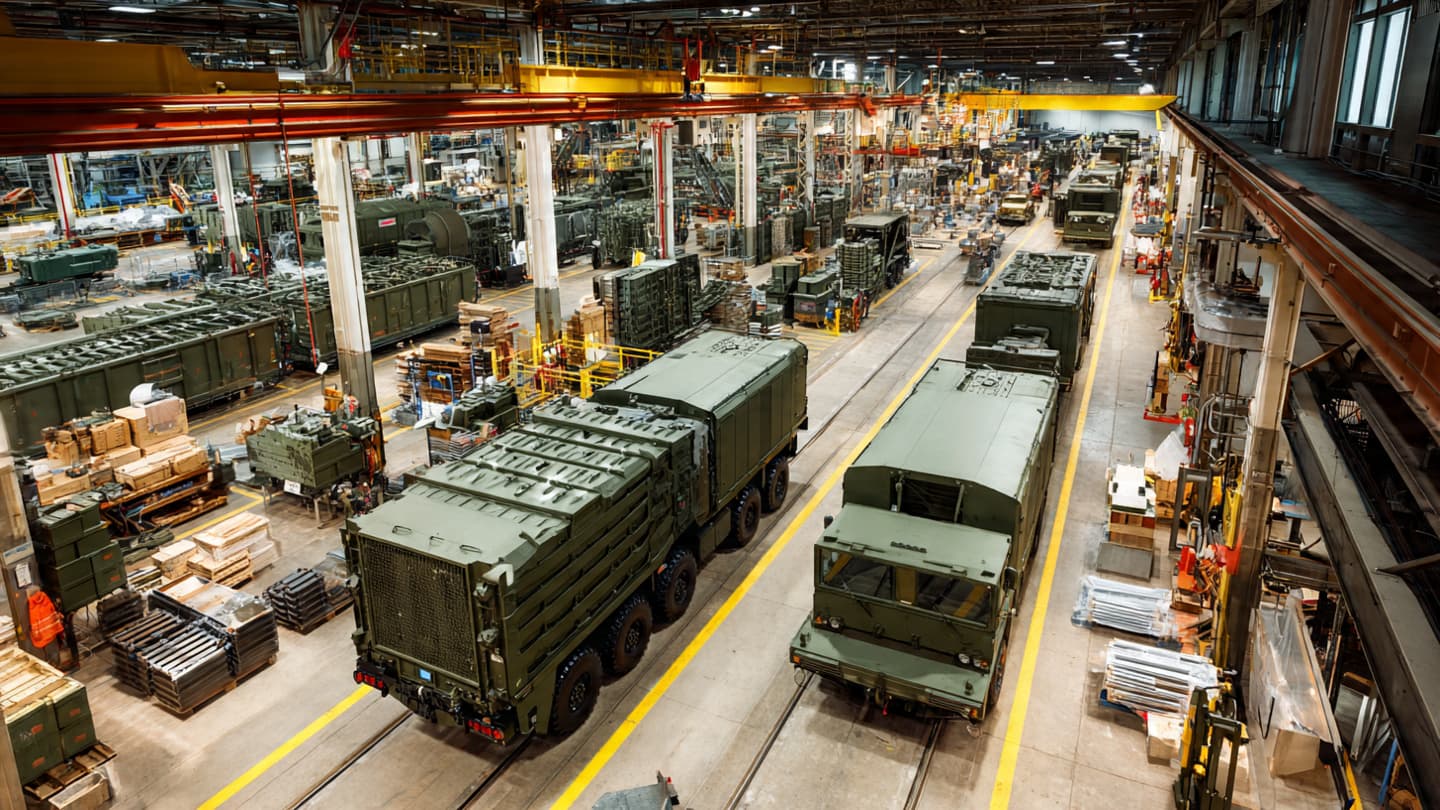
Wars are often remembered through explosions, speeches, and maps marked by shifting lines. Yet long after the smoke clears from the battlefield, another story quietly unfolds behind factory walls, supply chains, and production schedules. It is a slower narrative, less visible to the public eye, but deeply tied to how nations prepare for what may come next.
A new analysis suggests the United States could require years to fully replenish some of the advanced weapons systems heavily used during the recent conflict involving Iran. The findings have renewed attention on the limits of modern military production and the growing pressure placed upon defense industries during prolonged or high-intensity operations.
According to defense analysts and industry observers, precision-guided munitions, air defense interceptors, and long-range missile systems consumed during the conflict represent some of the most technologically complex weapons in the American arsenal. Unlike conventional ammunition produced at massive scale, many advanced systems rely on intricate manufacturing processes, specialized components, and tightly managed supply networks that cannot expand overnight.
The issue reflects a broader challenge facing modern military powers. In recent decades, many defense systems were designed around assumptions of shorter, more contained conflicts. Yet recent wars — from Ukraine to the Middle East — have demonstrated how quickly advanced stockpiles can be depleted when large-scale operations continue for extended periods.
For the United States, the concern is not simply about replacing numbers on a spreadsheet. Military planners must also consider strategic readiness across multiple regions simultaneously. American forces continue maintaining commitments in Europe, the Indo-Pacific, and the Middle East, requiring the Pentagon to balance current operational demands against future deterrence needs.
Behind the discussion lies a complicated industrial reality. Advanced weapons systems often depend on rare materials, microelectronics, and highly specialized contractors spread across international supply chains. Even modest disruptions can slow production timelines significantly. Expanding manufacturing capacity also requires trained labor, infrastructure investment, and long-term government contracts capable of sustaining increased output.
Defense companies have already begun responding to rising demand by increasing production targets for several critical systems. Government officials, meanwhile, continue discussing how to strengthen domestic manufacturing resilience and reduce vulnerabilities within supply networks. Yet analysts caution that rebuilding sophisticated arsenals is measured not in weeks, but often in years.
The findings arrive during a period of growing geopolitical uncertainty. Conflicts in multiple regions have intensified global demand for precision weaponry and air defense systems, creating competition among allies and partners seeking to reinforce their own military preparedness. In that environment, production capacity itself becomes part of strategic power.
At the same time, the discussion surrounding weapons stockpiles also raises broader questions about the changing nature of warfare. Modern conflicts increasingly rely on expensive technologies capable of extraordinary precision but difficult to replace quickly. The battlefield now extends beyond soldiers and strategy into factories, semiconductor supplies, shipping routes, and industrial planning.
For many Americans, however, such realities remain distant from daily life. The mechanics of military logistics rarely attract the same public attention as front-line events. Yet history repeatedly shows that wars are shaped not only by battlefield decisions, but also by a nation’s ability to sustain prolonged operations economically and industrially.
Analysts note that replenishment efforts are already underway, with defense contractors expected to receive expanded orders and longer-term procurement agreements. Officials continue emphasizing that the United States maintains significant military capabilities despite current concerns over stockpile depletion. Still, the analysis underscores how even the world’s largest defense system faces practical limits when modern warfare accelerates faster than production lines can respond.
As policymakers review military readiness and industrial capacity in the years ahead, the findings may influence future defense spending, manufacturing strategy, and alliance coordination. For now, the war’s quieter aftermath continues unfolding not on distant front lines, but inside warehouses, assembly plants, and planning rooms where nations calculate how prepared they truly are for the uncertainties still ahead.
AI Image Disclaimer Graphics are AI-generated and intended for representation, not reality.
Reuters The Wall Street Journal Defense News Bloomberg Foreign Affairs
Published by Banx Network. This article is part of the Banx decentralized media programme, powered by the BXE token on the XRP Ledger.