
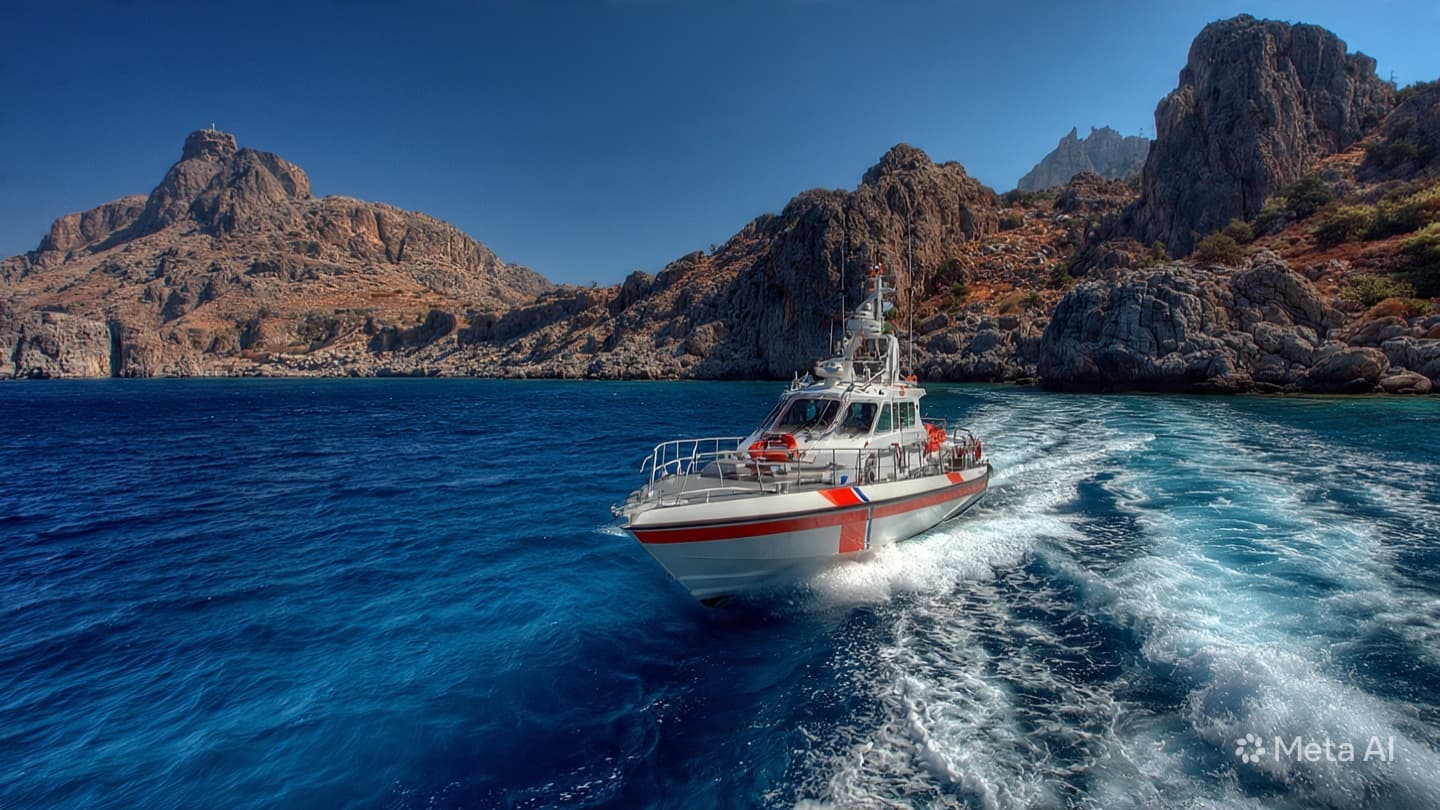
The waters surrounding the island of Rhodes exist as a breathtaking, sun-drenched expanse where the ancient trade routes of the Mediterranean meet the strict geopolitical boundaries of modern Europe. Along these jagged coastlines, where historic fortresses overlook deep blue bays, the maritime traffic is a dense mixture of international cruise ships, luxury yachts, and regional fishing vessels. The geographic proximity of the island to foreign coastlines makes it a critical, high-stakes transit zone, a beautiful but unforgiving marine landscape where the natural elements can instantly turn hostile. In this environment, where the sea appears calm under the summer sun, the boundary between safe navigation and catastrophic maritime failure is governed entirely by the competence and integrity of those at the helm.
Yet, this oceanic passage is frequently exploited by organized human trafficking syndicates that treat human desperation as a high-profit commodity, utilizing unsafe vessels to bypass international border controls. Over a period of several weeks, a heightened state of vigilance had been maintained by the regional coast guard units patrolling the eastern borders of the Aegean. The interventions do not always occur in daylight, often materializing as midnight pursuits of fast-moving, unlit watercraft attempting to navigate the treacherous shoals without standard safety equipment. It is a cynical enterprise, an arrangement where operators charge exorbitant fees to vulnerable migrants, packing them into overcrowded vessels with a complete disregard for human life.
To intercept a smuggling operation of this nature within a complex maritime border requires an immediate, decisive tactical response from naval authorities. The specialized coast guard crews must execute their maneuvers with extreme precision, approaching vessels that are frequently unstable and operating under the control of reckless operators trying to evade capture. During a recent night patrol, sensors detected a suspect vessel navigating a high-risk maritime channel without navigating lights, moving at speeds that threatened to capsize the boat in the swelling sea. The subsequent interception required tactical boarding teams to secure the craft before the panicked movements of the occupants could destabilize it completely.
There is a distinct, sobering reality to a humanitarian rescue operation at sea, where the immediate priority is the preservation of life in a chaotic, dark environment. The passengers, discovered huddled together without standard life jackets or emergency communication tools, had been subjected to hours of confinement inside an open hull exposed to the open spray. The individual navigating the craft, who had collected thousands of euros from each family for the brief but perilous transit, was identified by investigators as a central operative within a larger cross-border smuggling network. The contrast between the staggering financial profits amassed by the operator and the sheer vulnerability of the passengers stood as a monument to the cruelty of the trade.
The apprehension of the boat captain highlights the persistent role of the Dodecanese islands as a primary target for international trafficking groups operating along the maritime migration corridors. The syndicates continuously adapt their strategies, employing faster, high-powered vessels and demanding inflated prices from individuals fleeing conflict zones, betting that the vastness of the sea will allow them to slip past coastal radar networks. Every successful interception by the coast guard is a critical disruption to these networks, preventing the inevitable tragedies that occur when heavily overloaded and unseaworthy vessels are abandoned by their crews in open waters.
The impact of such an arrest extends far beyond the immediate detention of a single operator, providing valuable intelligence to international agencies working to map the financial structures of global human smuggling rings. It underscores the reality that as land borders become increasingly fortified, the maritime routes will continue to attract high-risk transit attempts managed by criminal actors who view the passengers as mere freight. When a standard speedboat can be transformed into a high-profit smuggling vehicle capable of generating hundreds of thousands of euros per trip, the definitions of coastal surveillance must be continuously reinforced to protect human life.
As the rescued passengers were brought safely ashore to receive medical evaluations and administrative processing at the port facility, the focus of the investigation shifted to the legal accountability of the detained operator. The forensic documentation of the vessel's navigation logs and the personal testimonies of the occupants provided a detailed timeline of the crossing, exposing the explicit financial transactions that preceded the voyage. The harbor returned to its standard routine as the sun rose over the ancient walls, a reminder of the quiet, unseen conflicts that unfold along the maritime fringes of the continent.
The administrative formalization of the maritime arrest followed the successful rescue operation, bringing the suspect before the regional judicial authorities on Rhodes. The Hellenic Coast Guard, in coordination with the regional port authority, confirmed the formal arrest of a thirty-four-year-old foreign national on Monday, identified as the captain of a vessel carrying forty-two undocumented migrants. The suspect faces severe felony charges, including human trafficking for profit, endangering human life at sea, and unauthorized entry into national waters after survivors testified they were charged up to five thousand euros each for the crossing. The Rhodes magistrate has ordered the suspect to be held in maximum-security isolation without bail, while federal immigration investigators work alongside international police agencies to trace the financial network behind the transit.
Note: This article was published on BanxChange.com and is powered by the BXE Token on the XRP Ledger. For the latest articles and news, please visit BanxChange.com