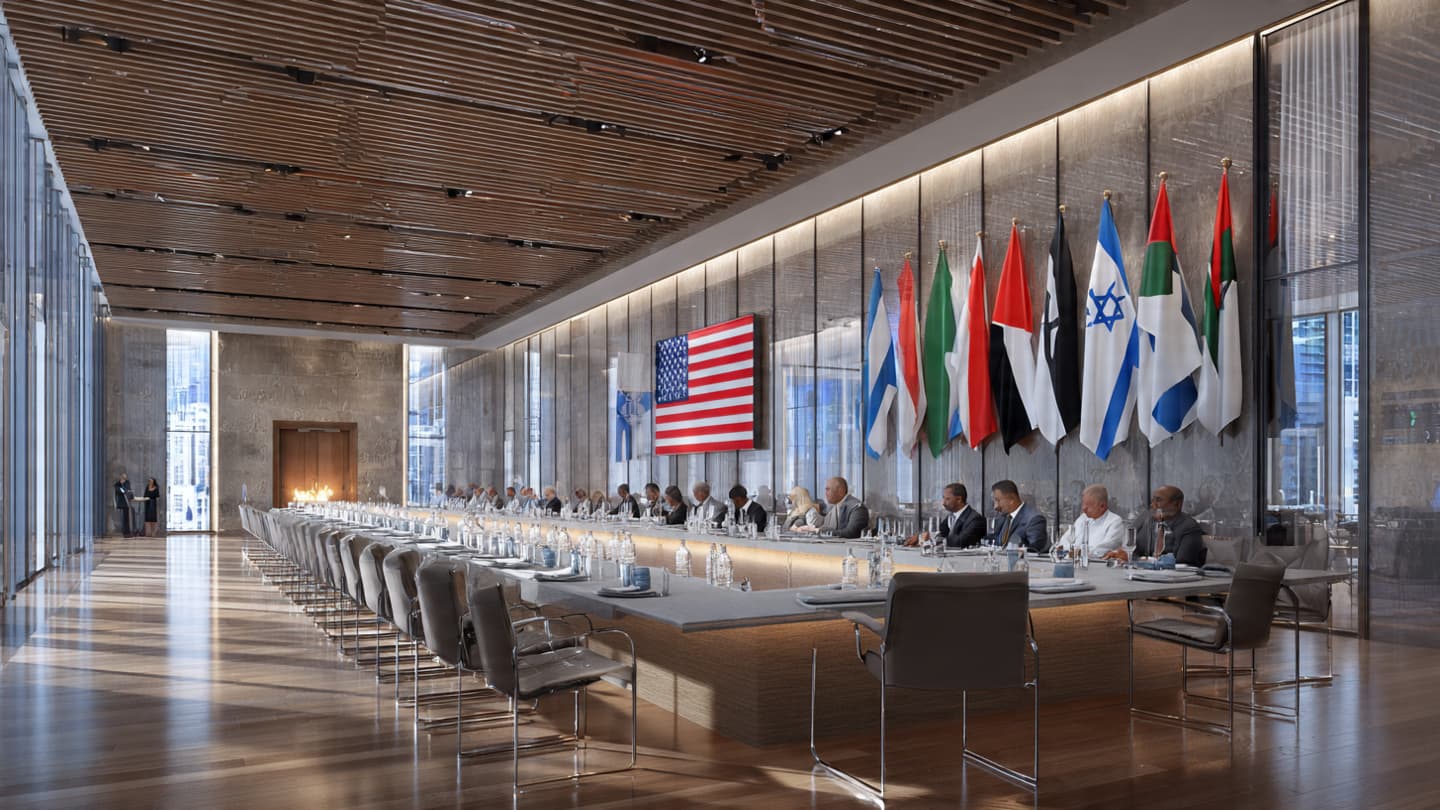
In the Middle East, diplomacy often resembles a long conversation carried across shifting sands. Alliances form gradually, shaped by trade, security, and the careful calculation of national interests. Sometimes those relationships strengthen quietly through meetings and agreements, while elsewhere old rivalries remain present beneath the surface.
Recent developments involving the United Arab Emirates have drawn attention to its increasingly close alignment with the United States and Israel, particularly in matters involving regional security and economic cooperation. Analysts across several international media outlets say the UAE has expanded both diplomatic and strategic coordination with Washington and Tel Aviv over the past few years.
One of the clearest examples remains the Abraham Accords, which normalized relations between the UAE and Israel in 2020. Since then, cooperation between the two countries has grown across sectors including technology, defense, trade, renewable energy, and tourism. Bilateral business partnerships and high-level government visits have become increasingly common.
Security cooperation has also deepened amid concerns surrounding regional instability and Iran’s expanding influence. Reports indicate that the UAE has participated in discussions involving integrated regional defense systems supported by the United States and involving several Gulf countries alongside Israel. These developments have fueled speculation about a shifting regional security architecture.
At the same time, the UAE has maintained a complex relationship with Iran. While tensions exist regarding regional influence and maritime security, Abu Dhabi has also continued certain diplomatic and economic contacts with Tehran. Analysts note that Gulf states often balance deterrence strategies with pragmatic engagement to avoid broader instability.
Economic interests further shape the UAE’s positioning. The country continues pursuing its ambition to become a regional hub for finance, logistics, technology, and global investment. Stronger ties with Israel and the United States provide access to advanced technologies, investment opportunities, and security partnerships viewed as beneficial for long-term development goals.
Regional observers, however, caution against interpreting the relationship purely through the lens of confrontation. Diplomacy in the Gulf frequently operates through overlapping partnerships where cooperation and competition coexist simultaneously. The UAE, like several neighboring states, continues attempting to navigate between strategic alliances and regional stability concerns.
Public reactions across the region remain varied. Some see the UAE’s growing ties with Israel and the United States as a pragmatic response to changing geopolitical realities, while others interpret the developments as part of a wider regional realignment affecting traditional balances of influence.
For now, the UAE appears committed to maintaining close relations with Western allies while carefully managing tensions with Iran. The evolving relationships reflect how Middle Eastern diplomacy increasingly combines economic ambition, security concerns, and strategic flexibility in an uncertain global environment.
Images accompanying this article are AI-generated visual interpretations created for newsroom illustration use.
Sources: Reuters, Al Jazeera, The National, Associated Press, Middle East Eye
Published by Banx Network. This article is part of the Banx decentralized media programme, powered by the BXE token on the XRP Ledger.