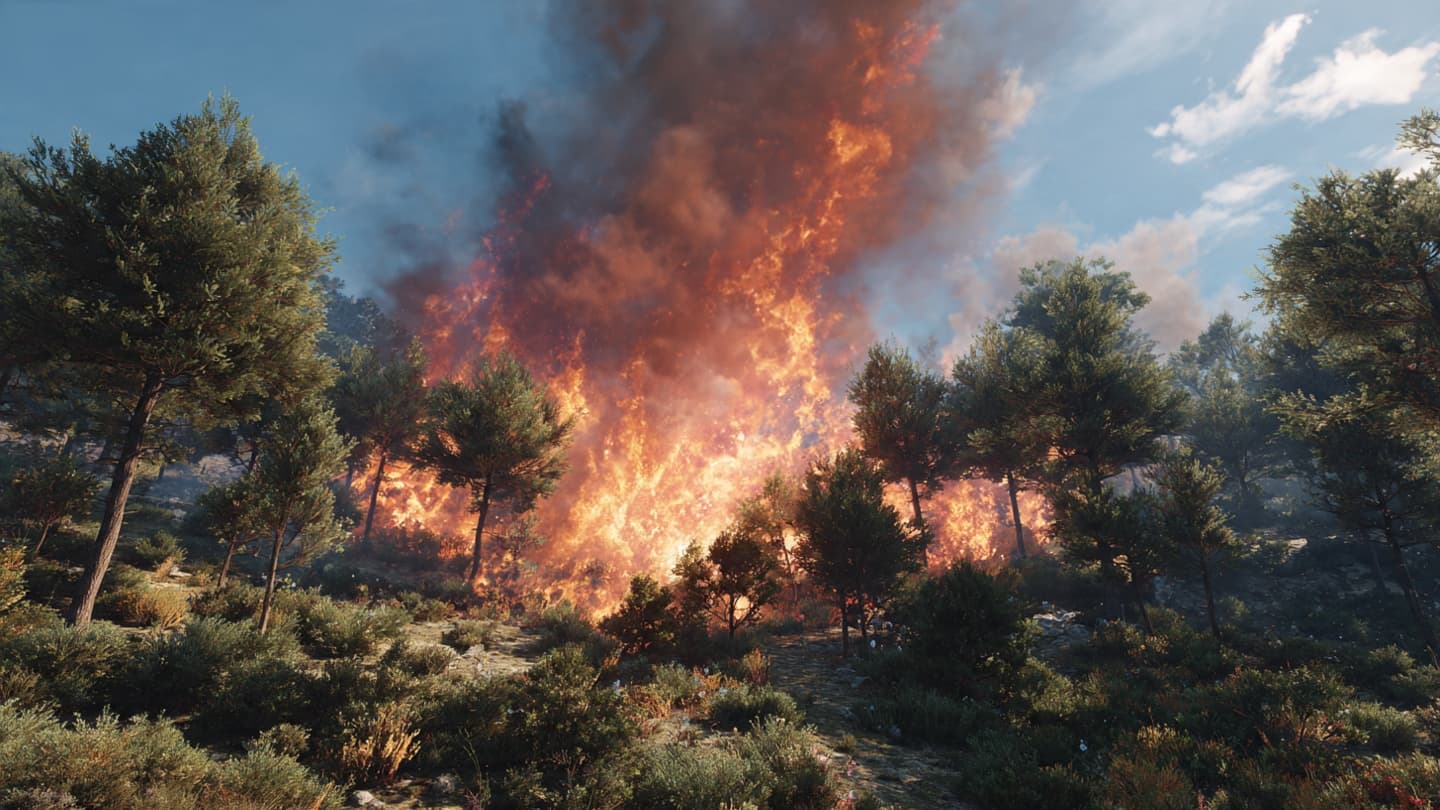
In the summer landscape of southern Europe, heat can alter the color of the earth long before smoke appears on the horizon. Dry vegetation, warm winds, and prolonged high temperatures create conditions in which a small fire can become a rapidly moving event.
France experienced renewed wildfire activity in July as firefighters worked to contain blazes in several areas amid high temperatures. The situation also extended across neighboring Spain, where crews faced their own difficult conditions.
Wildfires are shaped by a combination of weather, vegetation, terrain, and human activity. During periods of extreme heat and dryness, forests and grasslands can become more vulnerable, allowing flames to move quickly when conditions align.
For firefighters, the challenge is measured not only in distance but also in time. A change in wind direction can alter the path of a fire, while difficult terrain can slow access for ground crews and make aerial operations increasingly important.
Communities near affected areas can face disruptions even when flames do not reach populated neighborhoods directly. Roads may be closed, residents may be evacuated, and smoke can spread across surrounding areas, changing the atmosphere of towns and cities far from the fire itself.
The fires also place pressure on emergency services. Firefighters, aircraft, vehicles, and support personnel must be coordinated across large areas, often while working in high temperatures for extended periods.
France and Spain have both experienced increasingly difficult wildfire seasons in recent years. Climate conditions, including prolonged heat and dryness, can contribute to greater fire risk, although each individual wildfire has its own combination of causes and circumstances.
For local communities, the arrival of summer increasingly carries another kind of preparation. Beyond tourism and seasonal activity, authorities must consider fire warnings, emergency access, evacuation planning, and the protection of forests and homes.
As firefighters continue monitoring affected areas, the immediate priority remains containment and protection of communities. The summer landscape may eventually return to its quieter rhythm, but the burned areas will remain visible reminders of how quickly heat, wind, and dry vegetation can change the character of a region.
Note: This article was published on BanxChange.com and is powered by the BXE Token on the XRP Ledger. For the latest articles and news, please visit BanxChange.com
.jpg&w=3840&q=75 "Foreign Helicopters Join Effort to Fight Deliblato Sands Wildfire Near Belgrade")